
This Gordon Ramsay parsnip purée recipe turns out silky-smooth and ready in about 35 minutes, for roughly $0.95 a serving. Sweet parsnips are caramelised in butter first — the step most home cooks skip — then simmered in milk and blitzed into a velvety, spoonable purée that can turn an ordinary roast dinner into a restaurant-style plate.
The method is Ramsay’s root vegetable purée technique from his Great Escape cookbook, where he sautés celeriac and carrots in butter, simmers them in milk, and blitzes them smooth. It suits parsnips perfectly: they are sweeter than most root vegetables, so the extra caramelisation pays off in flavour. In Healthy Lean & Fit he serves parsnip mash alongside braised chicken legs with honey and five-spice, letting the sweetness of the vegetable play against the spiced glaze.
The step that makes this purée better than most is the initial sauté. Boiling parsnips straight in water makes them watery and washes out their flavour, leaving a purée people push around the plate. A few minutes in hot butter until the edges turn golden builds a toffee sweetness that carries through the whole dish, so the finished side tastes rich and silky instead of bland and grey.
Made this recipe? Leave a comment and star rating below — we would love to hear how yours turned out.
Why This Parsnip Purée Works
Most purée recipes get the order wrong: boil the vegetable, drain, then try to add flavour back at the end. This one builds flavour first and texture second. The parsnips caramelise in butter before any liquid goes in, so the sweetness is cooked in rather than bolted on. Then the milk does double duty — it loosens the purée without making it heavy, and it cooks down just enough that there is no draining step and no flavour washed away.
It is a cheap, easy side dish made from pantry staples, and it scales up without any fuss for holiday dinners. Serve it straight from the pan while it is still glossy and loose, because parsnip purée thickens as it cools.
Gordon Ramsay Parsnip Purée
Gordon Ramsay Parsnip Puree Recipe
Ingredients
Equipment
Method
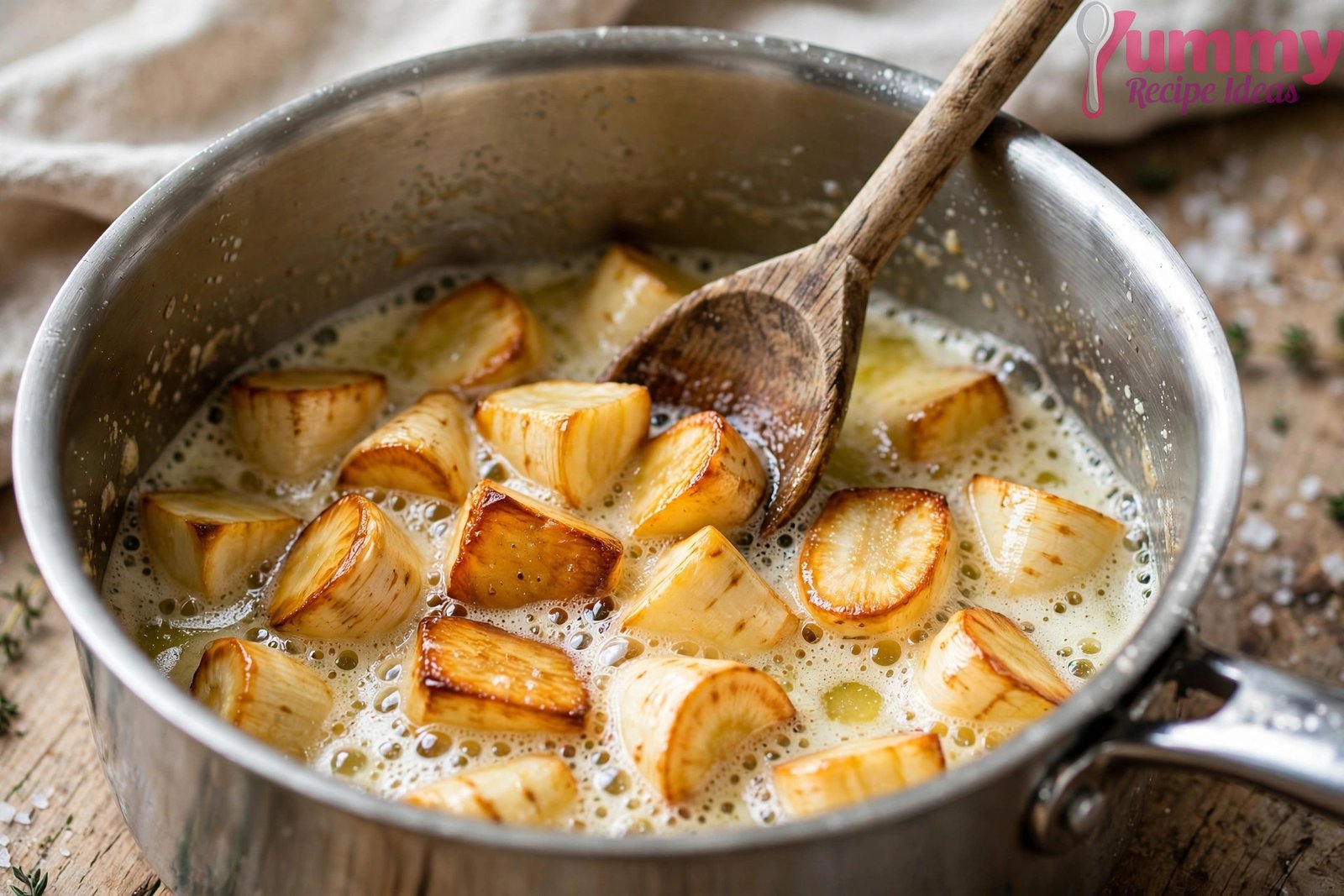
- Caramelise the parsnips: Melt 2 tablespoons of the butter in a wide heavy-bottomed saucepan over medium-high heat. Add the parsnip chunks in a single layer and cook 5 to 6 minutes, turning occasionally, until the edges are deep golden. Work in two batches if the pan is crowded so the parsnips brown rather than steam.
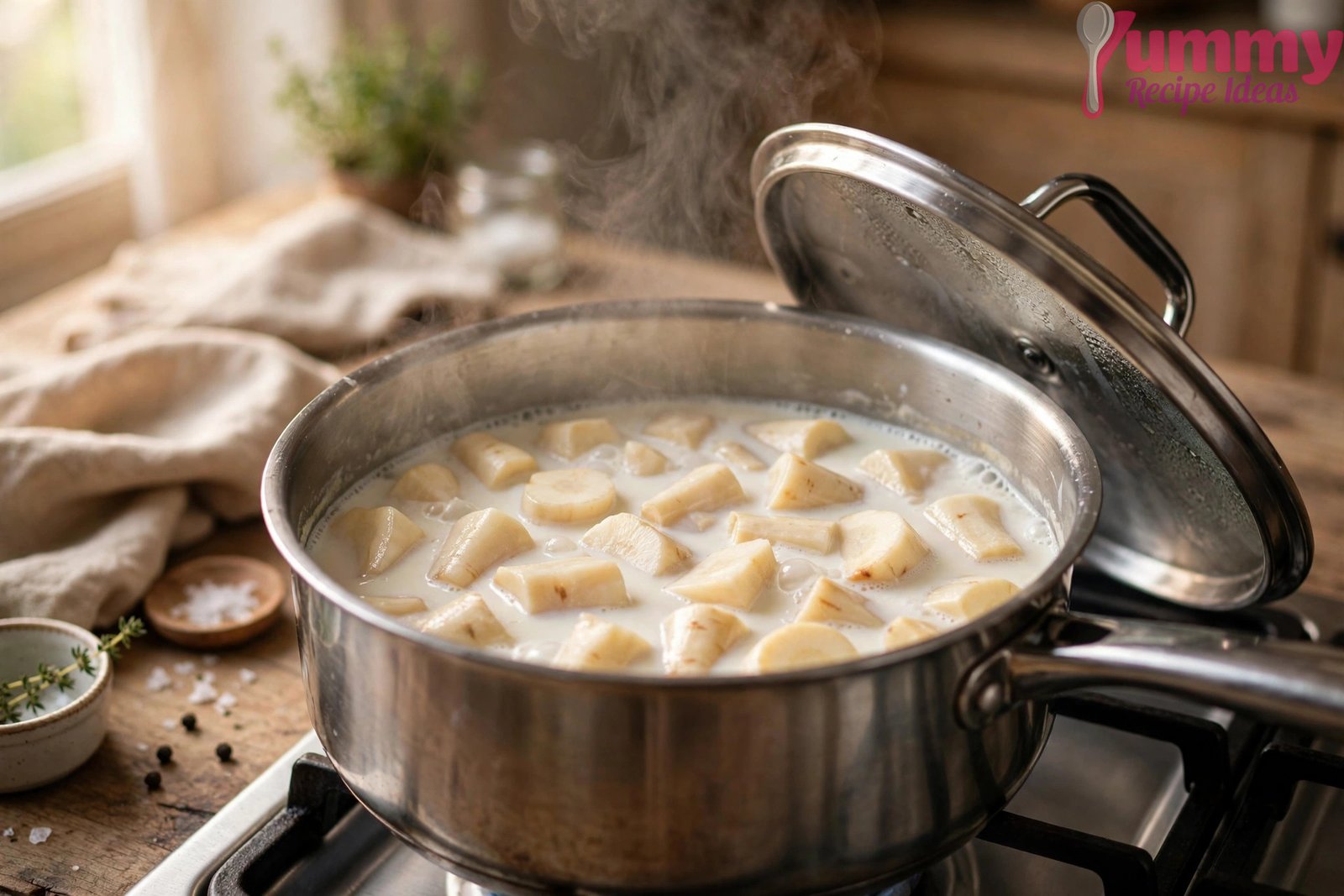
- Simmer in milk: Pour in the milk, add the remaining tablespoon of butter and the salt, and reduce the heat to medium-low. Cover and cook 15 to 18 minutes, until the parsnips are completely soft and a knife slides through with no resistance. Do not drain — the remaining milk goes into the blender.
- Blitz silky smooth: Transfer everything, liquid and all, to a high-speed blender or food processor and blitz 60 to 90 seconds until completely smooth with no lumps. For the true restaurant finish, push the purée through a fine-mesh sieve with the back of a spoon.
- Season and serve: Return the purée to the pan over low heat. Season with the white pepper and more salt to taste, and add the pinch of nutmeg if you like. Loosen with a splash of warm milk if too thick, or cook a minute longer, stirring, if too thin. Serve straight away.
Notes
How to Make It, Step by Step
Caramelise the parsnips
Take the time to get real golden edges. Melt 2 tablespoons of the butter in a wide heavy-bottomed saucepan over medium-high heat. Add the parsnip chunks in a single layer and cook for 5 to 6 minutes, turning occasionally, until the edges are deep golden. If your pan is crowded, work in two batches — steaming instead of browning is the one thing that will flatten the flavour of this dish.
Simmer in milk
Low heat from here on. Pour in the milk, add the remaining tablespoon of butter and the salt, and reduce the heat to medium-low. Cover and cook for 15 to 18 minutes, until the parsnips are completely soft and a knife slides through with no resistance. There should still be a little milk in the pan when you take it off the heat — that liquid goes straight into the blender, so do not drain it.
Blitz silky smooth
Blend while it is hot, and blend longer than feels necessary. Transfer everything, liquid and all, to a high-speed blender or food processor and blitz until completely smooth with no lumps — a full 60 to 90 seconds, not a quick pulse. For the true restaurant finish, push the purée through a fine-mesh sieve with the back of a spoon. This is the step that separates a purée from a mash.
Season and serve
Taste before you serve — parsnips vary in sweetness. Return the purée to the pan over low heat, season with the white pepper and more salt if needed, and add the pinch of nutmeg if you like. The purée should be thick enough to hold its shape on a plate but soft enough to spread with the back of a spoon. If it is too thick, loosen it with a splash of warm milk; too thin, and a minute over low heat, stirring, will tighten it up.
FAQs
Why does Ramsay sauté parsnips before simmering them?
Because caramelisation is flavour, and boiling destroys it. Most parsnip recipes tell you to boil the vegetable in water, drain it, and mash it with butter — which means the parsnip never sees real heat until it is drowned. Ramsay’s root vegetable purée technique starts the other way: sauté the parsnips in butter until the edges turn golden, and only then add the milk. Those browned edges are where the toffee sweetness comes from, and that sweetness survives the blitz and carries the whole dish. Boiling in water, by contrast, washes out the natural sugars and adds moisture you then have to cook off. The sauté takes five minutes and it is the single biggest difference between a purée people remember and one they forget.
Why milk and butter instead of cream?
Balance. Parsnips are already sweeter than most root vegetables, and cream on top of that sweetness pushes the dish toward dessert territory — rich, heavy, and one-note. Whole milk loosens the texture without making it heavy, and the butter adds richness that stays on the savoury side. Ramsay uses milk and butter rather than cream in all of his root vegetable purées for exactly this reason. If you want it richer, stir in an extra knob of cold butter at the end rather than switching to cream — you get silkiness without losing the savoury character. And if the purée still tastes a touch sweet for you, a little more salt and white pepper will pull it back into line.
What should I serve parsnip purée with?
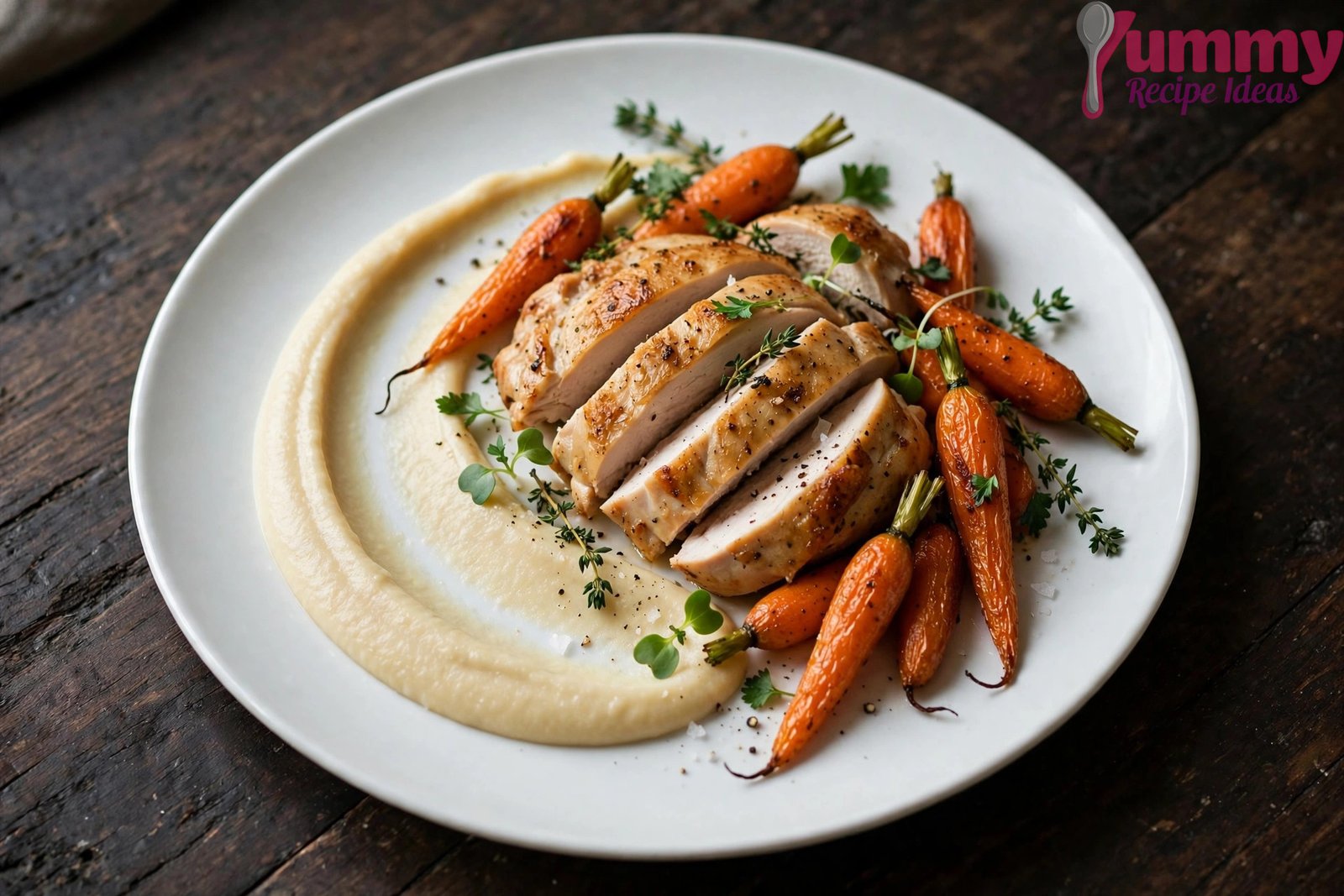
Think rich, deeply savoury mains that need something sweet to cut through them. Ramsay’s own pairing in Healthy Lean & Fit is braised chicken legs with honey and five-spice, where the spiced glaze plays off the purée’s sweetness. A roast dinner is the natural home for it: it works in place of mashed potatoes next to a big joint of meat, and it is a genuinely good match for lamb, whose richness the sweet purée cuts the same way apple sauce works with pork. For a cozy weeknight plate, try it under our Gordon Ramsay Bolognese Sausage, or as the side next to a bowl of Gordon Ramsay Meatball Soup for a proper comfort dinner.
Can I make parsnip purée ahead of time?
You can, but it is better fresh. Parsnip purée thickens and goes stodgy as it cools because the starch sets, so the glossy, loose texture you get straight from the blender is a fresh-only thing. If you need to make it ahead, cool it, cover the surface directly with plastic wrap to stop a skin forming, and refrigerate for up to a day. Reheat gently in a saucepan over low heat with a splash of warm milk, whisking until it loosens back up — about two minutes, which is easy to fit in while the meat rests. Do not microwave it: the edges dry out while the centre stays cold. For a roast dinner where everything has to land at once, the purée is actually one of the easier things to reheat last minute.
My purée is lumpy or watery — how do I fix it?
Lumps mean one of two things: the parsnips were not fully soft before blending, or the blend was too short. Cut the chunks evenly next time so they all cook at the same rate, and do not be shy with the blender — a full minute at high speed beats three quick pulses. The sieve is the guaranteed fix: pushing the purée through a fine-mesh sieve with the back of a spoon removes every last lump and gives the true restaurant finish. If the purée is watery, the milk did not reduce enough during the simmer; return it to the pan over low heat and stir for a few minutes until it tightens. And if your parsnips are very large, cut out the woody core before chopping — it never softens properly and it is a classic source of lumps.
How much does this cost to make?
Very little, which is part of the appeal. Two pounds of parsnips runs about $3, and the butter, milk, and seasoning come to well under a dollar, so the whole batch lands around $3.75 — about $0.95 per serving. Compare that to the side dishes it replaces on a holiday table and it is one of the cheapest ways to make a plate look expensive. The purée also scales cleanly: double everything for eight servings and just use a bigger pan, with no change to the method. The only ingredient worth splurging on is the butter — good unsalted butter is where the caramelisation flavour comes from, so it is the one place the money shows.
About Yummy Recipe Ideas
Yummy Recipe Ideas takes classic chef recipes — Gordon Ramsay’s included — and reworks them for home kitchens with US measurements, honest costs, and every technique explained. No guesswork, no watery purée.
