
These Gordon Ramsay chocolate brownies bake into rich, fudgy squares with a crackly top and hidden pockets of melted dark chocolate inside. They are ready in 55 minutes, cost about $0.65 a serving, and one 12×9-inch tin makes 16 generous pieces.
This is Ramsay’s “World’s Best Brownies” from the Bread Street Kitchen cookbook — the version they serve warm with thick cream in his London restaurant. Every chef claims their brownie is the best, but this one earns it: two types of sugar for depth, a double hit of dark chocolate, and a batter built by melting the chocolate and butter together into one glossy base.
The signature move is what happens halfway through baking. You pull the tin out after 20 minutes and throw dark chocolate chunks at the half-set surface so they break through the crust and sink in. When the tin goes back in the oven, those chunks melt into gooey pockets trapped inside the brownie. Nobody else does this — and it is why every bite is different from the last.
Made this recipe? Leave a comment and star rating below — we would love to hear how yours turned out.
Why These Brownies Work
Most brownies are one-note: rich, but flat. These build flavor in layers. Melting the butter with the chocolate keeps the chocolate from seizing and gives a smooth, glossy base. Whisking in two sugars — caster for clean sweetness, light brown for chewiness and a toffee note — gives depth a single sugar cannot. Folding in just enough flour, and no more, keeps the texture fudgy instead of cakey. And the mid-bake chunk throw adds texture contrast: some bites are smooth and dense, others have a vein of molten chocolate. That unevenness is what makes a homemade brownie more interesting than any shop-bought one.
Do not overbake. That is the one rule. A brownie that looks perfect in the oven will be dry and cakey once it cools — you want the center to look almost underdone when you pull it out.
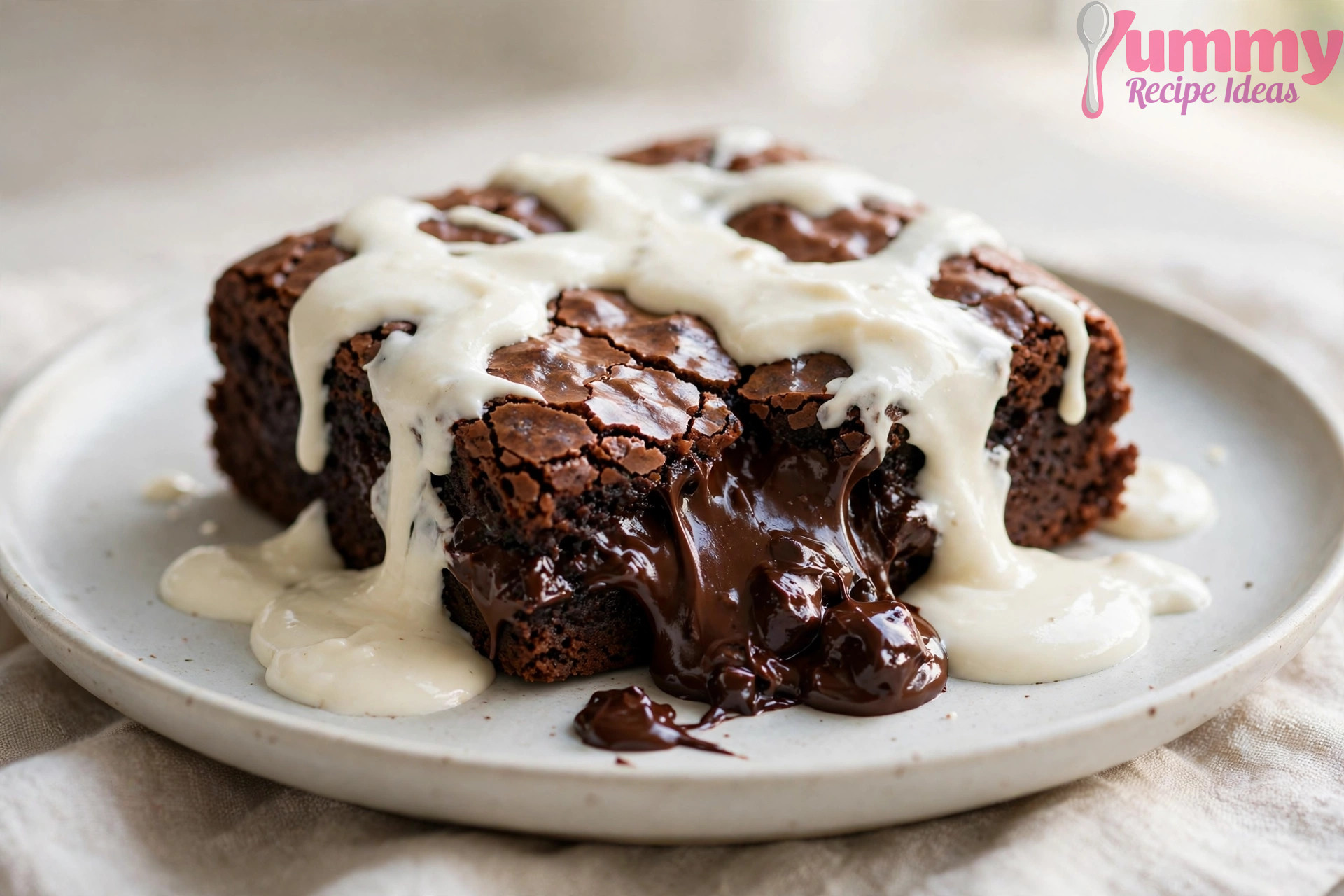
Gordon Ramsay Chocolate Brownies
Gordon Ramsay Chocolate Brownies Recipe
Ingredients
Equipment
Method
- Preheat and line: Set the oven to 350°F (180°C). Grease a 12×9-inch baking tin and line it with parchment, leaving an overhang on two sides.
- Melt chocolate and butter: Put the 8.5 oz of dark chocolate and the butter in a large heatproof bowl set over a pan of gently simmering water (bowl not touching the water). Leave until melted, stirring occasionally.
- Whisk in the sugars: Remove from the heat and whisk in the granulated and brown sugars with a balloon whisk until smooth. This also cools the mixture so the eggs won’t scramble.
- Add eggs and vanilla: Add the beaten eggs and vanilla and mix in with a wooden spoon until just combined. Don’t overwork it.
- Fold in flour: Sift over the flour and sea salt and fold through until smooth and just combined. Pour into the prepared tin and level the top.
- First bake: Bake 20 minutes, until the surface is set with a thin crust forming.
- Throw in the chunks: Remove from the oven and scatter or throw the chocolate chunks at the half-baked surface so they break the crust and sink in. Return to the oven.
- Finish baking: Bake 15 to 20 minutes more, rotating the tin halfway, until cracked around the edges and still soft in the middle. The brownie will firm up as it cools.
- Cool and cut: Cool completely in the tin on a wire rack, then lift out by the parchment and cut into 16 squares. Serve warm with thick cream or at room temperature.
How to Make Them, Step by Step
Preheat and line the tin
Set the oven to 350°F and line a 12×9-inch baking tin. Grease the tin lightly and line it with parchment paper, leaving an overhang on two sides — those handles are what let you lift the whole slab out cleanly for cutting. A metal tin gives the crispiest edges; glass works but add a few minutes to the bake.
Melt the chocolate and butter together
One bowl, gentle heat, no rushing. Put the 8.5 oz of dark chocolate and the 14 tablespoons of butter in a large heatproof bowl set over a pan of gently simmering water, making sure the bowl does not touch the water. Leave until melted, stirring occasionally. Melting them together matters: butter contains water, which can make melted chocolate seize and go grainy — but when they soften at the same time, the butterfat surrounds the chocolate and the two blend into a smooth, glossy base. (Short on patience? Microwave the mixture on low for about 3 minutes, stirring every 30 seconds.)
Whisk in the two sugars
Whisk straight into the hot chocolate. Remove the bowl from the heat and whisk in the caster sugar and light brown sugar with a balloon whisk until smooth. This does two jobs: it dissolves the sugars into the warm base, and it cools the mixture down enough that the eggs will not scramble when they go in next. Let it sit for a minute — it should be warm to the touch, not hot.
Add the eggs and vanilla
Stir, don’t beat. Add the lightly beaten eggs and the vanilla and mix in with a wooden spoon until just combined. Switch to the spoon here on purpose: aggressive beating whips in air, and air makes cakey brownies. We want dense and fudgy, so the batter should be mixed gently from this point on.
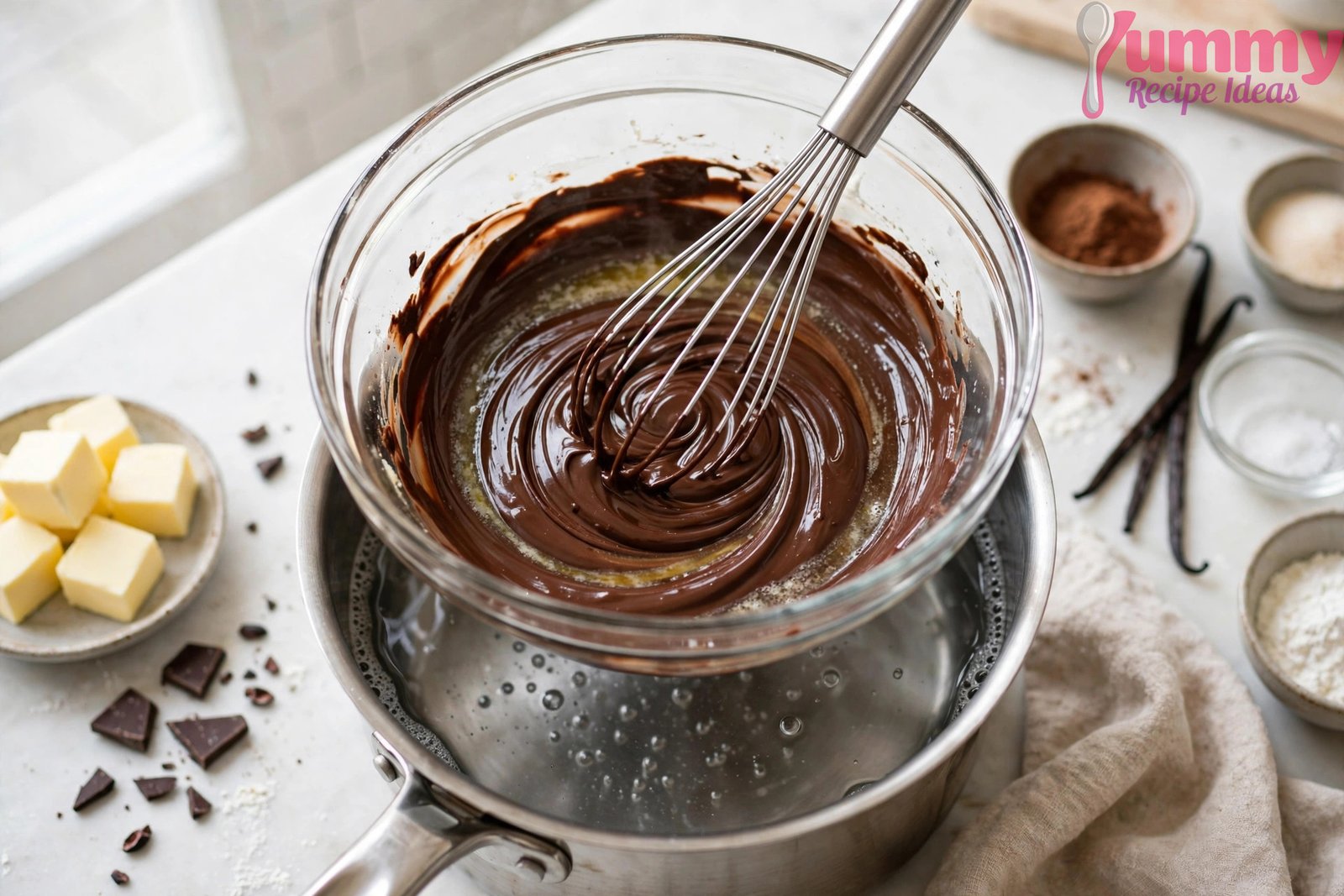
Fold in the flour and salt
Sift and fold, then stop. Sift the flour and sea salt over the bowl and fold them through with a spatula until the last streak of flour disappears. Stop the moment it is smooth — any extra stirring develops gluten, and gluten is the enemy of fudginess. Pour the batter into the prepared tin and level the top.
First bake
Bake 20 minutes, then pull the tin out. The surface should look set and slightly matte, with the very beginnings of a crust, but the center will still be soft. This is exactly what you want — the chunks need a firm-enough crust to crack and a soft-enough middle to sink into.
Throw in the chocolate chunks
This is the fun part — be decisive. Scatter the 2/3 cup of dark chocolate chunks over the half-baked brownie, then press or lightly throw them so they break through the crust and sink into the batter. The slight violence is the point: it cracks the crust and drives the chunks deep enough to melt inside rather than sitting on top.
Finish baking
Another 15 to 20 minutes, rotating once. The brownies are done when the edges are cracked and set but the middle still looks soft and slightly wobbly — it will firm up as it cools. Rotate the tin halfway through this second bake; most home ovens have hot spots, and brownies are thick enough that one corner can overbake while the other stays raw. Total bake time is 35 to 40 minutes.
Cool and cut
Cool in the tin, then lift out and cut. Leave the brownies to cool completely in the tin on a wire rack — this is when the texture sets. Lift the slab out by the parchment handles and cut into 16 squares with a sharp knife, wiping the blade between cuts for clean edges. Serve warm with thick cream for the full restaurant treatment, or at room temperature for a chewier bite.
FAQs
Why does Ramsay melt the chocolate and butter together?
Most brownie recipes melt the chocolate on its own, then add the butter separately. Ramsay puts both in the same bowl over the simmering water and lets them soften together, and there is a real reason. Butter contains water, and water is the enemy of melted chocolate — even a small amount can make chocolate seize into a grainy, stiff mess. By melting them at the same time, the fat from the butter surrounds the chocolate as it softens, so the two blend into a smooth, glossy base with no risk of seizing. It also means one less bowl to wash, which Ramsay would appreciate. If you are tempted to melt the chocolate alone first out of habit, resist it: the combined melt is both safer and easier, and it is the foundation the whole fudgy texture is built on.
Why two types of sugar?
Caster sugar and light brown sugar do completely different jobs here. The caster sugar dissolves cleanly into the melted chocolate and sweetens without changing the color or texture — clean, one-dimensional sweetness. The light brown sugar brings molasses, which adds chewiness and a deeper, almost toffee-like note that rounds out the dark chocolate. Together they create a brownie that is sweet but not flat; with only caster sugar you would get a one-note result, and with only brown sugar it would be too dark and too treacly. Ramsay whisks both into the hot chocolate mixture straight away, which also cools the base down before the eggs go in. If you only have one sugar on hand, use all light brown — but the two-sugar version is noticeably better.
What is the mid-bake chocolate chunk technique, and why does it work?
This is the signature move. After 20 minutes of baking, you pull the tin out and throw 2/3 cup of dark chocolate chunks at the half-set surface hard enough that they break through the forming crust and sink into the batter. When the tin goes back in for the final 15 to 20 minutes, those chunks melt inside the half-set batter — but because the outside has already started to firm up, the melted chocolate gets trapped as gooey pockets instead of blending into the mixture. The result is texture contrast in every bite: dense, fudgy brownie in some places, a vein of molten chocolate in others. That unevenness is what makes these more interesting than a brownie where all the chocolate is mixed into the batter. Be genuinely decisive when you do it — a timid scatter leaves the chunks sitting on top instead of sinking in.
How do I know when the brownies are done?
Look for edges that are cracked and set, and a center that still looks soft and slightly wobbly. That is done — the brownie will firm up as it cools, and this carryover cooking is part of the recipe. The single biggest brownie mistake is overbaking: a brownie that looks perfect in the oven will be dry and cakey by the time it cools. If you want to test, a toothpick pushed into the center should come out with moist crumbs clinging to it, not clean and not wet batter. Remember to rotate the tin halfway through the second bake, since most home ovens have hot spots. And resist cutting early — the brownies need to cool completely in the tin for the texture to set into proper fudginess. Warm is for serving, not for slicing.
Can I make these without the chocolate chunks?
Yes — the chunks are technically optional in the recipe. Without them you still get a rich, fudgy brownie from the 8.5 oz of melted dark chocolate in the base, and many people would never miss them. But the chunks are what make these brownies special: they add the gooey-pocket texture contrast that separates this recipe from every standard one-bowl brownie. If you skip them, consider folding in 2/3 cup of toasted walnuts or pecans instead for a different kind of contrast. And if you want a brownie that folds its mix-ins in before baking instead, try our Gordon Ramsay Chocolate Cake — it uses the same deep-chocolate approach in layer-cake form.
How should I store brownies, and do they freeze?
Brownies keep beautifully. Store them in an airtight container at room temperature for up to 5 days — the fudgy texture actually improves on day two as the flavors settle. Do not refrigerate unless your kitchen is very warm; the fridge firms the chocolate and dulls the flavor, though a 10-second microwave brings a slice back. They freeze excellently: wrap the uncut slab (or individual squares) tightly in plastic wrap, then foil, and freeze for up to 3 months. Thaw at room temperature for an hour or two. For another make-ahead chocolate bake, our Gordon Ramsay Vanilla Cupcakes also freeze well and are a party favorite.
About Yummy Recipe Ideas
Yummy Recipe Ideas takes classic chef recipes — Gordon Ramsay’s included — and reworks them for home kitchens with US measurements, honest costs, and every technique explained. No guesswork, no dry brownies.
