
This Gordon Ramsay peach cobbler recipe bakes up warm and bubbling in about 45 minutes, for roughly $1.40 a serving in peach season. Ripe peach wedges are roasted in butter first so they turn jammy and golden, then tucked under a light, fluffy scone topping that stays crisp on top instead of going soggy.
Ramsay has never published a standalone peach cobbler, so this version is built from two of his own fruit-pudding methods. The topping is his scone-cobbler technique from Great British Pub Food, where spoonfuls of soft dough sit on top of hot fruit and soak up some of the juices from below while staying light and fluffy on top. The fruit treatment comes from his deep-dish fruit pie, where he pan-roasts the fruit in butter and sugar to deepen the flavor before it ever reaches the dish.
The step that makes this cobbler better than most is roasting the peaches before they go in. Raw peaches flood the baking dish with juice in the oven and leave you with soup under a soggy lid. A few minutes in hot butter drives off that excess water and concentrates the flavor, so the filling sets thick and jammy while the topping rises up golden.
Made this recipe? Leave a comment and star rating below — we would love to hear how yours turned out.
Why This Peach Cobbler Works
Most cobblers fail for one reason: the fruit releases too much liquid and the topping sits in it. Here the peaches are pre-roasted, a spoonful of cornstarch catches the last of the juices, and the scone dough is dropped on in rough spoonfuls with gaps left between them. Those gaps matter — steam escapes, the fruit bubbles up through the spaces, and you get pockets of crisp topping and pockets of sticky fruit in every spoonful instead of one dense lid.
It is an easy bake with pantry ingredients, no peeling, and one pan plus one bowl. Serve it warm, straight from the oven, with something cold and creamy on top.
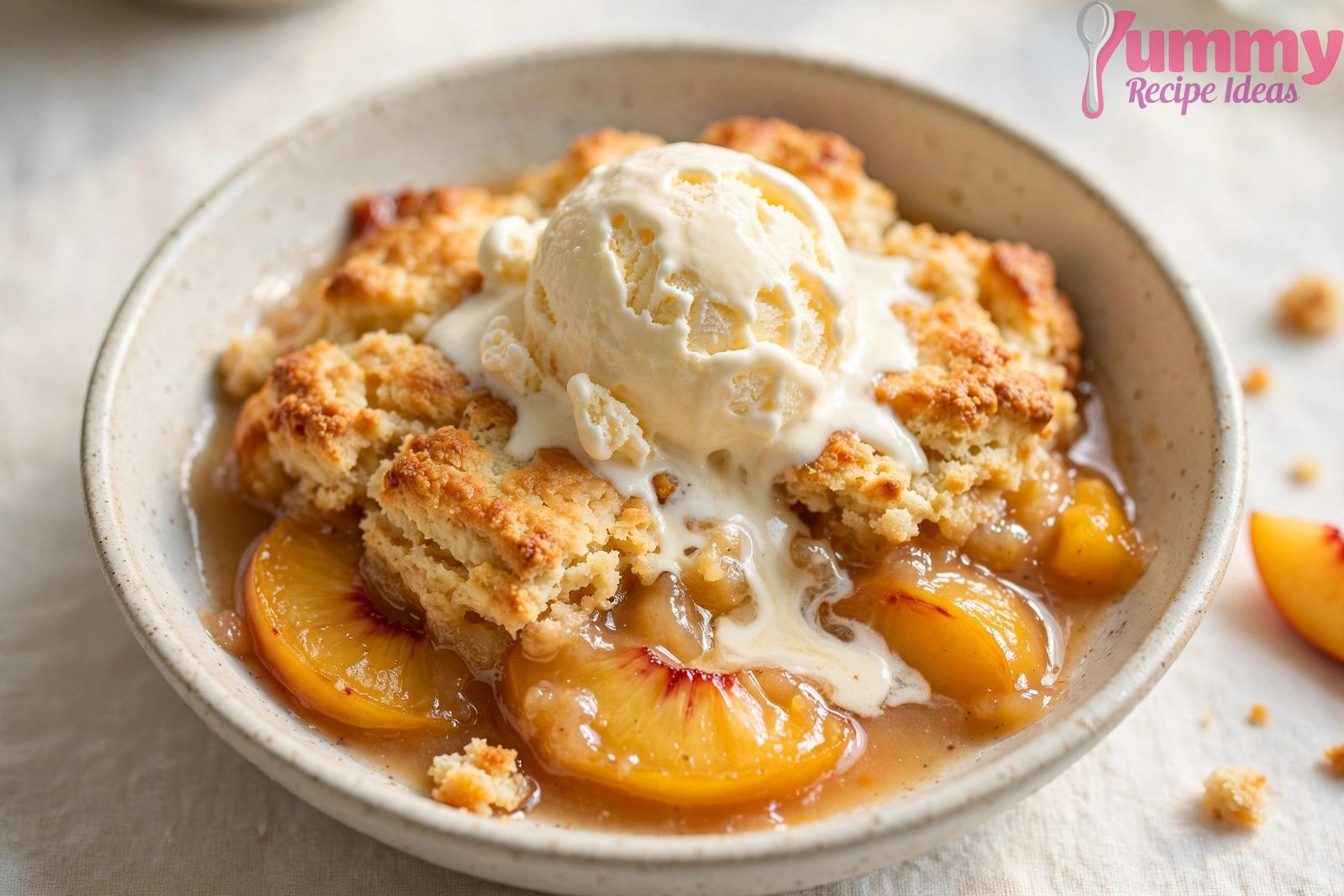
Gordon Ramsay Peach Cobbler

Gordon Ramsay Peach Cobbler Recipe
Ingredients
Equipment
Method
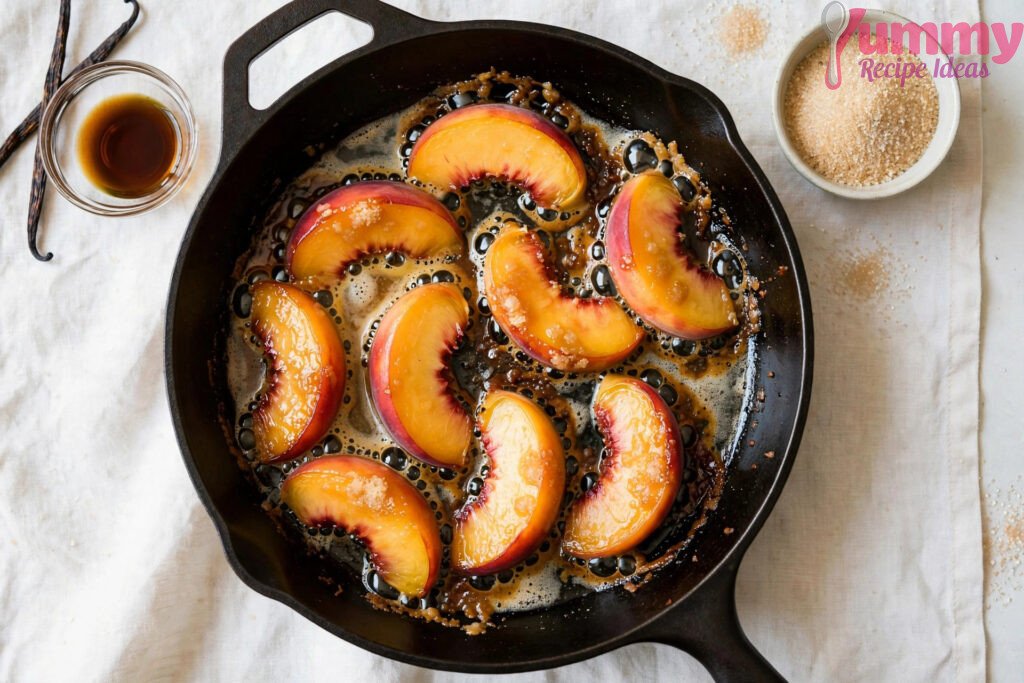
- Roast the peaches: Heat the oven to 400°F (200°C). Butter a 2-quart baking dish. Melt the 2 tablespoons of butter in a wide skillet over medium-high heat. Add the peach wedges and 1/4 cup sugar and cook 5 minutes, stirring, until just softened and golden at the edges. Stir in the vanilla, five-spice and lemon juice, then the cornstarch. Tip into the prepared dish.
- Rub the topping: Whisk the flour and salt in a large bowl. Rub in the cold butter with your fingertips until it looks like fine breadcrumbs, then stir through the 3 tablespoons of sugar.
- Make the dough: Make a well in the center, pour in most of the 2/3 cup of milk, and stir just until a soft dough forms, adding the last splash only if needed. Do not overwork it.
- Top the fruit: Drop rough spoonfuls of dough over the hot peaches, leaving gaps so the fruit shows through. Brush the dough with a little extra milk and scatter over the demerara sugar.
- Bake: Bake 25 to 30 minutes, until the topping is risen and golden and the filling bubbles at the edges.
- Serve: Rest 5 minutes, then serve warm with vanilla ice cream or cream.
How to Make It, Step by Step
Roast the peaches
Heat the oven to 400°F (200°C) and butter a 2-quart baking dish. Melt 2 tablespoons of butter in a wide skillet or sauté pan over medium-high heat. Add the peach wedges and 1/4 cup of sugar and cook, stirring now and then, for about 5 minutes until the peaches soften at the edges and the butter turns golden. Stir in the vanilla, five-spice, and lemon juice, then sprinkle over the cornstarch and stir until it disappears. Tip everything into the prepared dish.
Rub the topping
Cold butter is the key to a light topping. Whisk the self-raising flour and salt in a large bowl, then rub in the 3 1/2 tablespoons of cold diced butter with your fingertips until the mixture looks like fine breadcrumbs. Stir through the 3 tablespoons of sugar. You want small, even crumbs — big lumps of butter will melt into holes, and over-rubbed butter will make the topping dense.
Make the dough
Bring it together lightly and stop. Make a well in the center of the flour mixture and pour in most of the 2/3 cup of milk. Stir with a fork just until a soft, shaggy dough forms, adding the last splash of milk only if the dough looks dry. The moment it comes together, stop mixing — an overworked scone dough bakes up tough and heavy, which is the single most common cobbler fault.
Top the fruit
Drop rough spoonfuls over the hot peaches and leave gaps. Using a large spoon, drop 8 to 10 rough mounds of dough over the fruit, spacing them out so the peaches show through between them. Brush the tops of the dough lightly with a little extra milk and scatter over the demerara sugar — it melts into a crisp, crackly finish.
Bake
Bake 25 to 30 minutes until risen and golden. The topping should be puffed and deep golden, and the filling should be bubbling thickly at the edges where it shows through the gaps. If the topping is browning faster than the filling is bubbling, lay a sheet of foil loosely over the top for the last 10 minutes.
Serve
Rest 5 minutes, then serve warm. This is at its absolute best straight from the oven, with vanilla ice cream or pouring cream. The contrast of hot, jammy fruit against cold cream is the whole point of the pudding.
FAQs
Why roast the peaches before baking?
Raw peaches release a lot of water in the oven, and that water is the single reason most cobblers turn out soupy with a soggy topping. Roasting the wedges in hot butter first drives that excess moisture off and concentrates the flavor, so you get thick, jammy filling instead of a pool of juice. Ramsay uses this exact move in his deep-dish fruit pie, pan-roasting the fruit in butter and sugar to deepen it before it ever goes into the dish. The tablespoon of cornstarch stirred through at the end catches whatever juices remain, so the filling sets glossy and thick rather than runny. If your peaches are underripe and firm, give them an extra minute or two in the pan — they will soften down just fine. This one step is the difference between a good cobbler and a great one, and it only adds five minutes.
How do I keep the topping light instead of stodgy?
Three things matter. First, rub the cold butter into the flour until it is fine, even crumbs — this creates the little steam pockets that make the topping rise. Second, stop mixing the moment the dough comes together; an overworked dough turns tough and heavy, the most common cobbler fault there is. Third, drop the dough on in separate spoonfuls with gaps between them rather than spreading it into one sealed sheet. The gaps let steam escape and let the fruit bubble up, so the topping stays crisp instead of steaming itself soft. Ramsay’s scone topping is designed for exactly this: the scones absorb some of the sauce from below while remaining light and fluffy on top. Brush the tops with milk and sprinkle on the demerara sugar before baking for a finish that is crisp and crackly rather than pale and flat.
Do I need to peel the peaches?
No, and you shouldn’t. The skins hold the wedges together during the pan-roast, they add color to the finished filling, and they soften right down in the heat so you will not notice them in the finished dish. Ramsay leaves the skins on in his own fruit bakes for exactly these reasons. The only time to reconsider is if your peaches are bruised or the skins look rough — then peel just those pieces. Out of season, you can make this cobbler with well-drained tinned peaches; use two 15-oz cans, skip the added sugar since they are already sweet, and shorten the pan-roast to about 3 minutes since they are already soft.
Can I make peach cobbler ahead, and does it store well?
Be honest with yourself: this is a same-day pudding, and it is at its peak warm from the oven. The topping is crispest fresh, and once it sits on the warm fruit it slowly softens. That said, the peach filling can be roasted a day ahead — cool it, cover, and refrigerate — then tip it into the dish, top it with the fresh dough, and bake as directed. Leftovers keep covered in the fridge for up to two days; reheat in a hot 375°F oven for 10 to 12 minutes rather than the microwave, which will turn the topping gummy. The oven brings back most of the crispness. If you love fruit puddings with a crunchy topping instead, try our Gordon Ramsay Rhubarb Crumble, and for the same spiced fruit sealed inside pastry, our Gordon Ramsay Apple Pie.
What should I serve with peach cobbler?
Warm cobbler with something cold and creamy — that contrast is the whole dessert. Vanilla ice cream is the classic and honestly the best, but pouring cream works beautifully if you prefer it, and a spoonful of crème fraîche cuts the sweetness if your peaches were very ripe. For a crowd, set out both ice cream and cream and let people choose. If you are serving a full summer menu, this cobbler sits naturally after grilled food — the peaches echo the char — and it reheats well enough in the oven that you can bake it before guests arrive and warm it back through in 10 minutes. Leftover slices are excellent at room temperature the next morning with a strong cup of coffee, though the topping will have softened.
What is the difference between a cobbler and a crumble?
The topping. A cobbler is topped with spoonfuls of soft scone or biscuit dough that bake into puffy, dumpling-like mounds — the name comes from those lumps looking like a cobbled street. A crumble (or crisp) is topped with a rubble of flour, butter, and sugar, sometimes with oats, that bakes into a crunchy streusel. Cobbler topping is soft and cakey where it meets the fruit and crisp on top; crumble topping is crunchy all the way through. Both start with sweetened fruit, and both are best warm with ice cream. If you prefer the crunchy version, our Gordon Ramsay Rhubarb Crumble is the one to make.
About Yummy Recipe Ideas
Yummy Recipe Ideas takes classic chef recipes — Gordon Ramsay’s included — and reworks them for home kitchens with US measurements, honest costs, and every technique explained. No guesswork, no soggy bottoms.
