
This Gordon Ramsay baked Alaska flambe recipe takes about 40 minutes of active work plus 2 hours 30 minutes of freezing, for roughly $1.75 a serving. A dome of vanilla ice cream sits on golden pound-cake sponge, sealed inside glossy Italian meringue — and just before serving, you pour flaming cognac over it at the table. It arrives frozen solid in the middle and on fire on the outside, at about 520 calories a slice.
Ramsay has made baked Alaska twice on camera, and both versions matter here. On The F Word he built it with sponge, raspberries, and vanilla ice cream, then finished it with a cognac flambe poured over the meringue at the table — calling it “the perfect alternative to Christmas pudding.” In his Christmas special he swapped in syrup cake and Bailey’s ice cream and glazed the meringue with a blowtorch instead. This recipe follows the flambe version, the theatrical one, because the open flame at the table is the entire point of the dish — but it keeps the Christmas version’s discipline: exact sugar-syrup temperatures and a genuine two-day make-ahead plan.
The step that makes this version better than most is the syrup test. Ramsay judges his sugar syrup by eye — “big white balls of sugar flashing in and out” — which works after you have made it a hundred times and is useless the first time. This version gives you the number: 240°F, soft-ball stage, on a candy thermometer, plus what the bubbles look like when you get there. And the flambe is treated like a technique rather than a party trick: the liquor is warmed to exactly the right temperature so it ignites on the first touch of flame, with the safety rules written out instead of left to guesswork.
Made this recipe? Leave a comment and star rating below — we would love to hear how yours turned out.
Why This Baked Alaska Works
Italian meringue is the whole trick. Boiled sugar syrup streamed into whipped egg whites cooks the whites as they whip, so the meringue turns out glossy, dense, and stable — it holds its peaks for days in the freezer without weeping. Spread thick with no gaps, it becomes an insulating shell: meringue is mostly trapped air, and air barely conducts heat, so a brief pass of flame caramelizes the outside while the ice cream underneath stays rock solid. The second trick is timing. The dome is shaped and frozen rock solid before any meringue touches it, and the finished dessert goes back into the freezer for 30 minutes after coating — so you serve it at its absolute coldest, exactly when the flame is at its hottest.
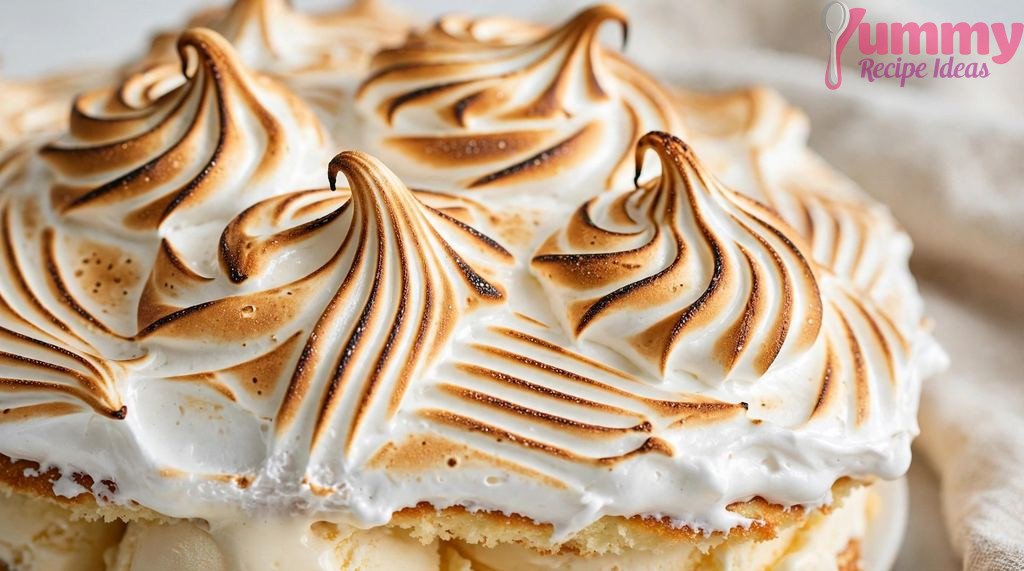
Gordon Ramsay Baked Alaska Flambe Recipe
Gordon Ramsay Baked Alaska Flambe Recipe
Ingredients
Equipment
Method
- Shape the dome: Line a 5- to 6-cup bowl with plastic wrap, leaving overhang. Soften the ice cream 10 minutes until just pliable, pack firmly into the lined bowl pressing out air gaps, smooth the top, fold the overhang over, and freeze at least 2 hours until rock solid.
- Boil the syrup: Combine the sugar and 1/3 cup water in a small heavy saucepan; stir once to wet. Bring to a boil over medium-high heat and do NOT stir. Boil 3 to 4 minutes until a candy thermometer reads 240°F (soft-ball stage) — bubbles turn thick and slow, syrup sheets off a spoon.
- Whip the meringue: While the syrup boils, whip the egg whites with the lemon juice to soft peaks. With the mixer running, stream the 240°F syrup in a thin thread into the whites. Whip on high 4 to 5 minutes until glossy, stiff, and cool; it passes the bowl-upside-down test.
- Cut the sponge: Slice the pound cake into 1/2-inch slabs and cut two 6-inch rounds. Brush one round with the 2 tablespoons of cognac, if using.
- Assemble: Set the soaked round on a serving platter. Unmold the frozen dome onto it (warm the bowl with your palms, invert, peel off plastic) and press the second round gently on top. If anything softens, freeze 10 minutes before continuing.
- Coat with meringue: Working quickly, spread the meringue over the entire dessert at least 1/2 inch thick, right down to the platter, with no gaps. Pull tall swirls and peaks; run a fork through for ridges. Freeze 30 minutes to set.
- Flambe and serve: Warm the 1/4 cup cognac until it just steams (about 120°F, never boil). At the table, pour into a warm metal ladle, ignite with a long match held away from the body, and pour the flaming liquor over the meringue. Flames die in 15 to 30 seconds; slice with a hot, dry knife and serve immediately.
Notes
How to Make It, Step by Step
Shape the ice cream dome
Line a medium bowl with plastic wrap and pack the ice cream rock-hard. Line a 5- to 6-cup bowl with plastic wrap, leaving plenty of overhang. Let 1 1/2 quarts of vanilla ice cream soften at room temperature for about 10 minutes — just pliable, never soupy — then pack it firmly into the lined bowl, pressing out every air gap. Smooth the top, fold the overhang over it, and freeze for at least 2 hours, until rock solid. Overnight is even better.
Boil the sugar syrup
Take the syrup to exactly 240°F and do not stir it. Combine the 3/4 cup plus 2 tablespoons of sugar with the 1/3 cup of water in a small heavy saucepan and stir once to wet all the sugar. Bring to a boil over medium-high heat, then stop stirring completely — stirring seeds crystals and turns the meringue grainy. Boil 3 to 4 minutes until a candy thermometer reads 240°F (soft-ball stage). No thermometer? Watch the bubbles: they turn from small and frantic to thick and slow, and the syrup falls off a spoon in a thick sheet instead of drips.
Whip the Italian meringue
Stream the hot syrup into soft-peak whites in a thin thread. While the syrup boils, whip the 3 room-temperature egg whites with the lemon juice in a stand mixer to soft peaks. With the mixer running, pour the 240°F syrup into the whites in a thin, steady stream, aiming between the whisk and the bowl so none hits the bowl wall and hardens. Then whip on high for 4 to 5 minutes until the meringue is glossy, stiff, and cool to the touch — it passes the bowl-upside-down test with nothing moving.
Cut the sponge
Two rounds, one soaked with cognac. Slice the pound cake into 1/2-inch slabs and cut two 6-inch rounds (trim and patch pieces together if needed — the meringue hides everything). Brush one round with the 2 tablespoons of cognac if you like; it perfumes the base without making it soggy.
Assemble the Alaska
Sponge, dome, sponge — work fast so nothing melts. Set the soaked sponge round on a serving platter. Unmold the frozen dome by warming the bowl with your palms for a few seconds and inverting it onto the round, then peel off the plastic. Press the second sponge round gently on top to make a sandwich. If anything starts to soften, slide the whole thing back into the freezer for 10 minutes before continuing.
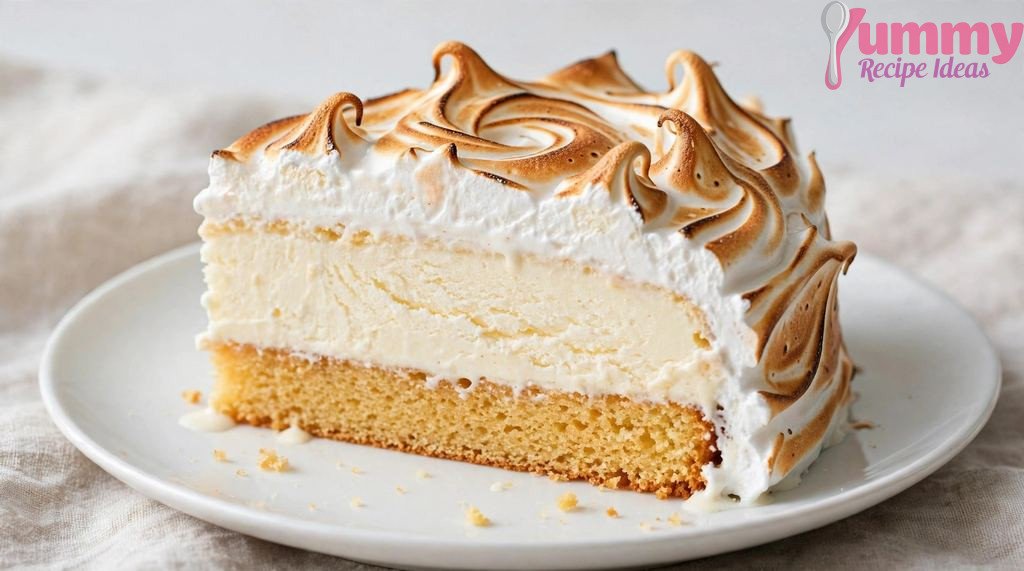
Coat with meringue
Seal every surface with no gaps — this is the insulation. Working quickly, spread the meringue over the entire dessert at least 1/2 inch thick, right down to the platter, covering every bit of sponge and ice cream. Pull the surface into tall swirls and peaks with the back of a spoon, then run a fork lightly through it for a ridged texture that catches the flame beautifully. Freeze for 30 minutes to set the meringue firm.
Flambe and serve
Warm liquor, long match, thin stream of flame. Just before serving, warm the 1/4 cup of cognac in a small saucepan until it just steams — about 120°F; never let it boil. At the table, pour it into a small warm metal ladle, light it with a long match held away from your body, and pour the flaming liquor over the meringue in a thin stream. The flames die on their own in 15 to 30 seconds. Slice immediately with a hot, dry knife and serve — frozen in the middle, caramelized on the outside.
FAQs
Why does this recipe use Italian meringue instead of regular meringue?
French meringue — the everyday kind made by beating sugar into raw egg whites — is fragile. It starts weeping and deflating within an hour, and in the freezer it collapses into a grainy puddle. Italian meringue is a different animal: the sugar is boiled into a syrup first, then streamed into the whipping whites, and the heat of the syrup cooks the egg proteins as they whip. That cooked-protein structure is why the meringue turns out glossy, marshmallow-dense, and stable enough to sit in the freezer for two days without losing a single peak — Ramsay’s exact reason for calling it “great for freezing.” It is also why the ice cream survives the flame: a dense, air-filled Italian meringue is a far better insulator than a foamy French one. Once you have nailed it here, you already know the hardest part of our Gordon Ramsay Lemon Meringue Cheesecake, which finishes with the same glossy torched cloud of meringue.
How do I know when the sugar syrup is ready?
Use a candy thermometer and stop guessing. You want 240°F — soft-ball stage — which takes 3 to 4 minutes of hard boiling for this quantity. If you don’t own a thermometer, watch the bubbles: they start small and frantic, then turn thick and slow as the water boils off, and the syrup “sheets” — falling off a spoon in a thick curtain instead of dripping. Ramsay does it by eye and describes seeing “big white balls of sugar flashing in and out”; that is exactly the thick-bubble stage. Two warnings. First, do not stir the syrup once it boils — stirring seeds crystals and the meringue turns grainy. Second, do not let it go past 245°F, or the syrup starts to caramelize and your snow-white meringue comes out yellow. Pull the pan off the heat the second it hits 240°F and pour it straight into the whipping whites.
Why does the ice cream stay frozen under a flame?
Two layers of protection, and both matter. First, the meringue is an insulator. Italian meringue is mostly trapped air, and air barely conducts heat — a thick, gap-free shell of it keeps the flame’s heat at the surface, where it caramelizes the peaks instead of traveling inward. That is why the recipe insists on coating every surface with no thin patches: one gap and the heat finds the ice cream. Second, the race is rigged in your favor by temperature. The dome is frozen rock solid, then the whole coated dessert goes back into the freezer for 30 minutes, so you serve it at its coldest; the flame lasts 15 to 30 seconds. Ice cream at 0°F against a flame that is gone in half a minute simply does not have time to melt — it softens a few millimeters at the meringue boundary, and that is all.
How do I do the flambe safely at the table?
The rules are simple and non-negotiable. Warm the 1/4 cup of cognac in a small saucepan until it just steams — about 120°F. Warm liquor ignites on the first touch of flame; cold liquor sputters and can pour unlit alcohol onto the dessert, which is the one thing you want to avoid. Never pour straight from the bottle — measure into a small metal ladle, light it with a long match held away from your body and the dessert, then pour the flaming liquor over the meringue in a thin stream. Keep hair tied back, sleeves rolled up, children and pets a step back, and clear anything flammable off the table. The flames die on their own in 15 to 30 seconds; do not blow on them, and keep a metal baking sheet or lid nearby just in case. Done this way, the flambe is pure theater — dramatic, controlled, and gone before anyone’s ice cream notices.
Can I make this ahead for a dinner party?
Yes — and Ramsay specifically recommends it. This is genuinely a two-days-ahead dessert, which is rare for something this theatrical. Shape the ice cream dome up to a week ahead, well wrapped. Assemble the whole thing, meringue coat and all, up to two days before serving: freeze it uncovered for the first hour so the meringue surface sets without sticking to anything, then wrap loosely in plastic so it doesn’t pick up freezer odors. Flambe it straight from the freezer — no thawing, no last-minute whipping, no stress. The only step you do at the table is warming and igniting the cognac, which takes two minutes. For a full holiday spread, pair it with our Gordon Ramsay Apple Pie — another dessert that rewards advance work, since it bakes the day before and reheats beautifully, leaving your oven free for the main event while the Alaska waits in the freezer.
What if I don’t have a kitchen torch — or I want to skip the alcohol?
You don’t need a torch at all — that is the point of the flambe version. The flaming cognac IS the browning; it caramelizes the meringue peaks as it burns off, which is exactly how Ramsay finished his on The F Word. If open flame at your table makes you nervous, use a kitchen torch instead, sweeping it about 4 inches from the surface until golden — or, as a last resort, slide the meringue-coated dessert under a screaming-hot broiler for 30 to 60 seconds, watching like a hawk, because meringue goes from golden to charcoal in seconds. For an alcohol-free version, skip the cognac soak and the flambe entirely and torch or broil the meringue; add 1/2 teaspoon of vanilla extract to the meringue for flavor. And if you’d rather have your drama warm than frozen, our Gordon Ramsay Peach Cobbler delivers the same crowd-pleasing theater — bubbling, jammy, and served straight from the oven.
About Yummy Recipe Ideas
Yummy Recipe Ideas takes classic chef recipes — Gordon Ramsay’s included — and reworks them for home kitchens with US measurements, honest costs, and every technique explained. No guesswork, no soggy bottoms.
