
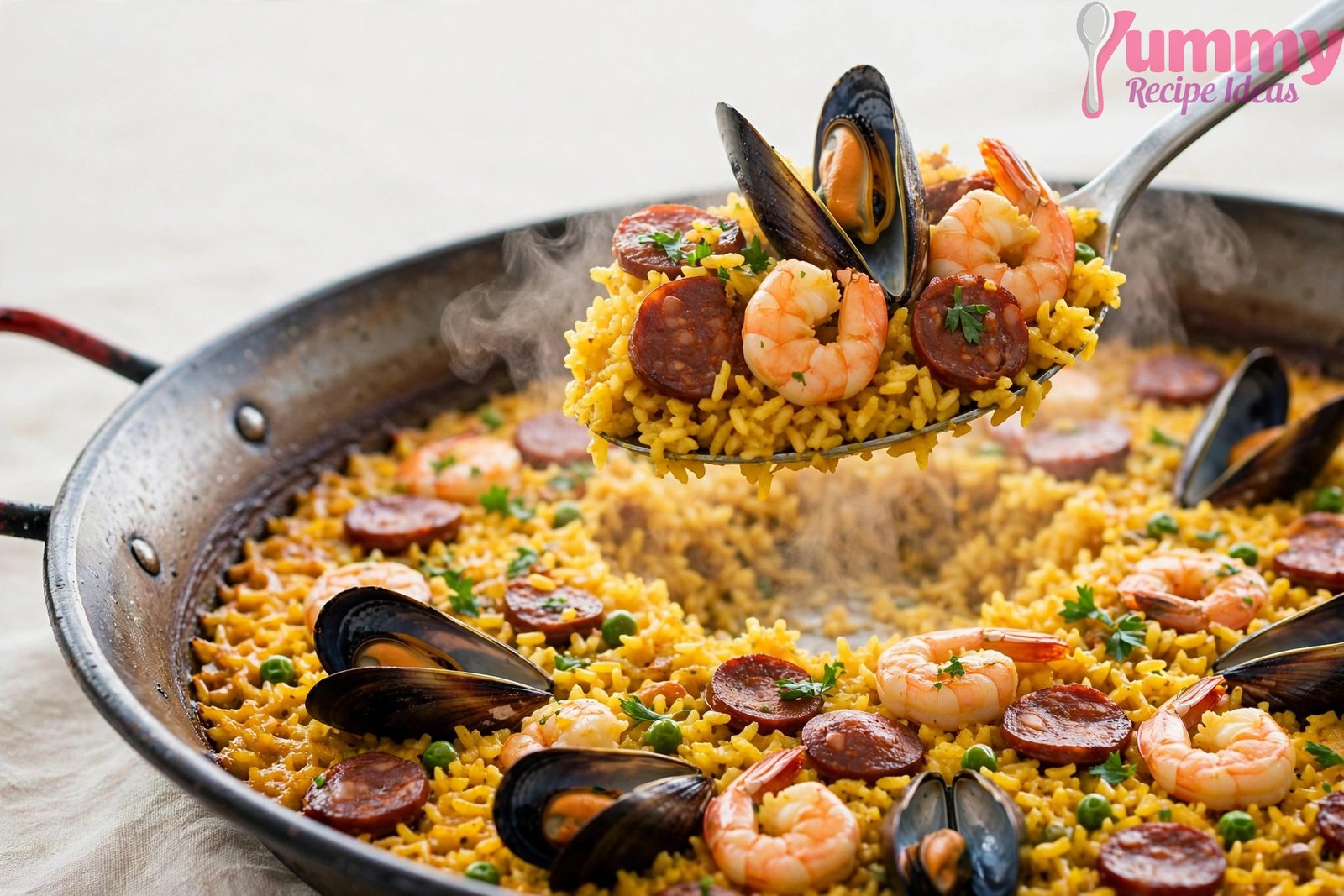
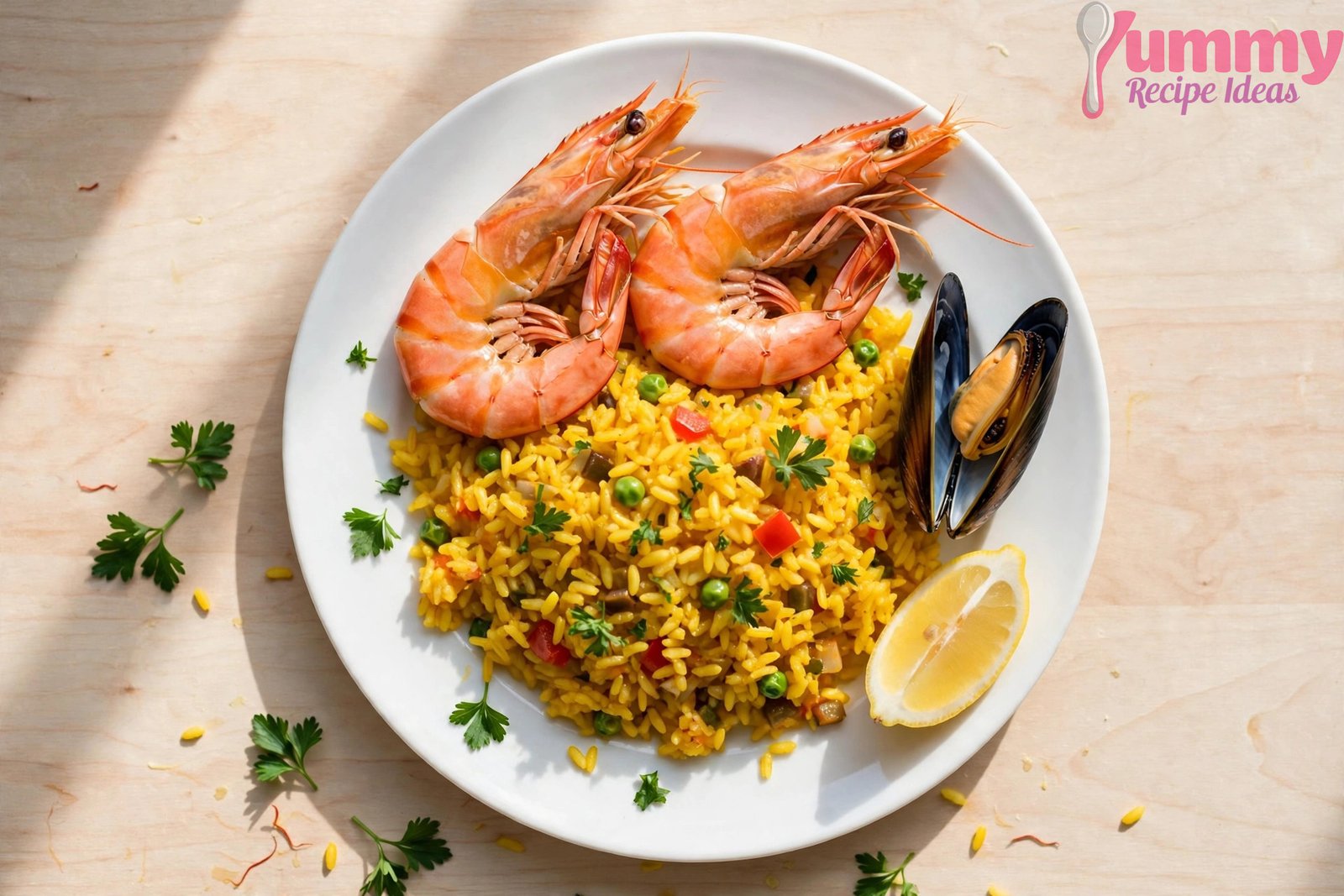
Gordon Ramsay’s paella recipe turns one wide pan into a feast: smoky chorizo, golden chicken thighs, sweet king prawns, mussels, and tender squid rings, all folded through saffron-yellow paella rice. It feeds 8 generously and goes from stovetop to table in about 65 minutes, including a 10-minute rest — at roughly $2.80 per serving.
This is Ramsay’s Sunday-lunch showpiece from the Ultimate Cookery Course and his F Word episode, where he cooks it as an alternative to the classic roast. His one-liners from that show say it all: a splash of dry sherry (or white wine) “gives it a deeper flavor,” while saffron “gives it an amazing color and a really nice flavor.” The technique that separates this from ordinary rice-and-seafood bakes is staged seafood: mussels and prawns go in first for 5 minutes, and squid goes in last — because, as Ramsay warns, squid “becomes rubbery if cooked for too long.”
Our version keeps Ramsay’s structure but adds the one thing home cooks are rarely told: how to build a proper socarrat — that caramelized, crispy rice crust on the pan bottom that Spaniards prize above all else. A final blast of high heat plus a no-stir rule in the last minutes gives you crackling bottom grains and a restaurant-grade finish, without a paella burner or any special equipment.
Cooked this recipe? Send a photo or tell us what you changed — we feature reader tweaks on the site every month.
Gordon Ramsay Paella Recipe
Recipe by Yummy Recipe Ideas · Course: Dinner · Cuisine: Spanish · Difficulty: Medium
Servings: 8 servings · Prep time: 20 minutes · Cook time: 35 minutes · Total time: 65 minutes (including 10-minute rest) · Calories: ~590 kcal per serving
One-pan paella in the Ramsay style — chicken, chorizo, and mixed seafood layered over saffron rice, finished with a crisp socarrat crust and rested under foil for 10 minutes so every grain is infused. Serves 8 at about $2.80 per serving.
Ingredients
For the sofrito base:
- 2 tbsp olive oil
- 1 large yellow onion, chopped (about 1 1/2 cups)
- 1 large red bell pepper, deseeded and diced
- 4 garlic cloves, thinly sliced
- 6 oz cooking chorizo, sliced into 1/4-inch rounds
- 1 tsp smoked paprika
For the rice:
- 1 1/2 lb boneless, skinless chicken thighs, cut into bite-size pieces
- 2 1/2 cups paella (bomba) rice
- 1/2 cup dry white wine
- 4 cups hot chicken stock
- 1/2 tsp saffron threads
- 1 (14.5 oz) can diced tomatoes, undrained
- 1 1/2 tsp kosher salt, plus more to taste
- 1/2 tsp freshly ground black pepper
For the seafood:
- 20 mussels, scrubbed and debearded (discard any that won’t close when tapped)
- 12 oz raw king prawns, peeled and deveined, tails on
- 8 oz squid, cleaned and sliced into 1/2-inch rings
- 1 1/2 cups frozen peas
To serve:
- 1/4 cup chopped flat-leaf parsley
- 2 lemons, cut into wedges
Directions
- Soften the base: Heat the olive oil in a 15-inch paella pan or large deep skillet over medium heat. Add the onion and bell pepper and cook 4-5 minutes, stirring occasionally, until soft. Stir in the garlic and cook 1 minute more, then add the chorizo and smoked paprika and cook 2-3 minutes until the chorizo edges crisp and stain the oil a deep red.
- Seal the chicken: Season the chicken pieces with 1 tsp of the salt and the black pepper. Push the base to the sides of the pan, add the chicken to the hot center, and sear 4-5 minutes over medium-high heat, turning, until lightly browned on the edges. Stir everything together.
- Toast the rice and add the wine: Add the paella rice and stir for 2 minutes so every grain is coated in the chorizo oil and smells toasty. Pour in the white wine and simmer 3-4 minutes, scraping the pan, until the alcohol smell cooks off.
- Bloom the saffron and add the stock: Stir the saffron threads into the hot stock, then pour the stock into the pan along with the diced tomatoes and the remaining 1/2 tsp salt. Stir once to level the rice, bring to a lively simmer, then lower the heat to medium-low.
- Simmer undisturbed: Cook 12 minutes without stirring — this is what builds the crust. Rotate the pan a quarter-turn every 3-4 minutes if your burner has hot spots, but do not stir the rice.
- Stage the seafood: Nestle the mussels and prawns into the top of the rice and cook 5 minutes until the prawns are pink and opaque and the mussels have opened. Discard any mussels that stay shut. Scatter the squid rings and peas over the top and cook 2-3 minutes more, just until the squid turns opaque — any longer and it goes rubbery.
- Crisp the socarrat: Raise the heat to high for 60-90 seconds. Listen for a faint crackling from the pan bottom — that is the socarrat forming. Do not stir.
- Rest and serve: Take the pan off the heat, cover tightly with foil, and rest 10 minutes so the rice finishes absorbing the stock and the seafood juices settle through. Shower with parsley and serve straight from the pan with lemon wedges for squeezing.
FAQs
Why does Ramsay add the seafood in stages?
Every piece of seafood cooks at a different speed, and dumping them all in together is how you get rubbery squid alongside raw prawns. Mussels and prawns need roughly 5 minutes of gentle heat to open and turn opaque; squid needs only 2-3 minutes, and past that it tightens into chewing gum. So Ramsay builds the rice first, then presses the mussels and prawns into the top of the rice so they steam as the last of the stock absorbs, and finally scatters the squid and peas over the top for the final couple of minutes. The same staged-delicate-first logic shows up in his Gordon Ramsay Bouillabaisse Recipe, where firm fish goes in early and delicate shellfish at the end. Watch the squid, not the clock: the second the rings turn opaque white, they are done — pull the pan off the heat rather than giving them “one more minute,” because they keep cooking in the covered 10-minute rest that follows.
Can you use long-grain rice instead of paella rice?
Yes — Ramsay himself says long-grain is the substitute when you cannot find paella rice — but it changes the dish. Bomba and calasparra rice absorb roughly three times their weight in stock while keeping the grains separate and firm; that is what lets every grain taste like saffron, chorizo, and seafood instead of just tasting of rice. Long-grain absorbs less liquid and goes soft if you keep the full stock quantity, so reduce the stock by about 1 cup and start checking 3-4 minutes earlier. Also note that the socarrat crust is much harder to build with long-grain, because the grains release more starch and stick instead of caramelizing. If rice technique is your weak point, practice with his Gordon Ramsay Pilau Rice Recipe first — the no-peek lid method there teaches the patience this paella’s rest step requires. Buy real bomba rice once and you will understand why Spaniards never substitute.
Can you make a seafood-only version?
Absolutely — this is actually how paella de mariscos is served across coastal Spain. Drop the chicken and chorizo entirely, swap the chicken stock for fish stock or light seafood stock, and double the seafood: add firm white fish chunks (they go in with the mussels and prawns), keep the squid for last, and finish with the same saffron, smoked paprika, and tomatoes. Without the chorizo’s paprika-rich fat you lose some depth, so bump the smoked paprika to 1 1/2 tsp and add an extra 2 tbsp of olive oil to compensate. The result is lighter and brighter — a better summer dish than the original. If you enjoy this style of staged seafood cooking, try his Gordon Ramsay Lobster Wellington Recipe next: it uses the same “delicate shellfish at the very end” timing discipline, wrapped in pastry instead of rice. One note: fish stock makes the dish richer and fishier, so if you prefer a cleaner flavor, use half fish stock and half chicken stock.
What is socarrat, and how do you actually get it at home?
Socarrat is the thin layer of rice that caramelizes against the hot pan bottom — crunchy, deeply savory, and considered the best part of the paella by Spaniards. Three things create it: a wide thin layer of rice (never a deep, soupy pot), no stirring in the final 10 minutes, and a short blast of high heat at the end. That is why this recipe instructs you to stop stirring after the rice simmers, and why the 60-90 second high-heat finish matters — you will hear a faint crackling as the bottom grains toast. The common mistake is adding too much liquid: if the rice is swimming at the 12-minute mark, lower the heat and let it absorb before staging the seafood, because a wet base steams instead of crisps. Another mistake is fear: home cooks hear the crackling and kill the heat. Trust your ears but not your panic — 90 seconds maximum, then foil and rest. Once you taste a proper socarrat you will never stir paella again.
How much does this paella cost to make, and is it worth the saffron?
At typical US grocery prices, this recipe costs roughly $20-24 total — about $2.50-3.00 per serving for 8 generous portions. The seafood is the main cost (prawns and mussels), and saffron adds about $1-1.50 for the half teaspoon. A quality seafood restaurant paella runs $25-35 per plate, so you are feeding eight people a restaurant-grade dish for the price of one restaurant order. On the saffron question: yes, it is worth it, and there is no real substitute. Turmeric gives color but a flat, earthy note; saffron gives the floral, almost honeyed aroma that defines paella’s flavor. A half teaspoon is the right dose for this rice quantity — more makes it bitter, less and you are just eating yellow rice. Buy threads (not powder, which is often cut with filler), crumble them into the hot stock, and let them bloom 2-3 minutes before the stock hits the pan. That blooming step is the difference between saffron that colors and saffron that perfumes.
Does paella store well, and can you freeze it?
The rice base keeps beautifully; the seafood does not. Cooked prawns and mussels turn tough and squid chewy when refrigerated overnight, so if you know you will have leftovers, portion out the rice-and-chicken-chorizo base before staging the seafood and refrigerate that. The base keeps 3 days in an airtight container and reheats perfectly in a hot pan with a splash of stock (never the microwave — it steams the socarrat into mush). Then sear fresh prawns and steam fresh mussels to top it. Already-mixed leftovers are still worth keeping: cool within an hour, refrigerate up to 2 days, and reheat in a covered skillet with 2-3 tbsp of stock over medium heat. Freezing is not recommended once the seafood is in — thawed mussels and prawns are unpleasant — but the rice base — chorizo, chicken, rice, and absorbed stock, made without the seafood — freezes fine for up to 2 months. Thaw overnight in the fridge, reheat in the pan, then stage fresh seafood as usual. For another make-ahead rice dish with similar discipline, see his Gordon Ramsay Thai Green Curry Recipe rice notes.
About the Author
Yummy Recipe Ideas — tested, US-kitchen recipes built from the world’s best-known chefs’ methods, rewritten in cups, tablespoons, and dollars so they actually work in an American home kitchen. Every recipe is accuracy-checked A to Z before publishing.
Gordon Ramsay Paella Recipe
Ingredients
Equipment
Method
- Soften the base: Heat the olive oil in a 15-inch paella pan or large deep skillet over medium heat. Add the onion and bell pepper and cook 4-5 minutes until soft. Stir in the garlic and cook 1 minute, then add the chorizo and smoked paprika and cook 2-3 minutes until the chorizo edges crisp.
- Seal the chicken: Season the chicken with 1 tsp of the salt and the black pepper. Push the base to the sides of the pan, add the chicken to the hot center, and sear 4-5 minutes over medium-high heat, turning, until lightly browned. Stir everything together.
- Toast the rice and add the wine: Add the paella rice and stir 2 minutes so every grain is coated in the chorizo oil. Pour in the white wine and simmer 3-4 minutes until the alcohol smell cooks off.
- Bloom the saffron and add the stock: Stir the saffron threads into the hot stock, then pour it into the pan with the diced tomatoes and the remaining 1/2 tsp salt. Stir once to level the rice, bring to a lively simmer, then lower the heat to medium-low.
- Simmer undisturbed: Cook 12 minutes without stirring so the crust can form. Rotate the pan a quarter-turn every 3-4 minutes on uneven burners, but do not stir the rice.
- Stage the seafood: Nestle the mussels and prawns into the top of the rice and cook 5 minutes until the prawns are pink and opaque and the mussels have opened; discard any mussels that stay shut. Scatter the squid rings and peas over the top and cook 2-3 minutes more, just until the squid turns opaque.
- Crisp the socarrat: Raise the heat to high for 60-90 seconds. Listen for a faint crackling from the pan bottom, then take off the heat. Do not stir.
- Rest and serve: Cover the pan tightly with foil and rest 10 minutes. Shower with parsley and serve straight from the pan with lemon wedges.
Notes
- Staged seafood is the key technique: mussels and prawns need 5 minutes, squid needs only 2-3 minutes or it turns rubbery.
- Do not stir the rice after the wine step – undisturbed rice plus the final high-heat blast builds the caramelized socarrat crust.
- Discard any mussels that do not open during cooking and any that do not close when tapped before cooking.
- For a seafood-only version, drop the chicken and chorizo, use fish stock, and double the seafood; bump smoked paprika to 1 1/2 tsp.
- Leftovers: cool within 1 hour and refrigerate up to 2 days; reheat in a skillet with a splash of stock, not the microwave.
