
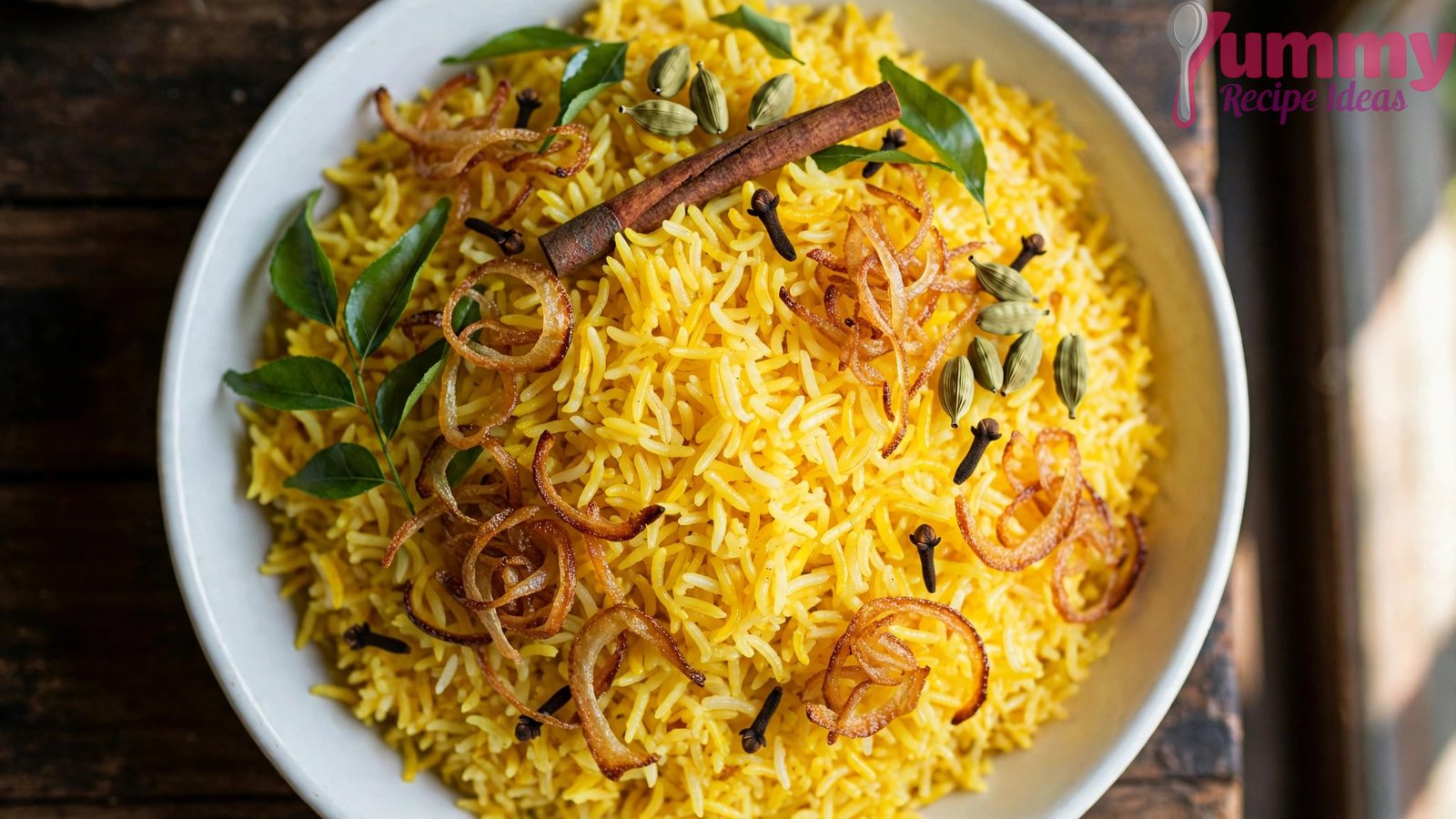
Restaurant curry night at home is only ever as good as the rice underneath it — and this Gordon Ramsay pilau rice is done in 23 minutes, with every single grain separate, fluffy and stained a deep golden yellow. It costs about $1.25 per serving, feeds four as a side, and asks for almost nothing more than basmati, saffron and a few whole spices you probably already own.
The dish comes from Ramsay’s Quick and Delicious, where it was built for exactly this job: a great addition to curry night that can hold its own next to the boldest vindaloo without competing with it. Basmati is bloomed in ghee with cinnamon, cardamom and cloves, then simmered in chicken stock until the grains turn golden and smell like a proper Indian kitchen — no takeaway box required.
The technique that changes everything is one Ramsay insists on: grind the saffron threads to a powder in a pestle and mortar before they go anywhere near the pan. Whole threads bleed color unevenly and leave half your rice pale; a pinch of saffron powder colors every grain evenly and gives the whole pot that restaurant-golden glow. It is a five-second step with a make-or-break payoff, and it is the difference between decent rice and the kind people ask about.
If you make this one, tell me in the comments — I’d love to hear which curry you served it with.
Gordon Ramsay Pilau Rice Recipe
This easy Indian side dish — 5 minutes prep, 18 minutes cook, 23 minutes total — turns basmati into golden, fluffy, restaurant-style pilau rice with saffron, ghee and whole spices: a perfect partner for any curry night.
Ingredients
For the pilau:
- 4 tablespoons ghee (or unsalted butter)
- 1 large onion, finely sliced
- 2 cups basmati rice (about 14 oz)
- 1 pinch saffron threads (about 20 threads)
- 1 small handful fresh curry leaves (about 12 leaves)
- 3 1/3 cups chicken stock
- 1 cinnamon stick
- 5 green cardamom pods
- 5 whole cloves
- 1 teaspoon sea salt
Directions
- Grind the saffron: Drop the saffron threads into a pestle and mortar and grind them to a fine powder. This is the step that colors every grain golden — whole threads stain unevenly, so never skip the grinding.
- Rinse the rice: Place the basmati in a large bowl, cover with cold water and swish with your hand. Drain and repeat until the water runs clear, then drain well in a sieve. Washing off the surface starch is what keeps the grains separate instead of sticky.
- Fry the onion: Melt the ghee in a large, heavy-bottomed pan or Dutch oven over medium heat. Add the sliced onion and cook, stirring often, for 5 to 8 minutes until soft, sweet and just starting to turn golden at the edges.
- Bloom the spices: Stir in the cinnamon stick, cardamom pods, cloves and curry leaves. Cook for 1 minute, stirring, until the leaves crackle and the whole spices smell deeply fragrant — this toasting step wakes up their oils.
- Toast the rice: Add the drained rice and the ground saffron. Stir gently for 1 to 2 minutes so every grain is coated in the spiced ghee and picks up an even golden color.
- Simmer low and slow: Pour in the chicken stock and stir in the sea salt. Bring to a gentle boil, then immediately reduce the heat to low, cover with a tight-fitting lid and simmer for 12 to 15 minutes. Do not lift the lid — the trapped steam is what finishes the rice.
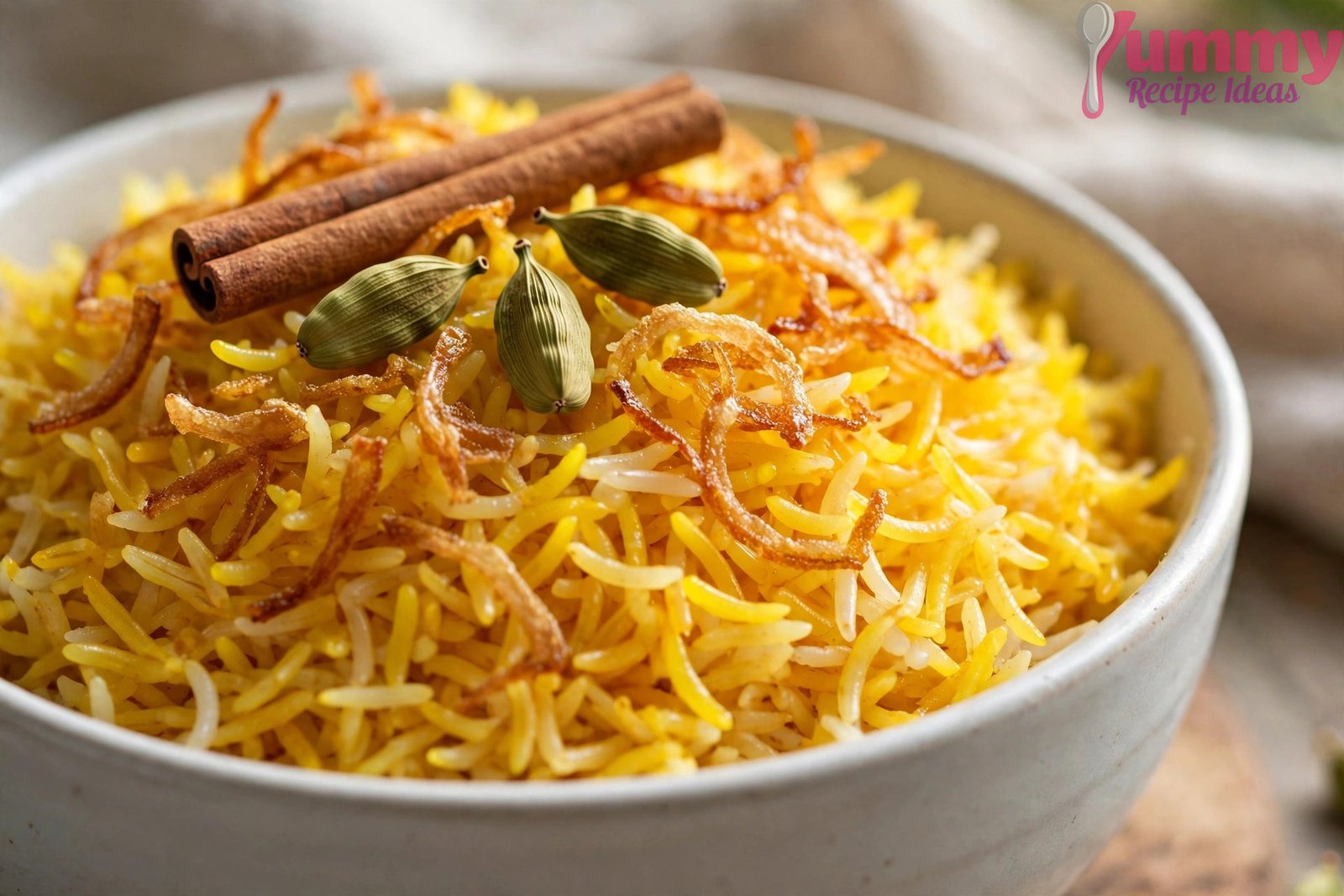
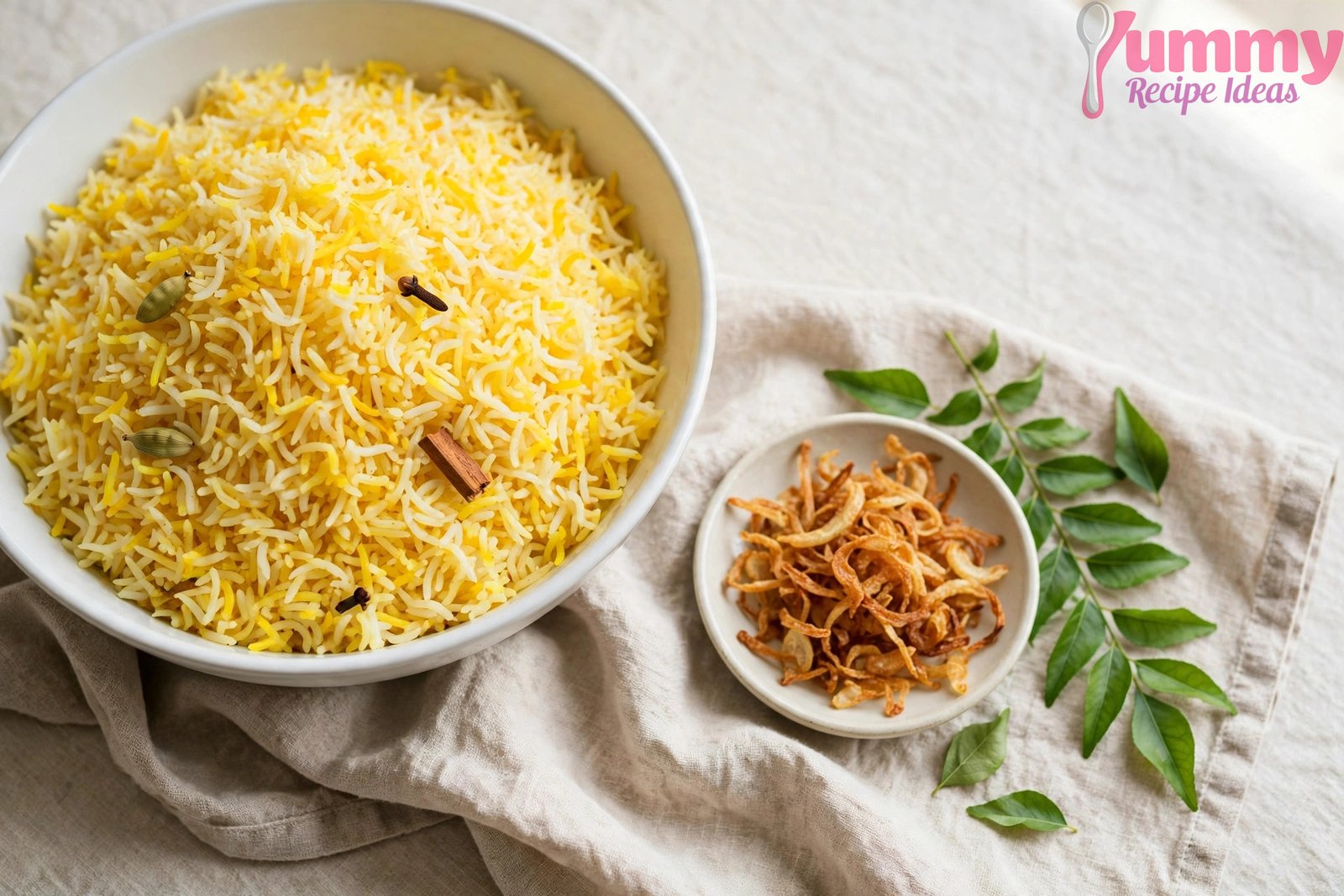
- Rest, then fluff: Take the pan off the heat and let it rest, still covered, for 5 minutes. Remove the lid, discard the cinnamon stick, and fluff the rice gently with a fork, lifting rather than stirring so the grains stay separate. Serve hot.
Frequently Asked Questions
Can I use butter instead of ghee in pilau rice?
Yes — unsalted butter is a fine stand-in and the recipe gives the swap right in the ingredients list. Ghee is the traditional choice because its higher smoke point lets the onion fry hard without browning the milk solids, and its nutty flavor leans into the dish’s Indian roots. If you use butter, keep the heat at a steady medium and pull the onion a shade earlier. Either way, keep the fat amount the same — 4 tablespoons — because that is what coats each grain and keeps them separate. If you love rice sides in general, our Gordon Ramsay rice guide runs through his other rice techniques, including plain boiled basmati done properly.
Why is my pilau rice sticky or mushy?
Sticky pilau almost always traces back to one of three mistakes. First, the rice was not rinsed enough — basmati’s surface starch glues grains together, so wash until the water runs completely clear, not just once or twice. Second, the stock ratio was off or the heat ran too high; the 3 1/3 cups of stock to 2 cups of rice here is calibrated for a low simmer, and boiling hard makes the bottom grains break down into mush. Third, the lid was lifted mid-cook, releasing the steam the grains need to finish. Follow the rest step too: those 5 minutes off the heat let the last of the moisture distribute evenly. For a completely different approach to rice as a side, see our Gordon Ramsay cauliflower cheese recipe — it pairs beautifully with this pilau for a fuller spread.
Do I really need to grind the saffron?
It is the single most impactful step in the recipe. Saffron threads are dried flower stigmas, and when you drop them in whole, each thread bleeds color in a tight halo around itself — you end up with streaky rice, some grains orange, most pale. Ground to a powder in a pestle and mortar, the same pinch disperses through the stock instantly and stains every grain an even golden yellow. It also releases more aroma, because the powder’s surface area is far greater. No pestle? Put the threads in a small bowl and crush them with the back of a spoon — close enough. Buy threads, not pre-ground powder, since ground saffron is frequently adulterated; a small jar of good threads lasts for dozens of pilau pots.
Can I make pilau rice vegetarian or vegan?
Easily. The recipe as written uses chicken stock, but vegetable stock swaps in one-for-one and the dish stays every bit as fragrant — look for a rich, golden vegetable stock rather than a thin one, since the stock carries the rice’s main savory flavor. For a fully vegan version, keep the ghee swap in mind: ghee is clarified butter, so replace it with a neutral coconut oil or a good vegan butter at the same 4-tablespoon measure. Everything else — the rice, saffron, curry leaves and whole spices — is already plant-based. The cardamom pods and cloves do double duty here, giving the vegetable-stock version the warmth it might otherwise miss.
How do I store and reheat leftover pilau rice?
Cool the rice within an hour of cooking — spread it on a wide tray so it cools fast — then refrigerate in a sealed container for up to 3 days. Rice and food safety deserve respect: never leave cooked rice at room temperature overnight, and reheat only once. To reheat, sprinkle a tablespoon of water over the rice, cover, and microwave for 2 to 3 minutes, or steam it in a covered pan over low heat until piping hot all the way through. The whole spices (cinnamon stick, cardamom pods, cloves) can be fished out before storing. Leftover pilau also fries brilliantly: day-old grains make an excellent quick fried rice with a beaten egg and a splash of soy sauce.
About the author: This recipe is part of our Gordon Ramsay recipe collection at Yummy Recipe Ideas — tested, step-by-step recreations of Ramsay’s best-loved dishes, adapted for US kitchens with cups, tablespoons and grocery-store ingredients.
Gordon Ramsay Pilau Rice Recipe
Ingredients
Method
- Grind the saffron: Drop the saffron threads into a pestle and mortar and grind them to a fine powder. This is the step that colors every grain golden — whole threads stain unevenly, so never skip the grinding.
- Rinse the rice: Place the basmati in a large bowl, cover with cold water and swish with your hand. Drain and repeat until the water runs clear, then drain well in a sieve. Washing off the surface starch is what keeps the grains separate instead of sticky.
- Fry the onion: Melt the ghee in a large, heavy-bottomed pan or Dutch oven over medium heat. Add the sliced onion and cook, stirring often, for 5 to 8 minutes until soft, sweet and just starting to turn golden at the edges.
- Bloom the spices: Stir in the cinnamon stick, cardamom pods, cloves and curry leaves. Cook for 1 minute, stirring, until the leaves crackle and the whole spices smell deeply fragrant — this toasting step wakes up their oils.
- Toast the rice: Add the drained rice and the ground saffron. Stir gently for 1 to 2 minutes so every grain is coated in the spiced ghee and picks up an even golden color.
- Simmer low and slow: Pour in the chicken stock and stir in the sea salt. Bring to a gentle boil, then immediately reduce the heat to low, cover with a tight-fitting lid and simmer for 12 to 15 minutes. Do not lift the lid — the trapped steam is what finishes the rice.
- Rest, then fluff: Take the pan off the heat and let it rest, still covered, for 5 minutes. Remove the lid, discard the cinnamon stick, and fluff the rice gently with a fork, lifting rather than stirring so the grains stay separate. Serve hot.
