
This Gordon Ramsay pizza dough recipe makes two blistered-crust pizzas from just 5 ingredients, with about 15 minutes of hands-on work plus a 90-minute rise — for roughly $0.70 a pizza. It is the Street Pizza method from Gordon Ramsay Restaurants: a properly kneaded dough that you sear in a screaming-hot frying pan and finish under the grill, so you get a leopard-spotted, puffy crust without a pizza oven.
The recipe comes from Ramsay’s Street Pizza kitchens and the YouTube video — watched more than 6.6 million times — where he cooks a Margherita in a frying pan. Three technique rules carry the whole thing. First, the salt goes in LAST, because salt kills yeast on contact. Second, you knead for a full 8 to 10 minutes, not a quick two-minute mix, because that is what builds the gluten for a chewy, airy crumb. Third, the frying-pan method: sear the base in the pan, add your toppings, then finish under a hot grill to mimic pizza-oven heat from above.
What separates this from the average homemade dough recipe is exactly those details. Most recipes throw everything in a bowl at once — salt landing straight on the yeast, which weakens the rise before it starts — and call two minutes of kneading enough, which gives you a dense, bready base instead of a chewy one. The restaurant version goes further with 00 flour and an 8-hour prove, and this recipe notes how to do that too. But even the quick version, made with strong bread flour from any supermarket, will out-crust most takeaways.
Made this recipe? Leave a comment and star rating below — we would love to hear how yours turned out.
Why This Pizza Dough Works
Good pizza dough is really just three things handled correctly: yeast kept alive, gluten built up, and heat applied hard. The salt-last rule protects the yeast at the one moment it is vulnerable — the initial mix, when dry salt sitting directly on dry yeast can draw out its moisture and weaken the rise. Adding the salt after the shaggy dough has formed means the yeast is already hydrated and working. Then the 8-to-10-minute knead does the structural work: it develops the gluten network that traps the gas the yeast produces, which is what gives you an open, airy crumb and a rim that puffs instead of sulking flat.
And the frying-pan finish is the clever bit for home ovens. A home oven tops out around 500°F, nowhere near a pizza oven’s 900°F, so a pizza baked on a tray often has a pale, soft base. Searing the base in a hot oiled frying pan first sets and crisps it, and the grill blast from above blisters the rim and melts the toppings fast. The whole dough costs about $1.40 to make — roughly $0.70 a pizza — which is the cheapest upgrade your pizza night will ever get.
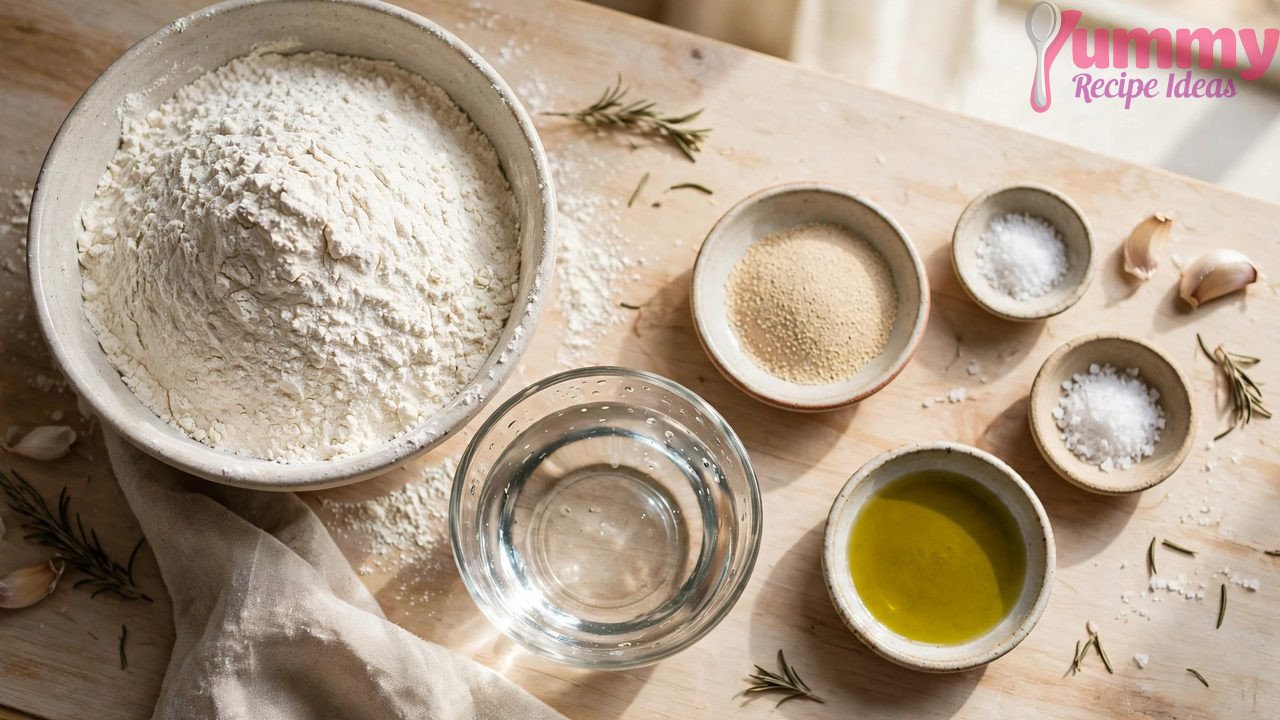
Gordon Ramsay Pizza Dough
Gordon Ramsay Pizza Dough Recipe
Ingredients
Equipment
Method
- <strong>Mix the flour and yeast:</strong> Put 3 1/3 cups of strong white bread flour and 1 teaspoon of instant dry yeast in a large mixing bowl and stir to combine. Add 1 cup of lukewarm water and 2 teaspoons of olive oil, and mix with a wooden spoon until a shaggy dough comes together with no dry flour left at the bottom.
- <strong>Add the salt last and knead:</strong> Sprinkle in 2 teaspoons of sea salt — after the dough has formed, never directly onto the dry yeast. Knead on a lightly floured surface 8 to 10 minutes, pushing with the heel of your hand, folding back, and turning, until smooth, elastic, and springy. It is ready when a small stretched piece passes the windowpane test.
- <strong>Let it rise:</strong> Shape the dough into a smooth ball and place it in a lightly oiled bowl, turning once to coat. Cover with a damp tea towel or plastic wrap and leave in a warm, draft-free spot about 1 hour 30 minutes, until doubled in size and puffy.
- <strong>Divide and shape the bases:</strong> Turn the dough out, knock it back gently, and divide into 2 equal pieces. Shape each into a tight ball and rest 10 minutes under the towel so the gluten relaxes. Stretch each ball into a 10- to 12-inch round on a floured surface, leaving a puffy 1-inch rim untouched.
- <strong>Cook it like Street Pizza:</strong> Heat a heavy oven-safe frying pan over high heat with a slick of olive oil until lightly smoking. Lay in one base and sear 2 to 3 minutes until the underside is golden and set. Flip, quickly add sauce and toppings, and slide under a preheated hot grill 2 to 3 minutes until the rim is puffed and blistered. Repeat with the second base.
How to Make It, Step by Step
Mix the flour and yeast
Keep the salt out of the bowl for now. Put 3 1/3 cups (14 oz) of strong white bread flour and 1 teaspoon of instant dry yeast in a large mixing bowl and stir to combine. Add 1 cup of lukewarm water and 2 teaspoons of extra virgin olive oil, and mix with a wooden spoon until a shaggy, rough dough comes together with no dry flour left at the bottom of the bowl. If it feels very dry, add water a tablespoon at a time; if it is soupy, dust in a little more flour.
Add the salt last and knead
This is the most important 10 minutes of the recipe. Sprinkle in 2 teaspoons of sea salt now — after the dough has formed, never directly onto the dry yeast — and knead on a lightly floured surface for 8 to 10 minutes. Push the dough away with the heel of your hand, fold it back, and turn it; repeat until it is smooth, elastic, and springs back when poked. The windowpane test tells you it is ready: stretch a small piece thin — if you can see light through it without it tearing, the gluten is developed.
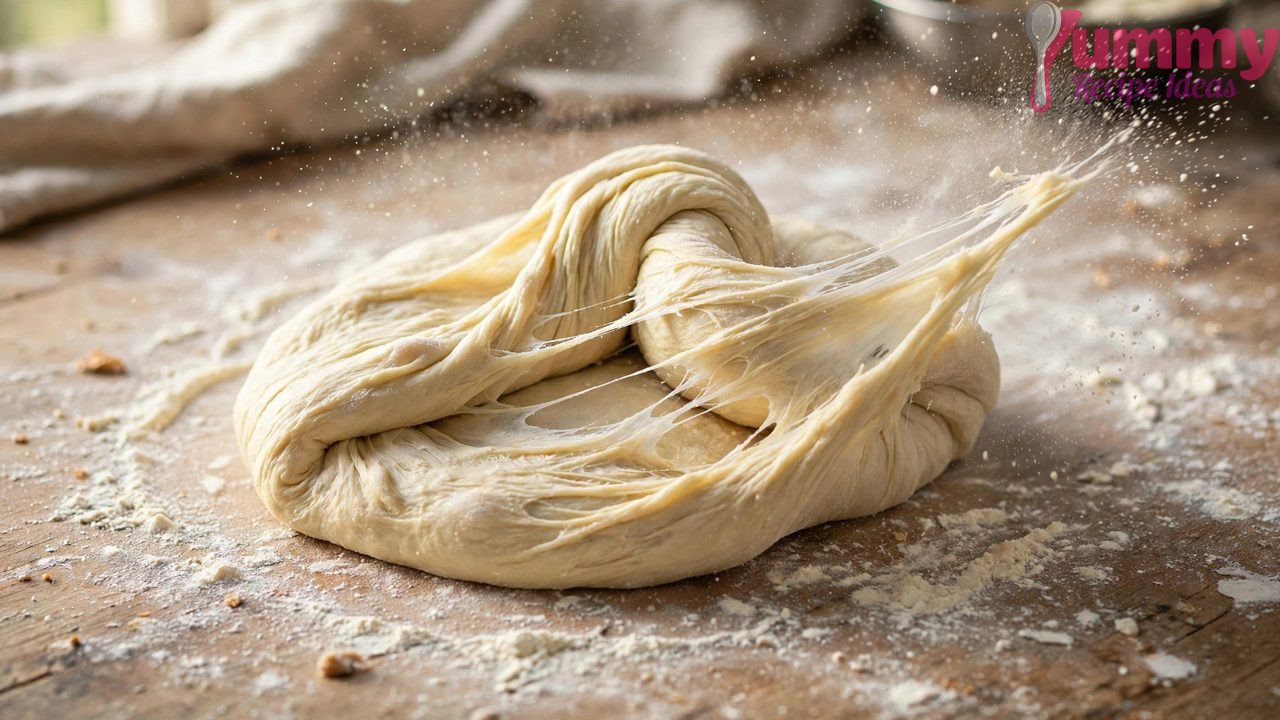
Let it rise
Warm, draft-free, and left alone. Shape the dough into a smooth ball, place it in a lightly oiled bowl, and turn it once to coat. Cover with a damp tea towel or plastic wrap and leave in a warm spot for about 1 hour 30 minutes, until doubled in size and puffy. If your kitchen is cold, the rise will take longer — go by the look and feel, not the clock. A properly risen dough holds a gentle dent when poked instead of springing straight back.
Divide and shape the bases
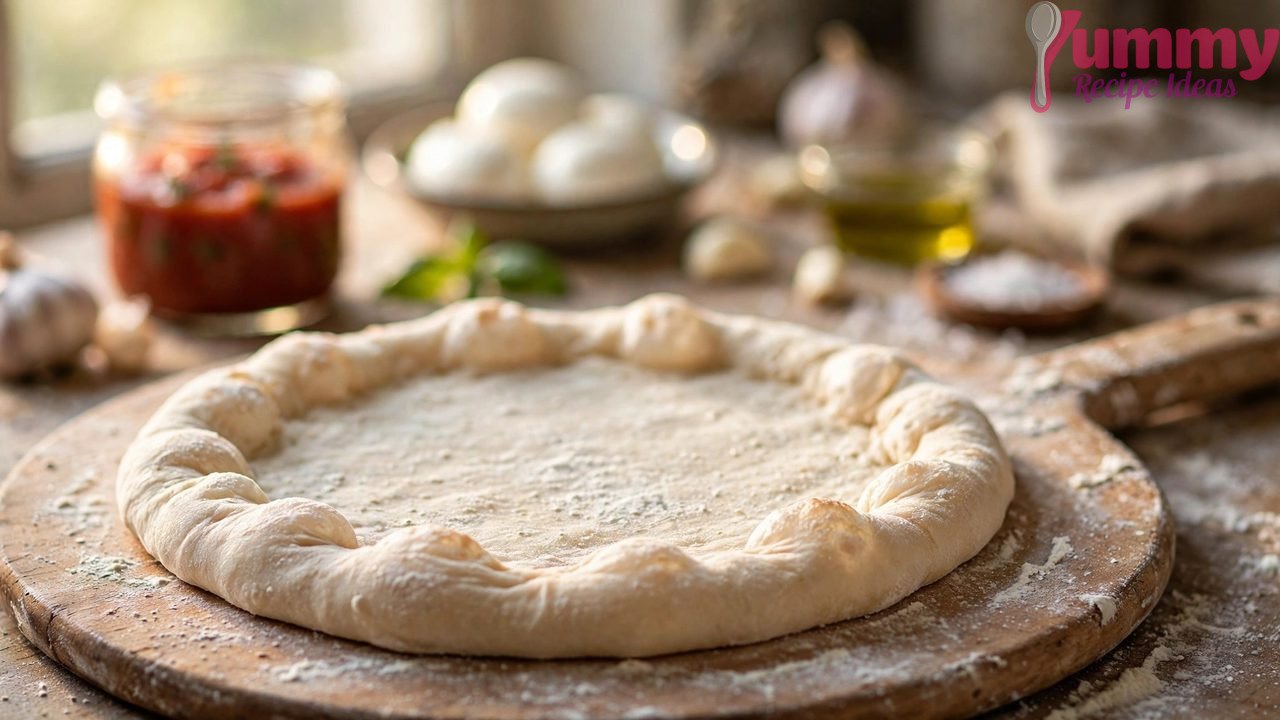
Thin middle, proud rim. Turn the dough out, knock it back gently to release the big air bubbles, and divide it into two equal pieces. Shape each into a tight ball and rest 10 minutes under the towel — this relaxes the gluten so the dough stretches instead of snapping back. Then, on a floured surface, press and stretch each ball into a 10- to 12-inch round, leaving a puffy 1-inch rim untouched. Do not roll the rim flat: that rim is what becomes the blistered crust.
Cook it like Street Pizza
Hot pan, then hot grill — that is the whole trick. Heat a heavy oven-safe frying pan over high heat with a slick of olive oil until it is smoking lightly. Lay in one dough base and sear 2 to 3 minutes until the underside is golden and set. Flip it, working quickly add your sauce and toppings, and slide the whole pan under a preheated hot grill for 2 to 3 minutes until the rim is puffed and blistered and the cheese is bubbling. Rest 1 minute, then slice. Repeat with the second base.
FAQs
Why does the salt go in last?
Because salt kills yeast on contact, and the initial mix is when the yeast is most exposed. Dry salt sitting directly on dry yeast draws moisture out of the yeast cells through osmosis, which can weaken or even kill enough of them to give you a sluggish, underwhelming rise. Once the yeast is hydrated in the shaggy dough, it is far more resilient — so Ramsay’s rule is simple: flour and yeast first, water and oil next, salt only after the dough has come together. This is one of those details most home recipes skip entirely, throwing everything into the bowl at once and wondering why the rise was disappointing. It costs you nothing and takes five seconds. The same salt-timing care applies to any yeasted dough, which is why our Gordon Ramsay White Bread follows the same principle — protect the yeast first, season second.
Do I really need to knead for a full 8 to 10 minutes?
Yes — this is the difference between chewy and bready. Kneading develops gluten, the stretchy protein network that traps the carbon dioxide the yeast produces. Two minutes of half-hearted mixing gives you a weak network: the gas escapes, the crumb bakes up dense and tight, and the rim stays flat. Eight to ten minutes of proper kneading — push, fold, turn, repeat — builds a strong, elastic network that holds big air pockets, which is what gives you an open crumb and a rim that puffs up blistered under the grill. Use the windowpane test: stretch a golf-ball-sized piece thin between your fingers. If light passes through without tearing, you are done; if it rips, keep going. A stand mixer with a dough hook does the same job in about 6 to 8 minutes on medium-low. Under-kneading is the single most common reason homemade pizza tastes like flatbread, and it is the first thing to fix — the same rule drives the texture of our Gordon Ramsay White Bread.
How does the frying-pan method actually work?
It solves the home-oven problem: your oven maxes out around 500°F, while a real pizza oven runs near 900°F. A pizza baked on a tray at home-oven heat often ends up with a pale, soft, slightly soggy base. Ramsay’s Street Pizza workaround splits the cooking into two heats. First, the base goes into a smoking-hot oiled frying pan for 2 to 3 minutes, which sears the underside golden and sets the structure — no soggy bottom. Then you flip it, add sauce and toppings quickly, and slide the whole pan under a preheated hot grill for another 2 to 3 minutes. The grill’s direct top heat mimics a pizza oven: it blisters the rim, bubbles the cheese, and finishes the toppings fast before the base overcooks. Use an oven-safe pan with no plastic handles, and have your toppings ready before the base goes in — this stage moves fast. For the classic topping, keep it simple with tomato, mozzarella and basil like a Margherita, or try our Gordon Ramsay Basil Pesto as the base sauce, with a Gordon Ramsay Caprese Salad on the side.
Can I use 00 flour or all-purpose flour instead of strong bread flour?
Yes to 00, with a caveat on all-purpose. Strong white bread flour (12–14% protein) is the right everyday choice: its high protein builds the strong gluten network that gives you chew and puff. Italian 00 flour is what Ramsay’s restaurants use for Street Pizza — it is milled extra-fine and makes an exceptionally silky, stretchy dough with a delicate crispness — and you can swap it 1:1 by weight (14 oz). The restaurant version also proves for 8 hours for deeper flavour, which you can do with either flour: mix, knead, then refrigerate overnight and shape cold. All-purpose flour (10–11% protein) will work in a pinch but expect a softer, less chewy crust with less rise — it simply cannot build as much gluten. Whatever you use, weigh the flour rather than scooping cups if you can: 14 oz is 14 oz, but 3 1/3 cups can vary by over an ounce depending on how you scoop. For another flour-and-yeast project that rewards the same care, see our Gordon Ramsay White Bread.
Can I make the dough ahead of time or freeze it?
Absolutely — pizza dough is one of the best make-ahead doughs there is. After kneading, you can slow-prove it in the fridge for up to 24 hours: the cold slows the yeast right down, and the long, slow ferment actually develops deeper, more complex flavour than the quick 90-minute room-temperature rise. Just bring it back to room temperature for 30 to 45 minutes before shaping so the gluten relaxes. For longer storage, freeze it after the first rise: divide into balls, oil them lightly, wrap each tightly in plastic wrap, and freeze for up to 3 months. Thaw overnight in the fridge, then rest at room temperature until puffy before stretching. One tip: make your sauce ahead too, so pizza night is just stretch, top, and sear. A jar of our Gordon Ramsay Basil Pesto in the fridge turns a thawed dough ball into dinner in about 10 minutes.
My dough came out dense, or it keeps springing back when I stretch it — what went wrong?
Two different problems with two different fixes. Dense, heavy crumb almost always means under-kneading or an under-powered rise: either the gluten network was too weak to trap gas (knead the full 8 to 10 minutes and check with the windowpane test), or the yeast never got going (water too hot kills it — lukewarm means comfortable on your wrist, not warm — or the salt went in too early, or the kitchen was too cold for the rise). Dough that springs back when you try to stretch it is a gluten-tension problem, and the fix is patience: the 10-minute rest after dividing lets the gluten relax, and if it still fights you, walk away for another 10 minutes. Never force it — stretching against tight gluten just tears the dough. Also check your flour: all-purpose instead of strong bread flour gives a noticeably less elastic dough. Get these three right — salt last, full knead, patient rise — and the dough practically shapes itself. The same troubleshooting applies to our Gordon Ramsay White Bread if you bake that too.
About Yummy Recipe Ideas
Yummy Recipe Ideas takes classic chef recipes — Gordon Ramsay’s included — and reworks them for home kitchens with US measurements, honest costs, and every technique explained. No guesswork, no dense pizza bases.
