Build the sponge: Pour the warmed milk into a large mixing bowl and whisk in the yeast until dissolved. Stir in the 1 cup of all-purpose flour until you have a smooth, thick batter. Cover the bowl and leave it in a warm spot for 1 hour — it should be puffy and smell pleasantly yeasty.
Rub in the butter: In a separate large bowl, whisk together the bread flour and salt. Add the cold butter pieces and rub them in with your fingertips, the way you would for pastry, until the mixture looks like coarse crumbs. Stir in the sugar and make a deep well in the center.
Bring the dough together: Scrape the sponge and the 1/4 cup of cold milk into the well. Stir with a wooden spoon until a shaggy dough forms, then turn it out onto a very lightly floured surface.
Knead until smooth: Knead 8–10 minutes until smooth and elastic — the dough is ready when a thumbprint springs back about halfway.
First rise: Lightly oil a clean bowl, place the dough in it, cover, and leave in a warm spot for about 1 hour, until doubled in size.
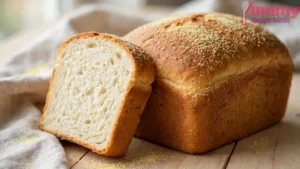
Shape and dust: Turn the risen dough out and knock it back gently. Shape into a smooth oval loaf. Press the top into semolina and place semolina-side up on an oiled, semolina-dusted baking sheet.
Final proof: Cover loosely and leave to prove 45–60 minutes, until doubled again. Near the end, preheat the oven to 400°F.
Bake hot, then finish gentle: Mist the baking sheet with cold water; bake 10 minutes at 400°F, then reduce to 350°F and bake 18–22 minutes more, until deep golden and hollow-sounding when tapped on the base. Cool fully on a wire rack before slicing.