
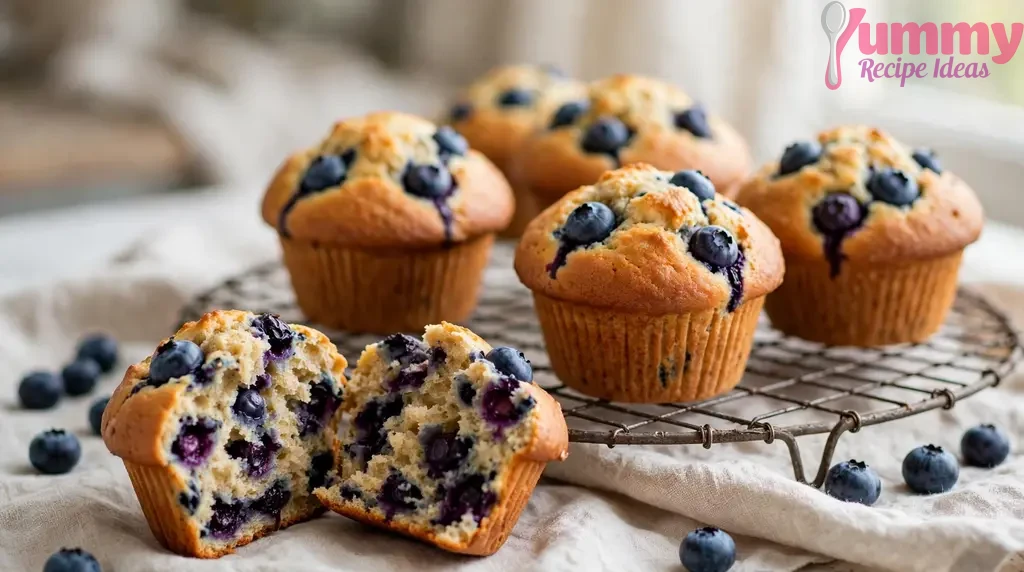
These Gordon Ramsay blueberry muffins bake up tall and golden in 32 minutes with one bowl, no mixer, and about $0.55 per muffin — bakery-style domed tops, a tender open crumb, and a full cup and a half of juicy blueberries in every batch of 12.
The method comes straight from Ramsay’s own kitchen playbook: his golden rule is that muffins are delicate little things that must be mixed entirely by hand, never with an electric mixer. I keep that hand-mixed soul here, but I go one step further with two real improvements — a 20-minute batter rest that hydrates the flour for taller domes, and a hot-then-low oven trick (5 minutes at 425°F, then down to 375°F) that sets the rise fast and finishes the centers without drying them out.
What makes this version better than the usual flat, dense homemade muffin is the combination of melted butter for richness, brown sugar for a warm caramel note, a pinch of cinnamon, and — most importantly — a strict 10-to-12-stroke fold so the batter stays lumpy and the crumb stays fluffy. Follow that and you get muffins that look like they came from a corner bakery.
Love quick breakfast bakes? Try these next and tell me in the comments which one your family devoured first.
Gordon Ramsay Blueberry Muffins
Course: Breakfast, Dessert · Cuisine: British, American · Servings: 12 muffins · Prep time: 10 minutes · Cook time: 22 minutes · Total time: 32 minutes · Calories: 220 kcal per muffin · Difficulty: Easy · Cost: about $0.55 per muffin
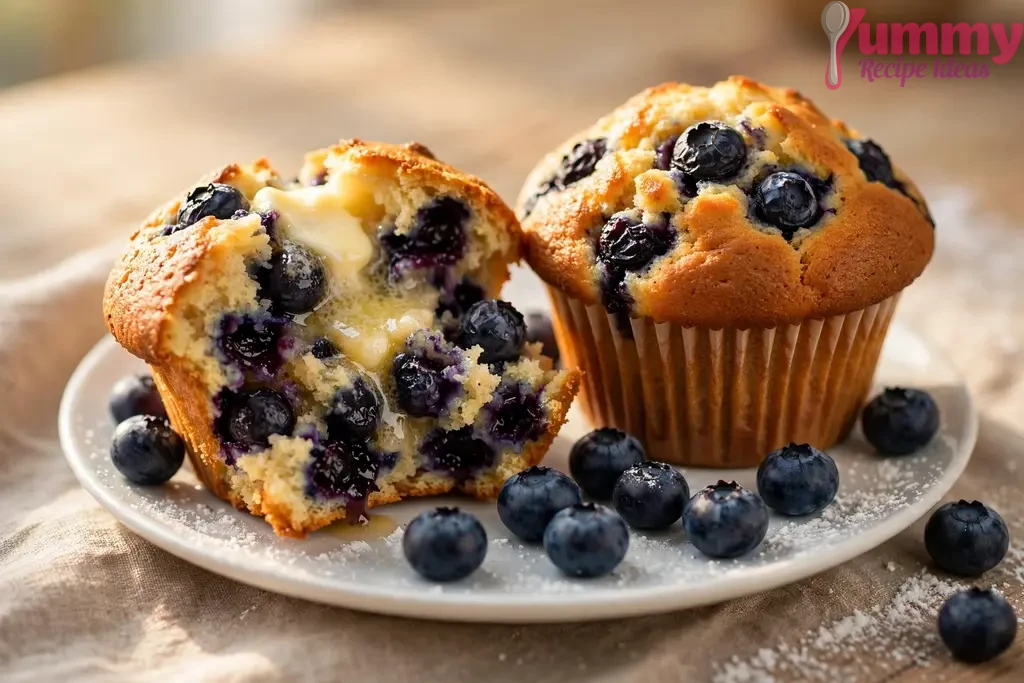
Hand-mixed blueberry muffins with bakery-style tall domes, a tender crumb, and juicy berries in every bite — ready in just over half an hour.
Ingredients
For the dry mix:
- 2 1/4 cups all-purpose flour
- 2 tsp baking powder
- 1 tsp ground cinnamon
- 1/2 tsp fine sea salt
- 3/4 cup packed light brown sugar
For the wet mix:
- 1 cup whole milk
- 2 large eggs, lightly beaten
- 1/3 cup unsalted butter, melted and cooled slightly
To finish:
- 1 1/2 cups fresh blueberries
- 2 tbsp coarse sugar, for sprinkling (optional, for crunchy bakery tops)
Directions
- Preheat hot: Heat the oven to 425°F. Line a standard 12-cup muffin tin with paper liners. The high starting heat is what gives these muffins their tall domes, so get the oven fully hot before the batter goes in.
- Whisk the dry: In a large mixing bowl, whisk together the flour, baking powder, cinnamon, and salt. Stir in the brown sugar and break up any lumps with your fingers so the sugar is evenly distributed.
- Combine the wet: In a large measuring cup or small bowl, whisk the milk and beaten eggs, then pour in the melted (but not hot) butter and whisk once more. Hot butter would scramble the eggs, so let it cool for a few minutes after melting.
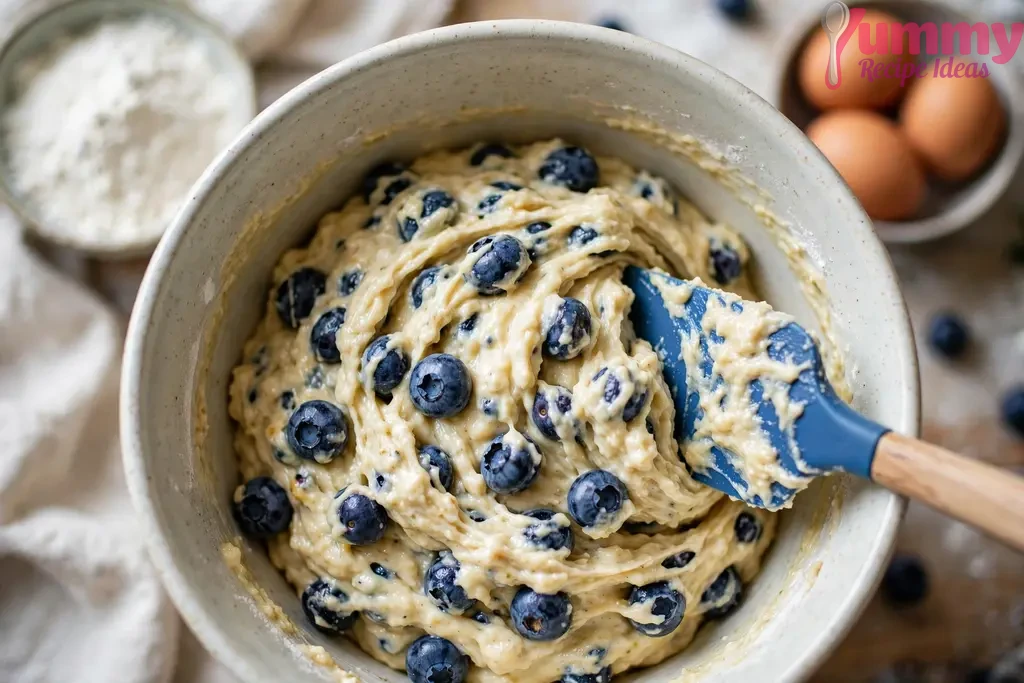
- Fold with a light hand: Pour the wet mixture into the dry and fold with a rubber spatula for just 10 to 12 strokes. Stop as soon as no dry flour is visible — the batter should look lumpy and shaggy. A smooth batter means you have already gone too far and the muffins will turn out dense.
- Rest the batter: Let the bowl sit at room temperature for 20 minutes (optional but worth it). The flour hydrates, the batter thickens slightly, and the muffins bake up noticeably taller with a more tender crumb.
- Fill generously: Gently fold in the blueberries with two or three strokes — do not crush them or the batter will turn purple. Divide the batter among the 12 cups, filling each nearly to the top. Sprinkle with coarse sugar if using, then tap the tin once firmly on the counter at each end so the batter settles into the cups.
- Bake hot, then low: Bake at 425°F for 5 minutes, then — without opening the oven door — reduce the temperature to 375°F and bake 15 to 18 minutes more, until deeply golden on top and a toothpick inserted in the center comes out clean or with moist crumbs.
- Cool briefly: Let the muffins rest in the tin for 5 minutes, then lift them onto a wire rack. Serve warm, when the berries are still jammy, or cool completely before storing.
Equipment
- Standard 12-cup muffin tin and paper liners
- Large mixing bowl
- Whisk and rubber spatula
- Wire cooling rack
- Toothpick or cake tester
Recipe Notes
- Overnight option: Mix the batter through step 4, cover the bowl, and refrigerate overnight. In the morning, stir gently once, then proceed from step 6 — the crumb turns out even more tender.
- Frozen berries work: Use them straight from the freezer (never thaw first) and add about 2 extra minutes to the bake time.
- Extra-moist swap: Replace 1/2 cup of the milk with 1/2 cup sour cream for an even richer, bakery-soft crumb.
- Storage: Keep in an airtight container at room temperature for up to 3 days, or freeze (cooled) in a zip-top bag for up to 2 months. Rewarm in a 300°F oven for 8 minutes.
FAQs
Why does mixing by hand matter so much for muffins?
Because flour plus liquid plus agitation builds gluten, and gluten is the difference between a fluffy muffin and a chewy, rubbery one. An electric mixer develops gluten in seconds — perfect for bread dough, terrible for muffins. When you fold by hand and stop after 10 to 12 strokes, you keep the gluten network barely formed, so the crumb stays open and tender instead of tight and dense. That is also why a lumpy batter is a good sign: the lumps hydrate in the oven and disappear, but the fluffiness they protect does not come back if you stir them away. This is the same gentle-handling principle that makes our Gordon Ramsay vanilla cupcakes so soft — cupcakes and muffins both punish overmixing, but muffins are even less forgiving because they have less sugar and fat to hide behind.
What does the high-then-low oven trick actually do?
The blast of 425°F heat at the start makes the leavening work fast: the baking powder releases a rush of gas while the outside of the muffin is still soft enough to stretch upward, which is how you get that tall bakery dome instead of a flat top. After 5 minutes the structure is set, so you drop to 375°F to finish baking the centers gently — full heat all the way through would over-brown the tops and dry out the crumb before the middle sets. Professional bakeries use exactly this principle, and it is the single biggest visual upgrade you can make to homemade muffins. If you are into oven tricks, our Gordon Ramsay chocolate cake uses a similar two-stage temperature idea to get a level, crack-free top.
Can I use frozen blueberries instead of fresh?
Yes — use them straight from the freezer and do not thaw them first. Thawed berries leak juice everywhere and will streak the whole batter purple; frozen berries hold their shape and bleed far less. Toss them in a spoonful of the measured flour before folding them in, which helps suspend them in the batter instead of sinking to the bottom of the cups. Expect to add about 2 extra minutes to the bake time since the batter goes into the oven colder. Wild blueberries are even better if you can find them — they are smaller, sweeter, and distribute through the crumb more evenly. For another bake where fruit distribution really matters, our Gordon Ramsay oatmeal cookies show the same flour-tossing trick with dried fruit and chocolate chips.
Can I make the muffin batter the night before?
Absolutely, and the muffins actually come out slightly better. Mix the batter through the folding step, cover the bowl tightly, and refrigerate overnight. The flour fully hydrates during the rest, which gives a more tender crumb and an even taller rise in the morning. Do not stir it again beyond one gentle fold — you would knock out the air and wake up the gluten you worked so hard to keep sleepy. Spoon the cold batter straight into the liners and add 1 to 2 minutes to the bake time. This make-ahead approach works across Ramsay-style baking: our Gordon Ramsay sugar cookies also rest their dough overnight for deeper flavor and easier handling.
What is the real difference between a muffin and a cupcake?
Three things: mixing method, sugar level, and fat. Muffins use the quick-bread method — wet into dry, folded by hand, lumps welcome — while cupcakes use the creaming method, where butter and sugar are beaten until fluffy for a fine, even crumb. Muffins also carry roughly half the sugar and fat of a cupcake, which is why they eat like breakfast and cupcakes eat like dessert. That is why you cannot just pour cupcake batter into a muffin tin and call it a muffin: it will taste too sweet and too rich, and the texture will be wrong. If the distinction ever feels blurry, compare this recipe side by side with our Gordon Ramsay vanilla cupcakes — same oven, same 12-cup tin, completely different technique and completely different result.
How do I store these so they stay fresh?
Cool the muffins completely first — trapping steam in a container makes the tops gummy. Then store in an airtight container at room temperature for up to 3 days, with a paper towel on the bottom and one on top to absorb excess moisture. For longer storage, freeze the cooled muffins in a single layer on a baking sheet, then transfer to a zip-top freezer bag for up to 2 months; thaw at room temperature or rewarm in a 300°F oven for about 8 minutes and they taste freshly baked. Do not refrigerate — cold air stales baked goods faster than room temperature does. The same freeze-then-rewarm routine works beautifully for our Gordon Ramsay oatmeal cookies and Gordon Ramsay chocolate cake layers too.
About the author: Yummy Recipe Ideas recreates chef-inspired classics for the American home kitchen — every recipe is tested in US cup measurements with step-by-step photos so it works the first time, every time. Browse the full collection at yummyrecipeideas.com.

Gordon Ramsay Muffins Recipe (Blueberry)
Ingredients
Equipment
Method
- Preheat hot: Heat the oven to 425°F. Line a standard 12-cup muffin tin with paper liners. The high starting heat is what gives these muffins their tall domes, so get the oven fully hot before the batter goes in.
- Whisk the dry: In a large mixing bowl, whisk together the flour, baking powder, cinnamon, and salt. Stir in the brown sugar and break up any lumps with your fingers so the sugar is evenly distributed.
- Combine the wet: In a large measuring cup or small bowl, whisk the milk and beaten eggs, then pour in the melted (but not hot) butter and whisk once more. Hot butter would scramble the eggs, so let it cool for a few minutes after melting.
- Fold with a light hand: Pour the wet mixture into the dry and fold with a rubber spatula for just 10 to 12 strokes. Stop as soon as no dry flour is visible — the batter should look lumpy and shaggy.
- Rest the batter: Let the bowl sit at room temperature for 20 minutes (optional but worth it). The flour hydrates, the batter thickens slightly, and the muffins bake up noticeably taller.
- Fill generously: Gently fold in the blueberries with two or three strokes. Divide the batter among the 12 cups, filling each nearly to the top. Sprinkle with coarse sugar if using.
- Bake hot, then low: Bake at 425°F for 5 minutes, then — without opening the oven door — reduce to 375°F and bake 15 to 18 minutes more, until deeply golden and a toothpick comes out clean or with moist crumbs.
- Cool briefly: Rest in the tin for 5 minutes, then lift onto a wire rack. Serve warm or cool completely before storing.
