
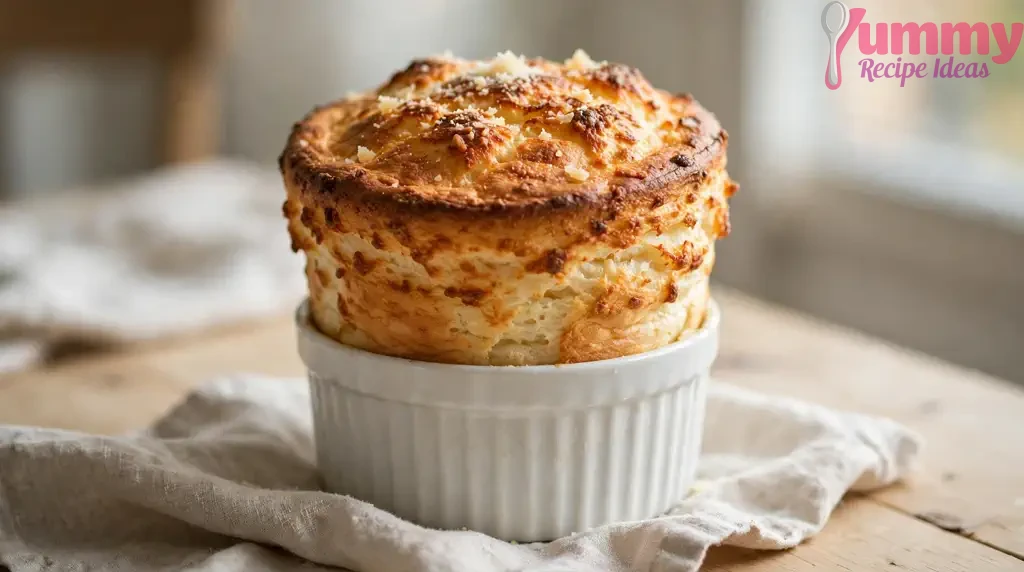
A restaurant-worthy cheese souffle in just 45 minutes, with ingredients that cost about $2.25 per serving — less than your morning coffee. This Gordon Ramsay cheese souffle recipe rises tall and golden every single time, with a crisp Parmesan crust, a molten Gruyere heart, and that dramatic puff that makes guests go quiet when it hits the table. No restaurant reservation required, and no soufflé fear allowed.
The souffle was born in France in the 1700s, but it was Ramsay’s kitchen discipline that turned it into a test every serious cook wants to pass. His whole approach is built on one idea: a souffle is not magic, it is physics. A thick, well-seasoned cheese base gives the structure; properly whipped egg whites give the lift; and a correctly prepared ramekin gives the batter something to climb. When those three things are right, the rise is not luck — it is guaranteed. The vertical butter strokes and double Parmesan coating on the ramekins are the details most home recipes skip, and they are exactly why restaurant souffles look so impossibly straight and tall.
What makes this version better than the average souffle recipe is the insurance policy built into every step: a double butter-and-Parmesan ramekin coating so nothing sticks and everything climbs, a pinch of cream of tartar for extra-stable egg whites, and a clear “no peeking” bake rule so the oven heat never collapses your hard work. The result is a souffle with crisp, savory edges, a center that trembles just slightly when it comes out of the oven, and a rich Gruyere flavor sharpened with Dijon and a whisper of cayenne. It tastes like a special occasion and cooks like a weeknight.
Have you ever pulled a souffle out of the oven and watched it deflate in seconds? Tell me in the comments what went wrong — and watch it rise like a pro with this method.
Gordon Ramsay Cheese Souffle
Course: Appetizer · Cuisine: French · Servings: 4 souffles · Prep Time: 25 mins · Cook Time: 18 mins · Total Time: 45 mins · Calories: 450 kcal per souffle · Difficulty: Medium
Tall, golden, and impossibly airy — a classic French cheese souffle with a double-coated Parmesan ramekin, a rich Gruyere bechamel base, and stiff-peaked egg whites folded in by hand for a guaranteed rise.
Ingredients
For the ramekins:
- 3 tablespoons unsalted butter, softened
- 1/3 cup Parmesan cheese, finely grated
For the souffle:
- 3 tablespoons unsalted butter
- 1/4 cup all-purpose flour
- 1 1/4 cups whole milk, warmed
- 1 1/2 cups Gruyere cheese, finely grated (about 5 oz)
- 2 tablespoons Parmesan cheese, finely grated
- 1 teaspoon Dijon mustard
- 1/4 teaspoon cayenne pepper
- 3/4 teaspoon kosher salt, plus more to taste
- 1/4 teaspoon black pepper, freshly ground
- 4 large egg yolks, at room temperature
- 5 large egg whites, at room temperature
- 1/4 teaspoon cream of tartar
Directions
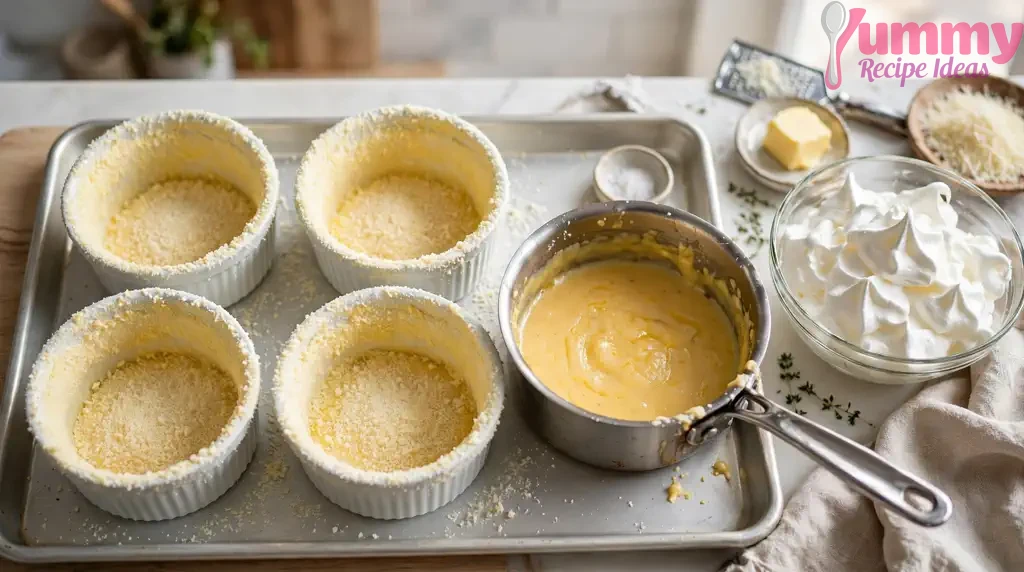
- Coat the ramekins: Using a pastry brush, paint the insides of four 8-oz ramekins with softened butter, using firm vertical strokes from bottom to rim. Chill for 10 minutes, then apply a second butter layer the same way. Add the grated Parmesan, tilt each ramekin to coat the inside completely, and tap out the excess. Chill the ramekins until you need them.
- Build the bechamel base: Melt the butter in a heavy saucepan over medium heat. Whisk in the flour and cook, stirring constantly, for 1 to 2 minutes until it smells nutty and turns pale gold. Pour in the warm milk a little at a time, whisking hard after each addition so no lumps form. Simmer for 3 to 4 minutes, stirring, until the sauce is thick enough to coat the back of a spoon.
- Melt in the cheese: Take the pan off the heat and stir in the Gruyere, the extra Parmesan, the Dijon mustard, cayenne, salt, and black pepper until the cheese melts into a smooth, glossy sauce. Let it cool for 5 minutes — it should be warm, not hot — then beat in the egg yolks one at a time until fully combined.
- Whip the whites: Place the egg whites in a spotlessly clean, completely dry large bowl. Add the cream of tartar and a tiny pinch of salt. Beat with an electric mixer, starting on medium and increasing to high, until the whites form stiff, glossy peaks that stand straight up when you lift the beaters.
- Loosen, then fold: Stir about one-third of the whipped whites into the cheese base with a whisk to loosen it. Switch to a large rubber spatula and gently fold in the remaining whites in two additions, cutting down the middle, sweeping around the bowl, and turning the bowl as you go. Stop the moment you cannot see any white streaks.
- Fill and score the edge: Divide the mixture evenly among the prepared ramekins, filling each one right to the top. Tap each ramekin once firmly on the counter to settle the batter, level the tops with a palette knife, then run your thumb around the inside rim of each ramekin to make a shallow trench.
- Bake without peeking: Place the ramekins on a baking sheet and bake in a preheated 400°F oven for 15 to 18 minutes, until the tops are deeply golden and risen well above the rims, with just a slight wobble in the center when you gently nudge the tray. Do not open the oven door for the first 15 minutes.
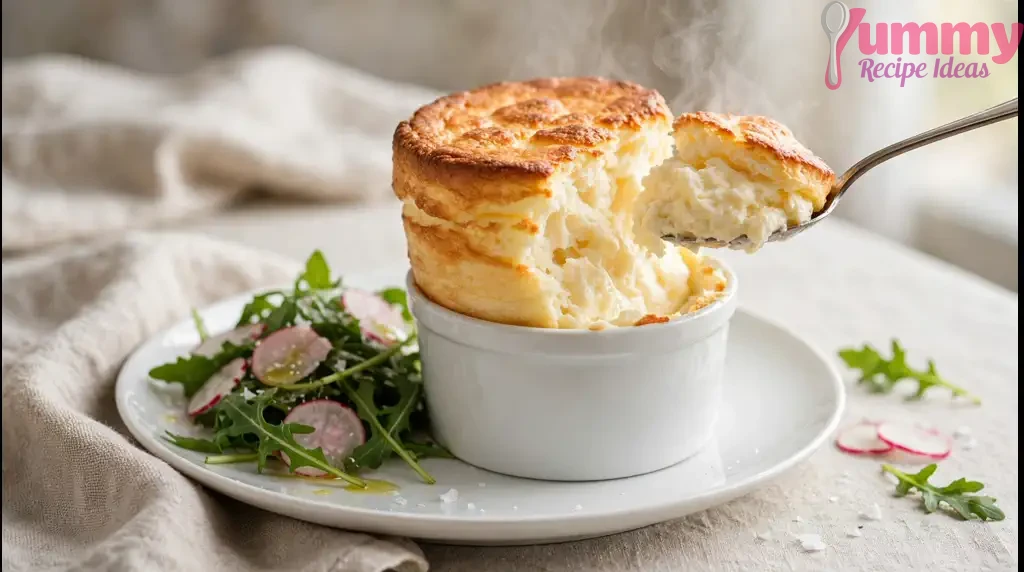
- Serve at once: Dust the tops with a little extra grated Parmesan and carry the souffles straight to the table. A souffle waits for no one — it begins to settle within minutes, so have your guests seated and your salad ready before it comes out of the oven.
FAQs
Why did my cheese souffle fall or deflate?
A fallen souffle almost always comes down to one of four mistakes, and every one of them is preventable. First, under-whipped or over-whipped egg whites: you want stiff, glossy peaks, not dry and grainy. Second, over-folding the whites into the base — once the white streaks disappear, stop. Third, opening the oven door too early: a blast of cool air before the structure sets will collapse the rise in seconds, which is why this recipe says no peeking for the first 15 minutes. Fourth, letting the baked souffle sit: it starts settling within minutes of leaving the oven, so guests should be seated before it comes out. Under-seasoned base is a quieter culprit too — a bland batter tastes flat even when it rises, so taste the cheese sauce before adding the whites and adjust the salt confidently. Fix those four, and the souffle rises like clockwork.
What is the best cheese for a cheese souffle?
Gruyere is the gold standard for a reason: it melts into a silky, lump-free sauce, and its nutty, slightly sweet flavor is bold enough to survive the dilution of egg whites and bechamel without tasting washed out. Aged at least 6 months, it brings the depth that makes a restaurant souffle taste expensive. Parmesan plays a supporting role — its job in this recipe is the ramekin coating and a salty punch in the base, not the main flavor. If Gruyere is hard to find or too pricey, aged Comte is the closest substitute, and a sharp aged cheddar works well too, though it gives a slightly tangier, less nutty result. Avoid pre-shredded bagged cheese: the anti-caking starch coating on it prevents smooth melting and can make your base grainy. Always grate from a block, and grate it finely so it melts in seconds off the heat. The Dijon mustard and cayenne are not optional garnishes either — they sharpen the cheese flavor so it reads clearly through all that airy egg.
How do I know when the souffle is perfectly baked?
Look for three signals together, not just one. The top should be deeply golden brown — pale gold means it needs more time, while a dark, almost burnt crust means the inside is over-set. The souffle should have risen 1 to 2 inches above the rim of the ramekin with a proud, even dome. And when you gently nudge the baking sheet, the center should tremble just slightly — that gentle wobble means the interior is still creamy and custardy, which is exactly what you want. If the center does not move at all, it is overbaked and will eat dry. Start checking at 15 minutes through the oven window, and expect most ovens to finish between 15 and 18 minutes at 400°F.
Can I make cheese souffle ahead of time?
Yes — and this is the secret that makes souffle a realistic dinner-party dish instead of a last-minute panic. The cheese base (everything through the egg yolks) can be made up to 2 days ahead: press plastic wrap directly onto the surface so no skin forms, and refrigerate. The buttered, Parmesan-coated ramekins can also be prepared a day ahead and kept chilled, covered. When guests arrive, all that is left is whipping the egg whites and folding, which takes about 10 minutes, and then the 15 to 18 minute bake. Do not whip the whites in advance, because beaten whites weep and lose volume as they sit. If you love make-ahead starters in the same spirit, my Gordon Ramsay Meatball Soup Recipe is another one that actually improves after a night in the fridge. The make-ahead base is also why restaurants can fire souffles to order — the hard work was done hours ago.
What is a twice-baked cheese souffle, and should I try it?
A twice-baked souffle is the restaurant trick for serving souffle to a crowd without the last-minute stress. You bake the souffles once as directed, let them cool completely (they will sink — that is normal and expected), then turn them out of the ramekins into a buttered baking dish, pour about 1/2 cup of heavy cream around them, scatter extra grated Gruyere on top, and bake again at 400°F for 10 to 12 minutes until they puff back up and the cream bubbles into a sauce. The texture is different from a classic souffle — denser, richer, almost like a savory bread pudding — but it is deeply comforting and completely make-ahead friendly, since the first bake can happen a full day earlier. If you want to push it further into brunch territory, a spoonful of warm hollandaise over the top is sensational; my Gordon Ramsay Hollandaise Sauce Recipe is the one to use. Try the classic version first to learn the technique, then graduate to twice-baked when you are feeding six.
About the author: Lax develops Gordon Ramsay–style recipes for Yummy Recipe Ideas, testing every dish in a real home kitchen until it works the first time, every time. More restaurant-worthy starters: try the Gordon Ramsay Broccoli Salad Recipe for a fresh make-ahead side.
Gordon Ramsay Cheese Souffle
Ingredients
Equipment
Method
- Coat the ramekins: Using a pastry brush, paint the insides of four 8-oz ramekins with softened butter, using firm vertical strokes from bottom to rim. Chill for 10 minutes, then apply a second butter layer the same way. Add the grated Parmesan, tilt each ramekin to coat the inside completely, and tap out the excess. Chill the ramekins until you need them.
- Build the bechamel base: Melt the butter in a heavy saucepan over medium heat. Whisk in the flour and cook, stirring constantly, for 1 to 2 minutes until it smells nutty and turns pale gold. Pour in the warm milk a little at a time, whisking hard after each addition so no lumps form. Simmer for 3 to 4 minutes, stirring, until the sauce is thick enough to coat the back of a spoon.
- Melt in the cheese: Take the pan off the heat and stir in the Gruyere, the extra Parmesan, the Dijon mustard, cayenne, salt, and black pepper until the cheese melts into a smooth, glossy sauce. Let it cool for 5 minutes — it should be warm, not hot — then beat in the egg yolks one at a time until fully combined.
- Whip the whites: Place the egg whites in a spotlessly clean, completely dry large bowl. Add the cream of tartar and a tiny pinch of salt. Beat with an electric mixer, starting on medium and increasing to high, until the whites form stiff, glossy peaks that stand straight up when you lift the beaters.
- Loosen, then fold: Stir about one-third of the whipped whites into the cheese base with a whisk to loosen it. Switch to a large rubber spatula and gently fold in the remaining whites in two additions, cutting down the middle, sweeping around the bowl, and turning the bowl as you go. Stop the moment you cannot see any white streaks.
- Fill and score the edge: Divide the mixture evenly among the prepared ramekins, filling each one right to the top. Tap each ramekin once firmly on the counter to settle the batter, level the tops with a palette knife, then run your thumb around the inside rim of each ramekin to make a shallow trench.
- Bake without peeking: Place the ramekins on a baking sheet and bake in a preheated 400°F oven for 15 to 18 minutes, until the tops are deeply golden and risen well above the rims, with just a slight wobble in the center when you gently nudge the tray. Do not open the oven door for the first 15 minutes.
- Serve at once: Dust the tops with a little extra grated Parmesan and carry the souffles straight to the table. A souffle waits for no one — it begins to settle within minutes, so have your guests seated and your salad ready before it comes out of the oven.
