
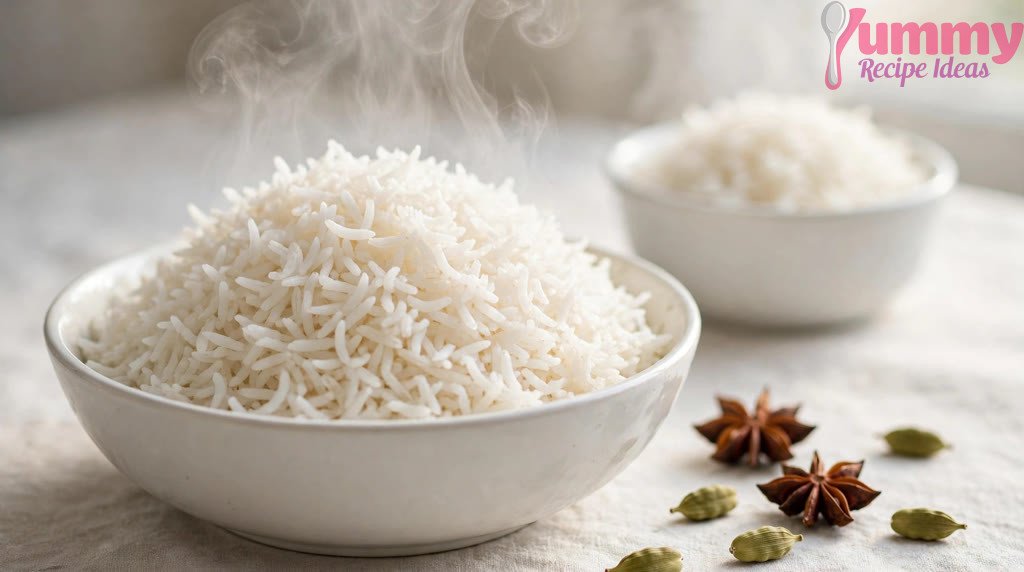
Perfectly fluffy, fragrant basmati rice in just 25 minutes and for about $0.30 per serving. No rice cooker, no guesswork — just one saucepan and a method so reliable you will never make gummy, bland rice again.
This is Gordon Ramsay’s approach to rice, the one he demonstrates across his cookbooks and his famous rice video: season the rice before it cooks, use cold water at a strict 1-to-1.5 ratio, and once that lid goes on — as he says — do not lift that lid. The steam trapped inside finishes the grains to separate, tender perfection.
The real differentiator is the whole-spice layer: lightly crushed green cardamom pods and star anise cooked right in the pot. They perfume every grain from the inside out, turning a plain side dish into the kind of aromatic rice you would pay restaurant prices for.
Cooked this recipe? Scroll down and tell me in the comments — did your grains come out fluffy?
Gordon Ramsay Rice Recipe
Aromatic basmati rice steamed with cardamom, star anise, salt, and pepper using Gordon Ramsay’s season-first, never-lift-the-lid technique — ready in 25 minutes and costing pennies per serving.
Gordon Ramsay Rice Recipe
Ingredients
Equipment
Method
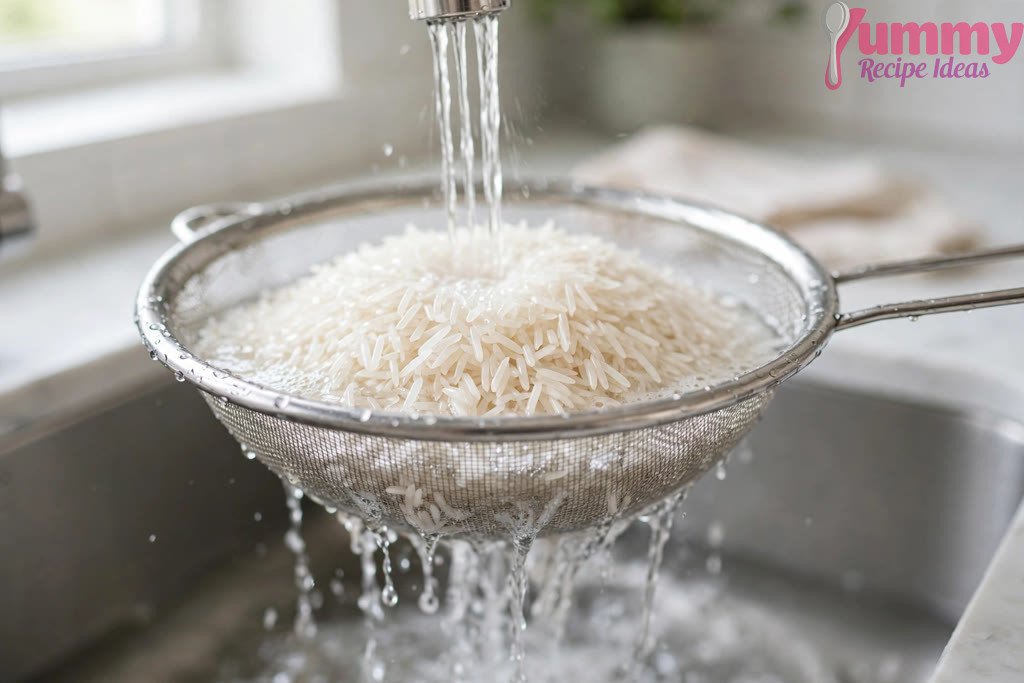
- Wash until clear. Rinse the basmati in a fine-mesh sieve under cold running water 3 to 4 times, swishing gently, until the water runs almost clear.
- Season before cooking. Tip the washed rice into the saucepan and stir in the salt, pepper, crushed cardamom pods, and star anise while the rice is still raw.
- Cold water, lid on. Pour in 3 cups of cold water, put the lid on the pan, and bring to a boil over high heat.
- Simmer low, do not lift that lid. Reduce the heat to low and simmer gently for 8 to 10 minutes without ever lifting the lid.
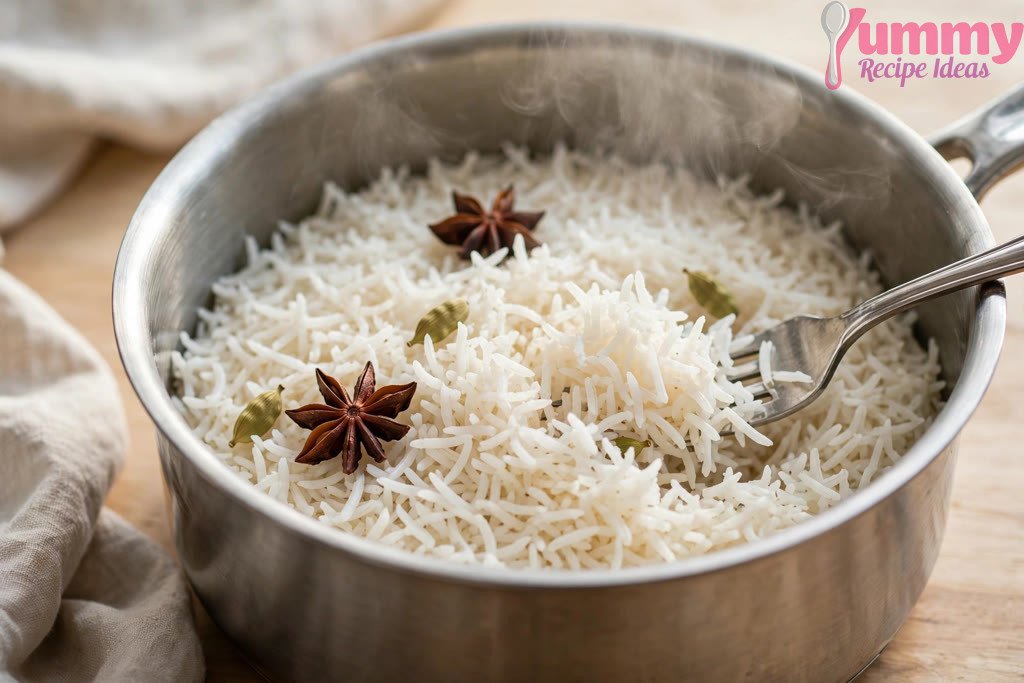
- Rest, then fluff. Take the pan off the heat and rest, lid on, for 5 minutes. Remove the cardamom and star anise, then fluff with a fork using a lifting, folding motion.
Notes
Ingredients
For the rice
- 2 cups basmati rice
- 3 cups cold water
- 1 1/2 teaspoons kosher salt
- 1/2 teaspoon freshly ground black pepper
The aromatics
- 4 to 5 green cardamom pods, lightly crushed
- 2 whole star anise
Directions
- Wash the rice until the water runs clear. Put the basmati in a fine-mesh sieve and rinse under cold running water 3 to 4 times, swishing the grains gently with your hand, until the water draining through runs almost clear. This removes the surface starch that causes sticky, gummy rice.
- Season before you cook — never after. Tip the washed rice into a medium saucepan with a tight-fitting lid. Stir in the salt, black pepper, crushed cardamom pods, and star anise now, while the rice is still raw, so the seasoning reaches every grain from the start.
- Add cold water and get the lid on. Pour in 3 cups of cold water (the 1-to-1.5 ratio: 2 cups rice to 3 cups water). Put the lid on the pan, then bring it to a boil over high heat.
- Simmer low and do not lift that lid. As soon as it boils, reduce the heat to low and simmer gently for 8 to 10 minutes. This is the discipline part: do not lift the lid, not even to peek. The trapped steam is doing the cooking.
- Rest, then fluff. Take the pan off the heat and let it rest, lid still on, for 5 minutes. Then remove the lid, fish out the cardamom pods and star anise, and fluff the rice with a fork using a lifting, folding motion — never a spoon, which would smash the grains.
FAQs
What is the right rice-to-water ratio?
For basmati rice, Gordon Ramsay’s method uses a 1-to-1.5 ratio: 2 cups of rice to 3 cups of cold water. This is the ratio that works with the covered-simmer-and-rest technique, because almost no steam escapes during cooking. If you switch rice types, the ratio changes. Long-grain white rice and jasmine rice need a 1-to-2 ratio (2 cups rice to 4 cups water) because those grains absorb more water before they turn tender. Brown rice is a different story entirely: it keeps its bran layer, so it needs about 1-to-2.5 water and a much longer simmer — typically 40 to 45 minutes — and it does not get the same fluffy, separate texture from the quick method in this recipe. Stick with basmati for the cardamom and star anise pairing, because basmati’s natural nutty aroma blends beautifully with the spices. Whatever rice you choose, the rules stay the same: wash the grains first, season before cooking, keep the lid on, and always rest the rice off the heat before fluffing.
Why do I need to wash the rice first?
Washing rice is about starch — the invisible coating of surface starch on every raw grain. When unwashed rice hits hot water, that starch dissolves into the cooking liquid and turns it into a thick, starchy paste. The grains glue together, and you end up with a heavy, gummy clump instead of light, separate grains. Rinsing the rice 3 to 4 times under cold running water, swishing gently until the runoff water looks almost clear, washes that loose starch away before it can cause trouble. It also rinses off any fine dust from milling and packaging. For basmati in particular, washing is non-negotiable because the whole point of basmati is its long, slender, separate grains — the very thing starch sabotage destroys. Some older recipes call for soaking rice for 30 minutes, but with this method the wash alone is enough, because the exact water ratio and the lid discipline do the rest. Think of the rinse as a 2-minute insurance policy on every batch of rice you will ever cook.
Why did my rice burn on the bottom or turn out mushy?
A burned bottom almost always means the heat was too high during the simmer. Once the water reaches a boil and you add the lid, the burner needs to go straight down to low — just a gentle, barely-there simmer. A heavy-based saucepan helps enormously because it spreads the heat evenly; thin pans create hot spots that scorch the bottom layer before the top is cooked. Mushy rice, on the other hand, comes from too much water, lifting the lid mid-cook (which lets steam escape and tempts you to add more water), or skipping the rest period and stirring too aggressively. If your rice is slightly undercooked when the timer ends, do not add water — just put the lid back on and let it rest the full 5 minutes, because carryover steam finishes the job. And if you catch a light scorch, resist the urge to stir; spoon out the good rice from the top and leave the burned layer behind. A pair like this rice alongside his Gordon Ramsay BBQ Sauce shows how forgiving the rest of the meal can be when the technique is right.
Can I cook the rice in chicken stock to make pilau?
Yes — and that is essentially how you turn this recipe into a pilau-style rice. Replace the 3 cups of cold water with 3 cups of good-quality chicken stock, keeping the same 1-to-1.5 ratio, the salt, and the whole spices. The stock adds a savory depth that plain water never can, and the rice absorbs that flavor all the way through because the seasoning goes in before cooking. For a richer, more authentic pilau, you can also warm a tablespoon of butter or oil in the pan first and toast the cardamom and star anise in it for about 30 seconds until fragrant, then add the washed rice and stir for a minute before pouring in the stock — the hot-fat bloom wakes up the spices even further. Keep the lid-on discipline exactly the same. This stock-cooked version is outstanding next to saucy mains, where the grains soak up every drop — it is the perfect partner for a comforting bowl like Gordon Ramsay’s Meatball Soup, where the aromatic rice turns the meal into something truly special.
Can I use day-old rice to make fried rice?
Absolutely — day-old rice actually makes better fried rice than fresh rice. Freshly cooked rice is still full of moisture and relatively soft, so it clumps and steams in a hot wok instead of frying. Refrigerated overnight, the grains firm up and dry out slightly on the surface, which means they separate cleanly and get those crisp, golden edges when they hit hot oil. Spread the leftover rice in a thin layer in an airtight container, chill it within 2 hours of cooking, and use it within 2 to 3 days. When you are ready, break up any clumps with wet hands before it goes in the pan. One important note: because this rice already contains whole cardamom and star anise, remove any leftover pods before refrigerating — nobody wants to bite into a whole cardamom pod in their fried rice. Toss the chilled rice in a ripping-hot pan with oil, soy sauce, and beaten egg for a quick meal, or serve it as the base under a hearty sauce like Gordon Ramsay’s Bolognese Sausage.
Can I make this rice in the oven instead?
Yes, the oven method is wonderfully hands-off and nearly impossible to scorch. Follow the recipe through the washing and seasoning steps, then bring the rice, water, salt, pepper, cardamom, and star anise to a boil in an oven-safe saucepan or Dutch oven with a tight-fitting lid. As soon as it boils, put the lid on and transfer the whole pot to a preheated 375°F oven for 18 to 20 minutes. The even, all-around oven heat cooks the rice gently without any risk of a hot spot burning the bottom — which makes this the best option if your stovetop runs hot or your pan is thin. When the time is up, let it rest with the lid on for 5 minutes, then fluff with a fork exactly as the stovetop version. The texture is identical: separate, fluffy, fragrant grains. This method is especially handy when the stovetop is crowded on a big cooking day — you can let the rice take care of itself in the oven while a soup like Gordon Ramsay’s Carrot Soup simmers away on the burner.
About the author: Yummy Recipe Ideas is run by home cook Sumit Vishwakarma, testing and perfecting Gordon Ramsay-inspired recipes with US measurements so every dish works in an American kitchen.
