
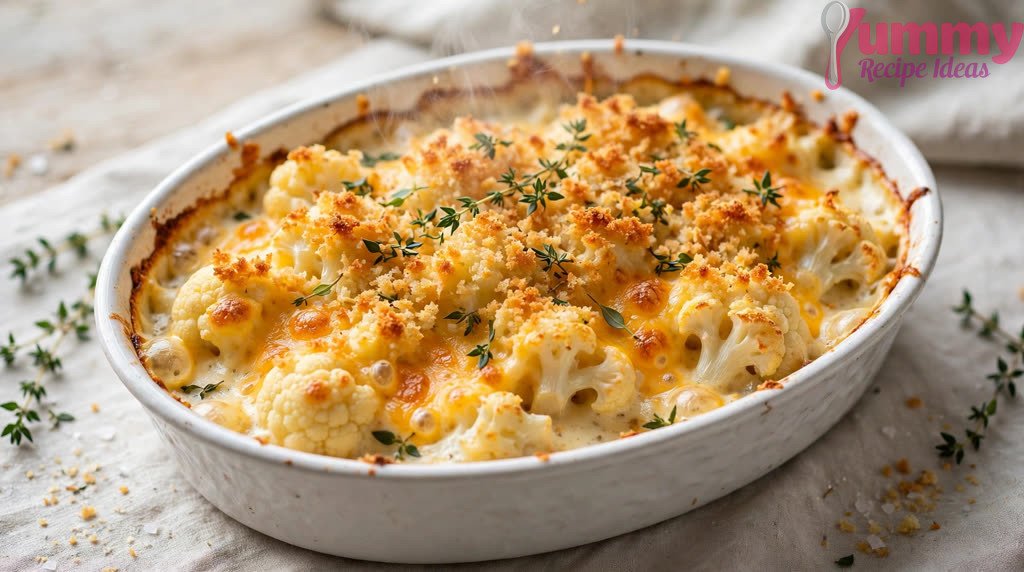
This Gordon Ramsay cauliflower cheese is the creamiest, crispiest take on the British classic you will ever pull from your oven — ready in 35 minutes and costing about $1.50 a serving. Tender cauliflower florets swim in a silky three-cheese sauce under a golden thyme-breadcrumb crust, and the whole thing comes together in one baking dish.
The recipe comes straight from the Gordon Ramsay Restaurants playbook, where cauliflower cheese is the non-negotiable side on every proper roast dinner. Ramsay’s version is famous for its three-cheese blend — mature Cheddar, crumbly Lancashire, and gentle Cheshire — with half melted into the sauce and the rest baked into the topping. Two of those cheeses are nearly impossible to find in American supermarkets, so this version keeps Ramsay’s philosophy intact with faithful US stand-ins: Monterey Jack for Lancashire’s milky crumble and sharp white Cheddar for Cheshire’s mellow saltiness.
But the real secret is not the cheese — it is the ice bath. Ramsay blanches his cauliflower for just 4 to 5 minutes, then shocks it in ice water to stop the cooking dead. The florets stay firm with a pleasant bite instead of collapsing into mush under the hot sauce, which is exactly where most homemade cauliflower cheese goes wrong. That one technique, plus a mustard-spiked roux, is what takes this from good to restaurant-worthy.
Cooked this recipe? Send a photo of your golden, bubbling bake — we love featuring reader cauliflower cheese wins!
Gordon Ramsay Cauliflower Cheese Recipe
Tender ice-bath-blanched cauliflower in a silky three-cheese sauce with a crispy thyme-breadcrumb crust — the ultimate British roast-dinner side, ready in 35 minutes.
Gordon Ramsay Cauliflower Cheese Recipe
Ingredients
Equipment
Method
- Blanch the cauliflower: Bring a large pot of generously salted water to a rolling boil. Add the cauliflower florets and blanch for 4 to 5 minutes, until just tender with a distinct bite. While they cook, fill a large bowl with ice water.
- Shock in the ice bath: Drain the florets and plunge them straight into the ice water. Leave for 2 minutes to stop the cooking completely, then drain very well and pat dry with a clean kitchen towel.
- Make the roux: In a medium saucepan, melt the butter over medium heat. Whisk in the flour and cook, whisking constantly, for 1 to 2 minutes until faintly nutty. Whisk in the mustard powder until evenly combined.
- Build the sauce: Gradually pour in the warm milk, whisking constantly. Bring to a gentle simmer and cook 4 to 5 minutes, stirring, until the sauce thickly coats the back of a spoon. Season with the cayenne, salt, and plenty of black pepper.
- Melt in half the cheese: Take the pan off the heat. Add half of the combined shredded cheeses (about 1 1/2 cups) and stir until completely melted and glossy. Taste and adjust the seasoning.
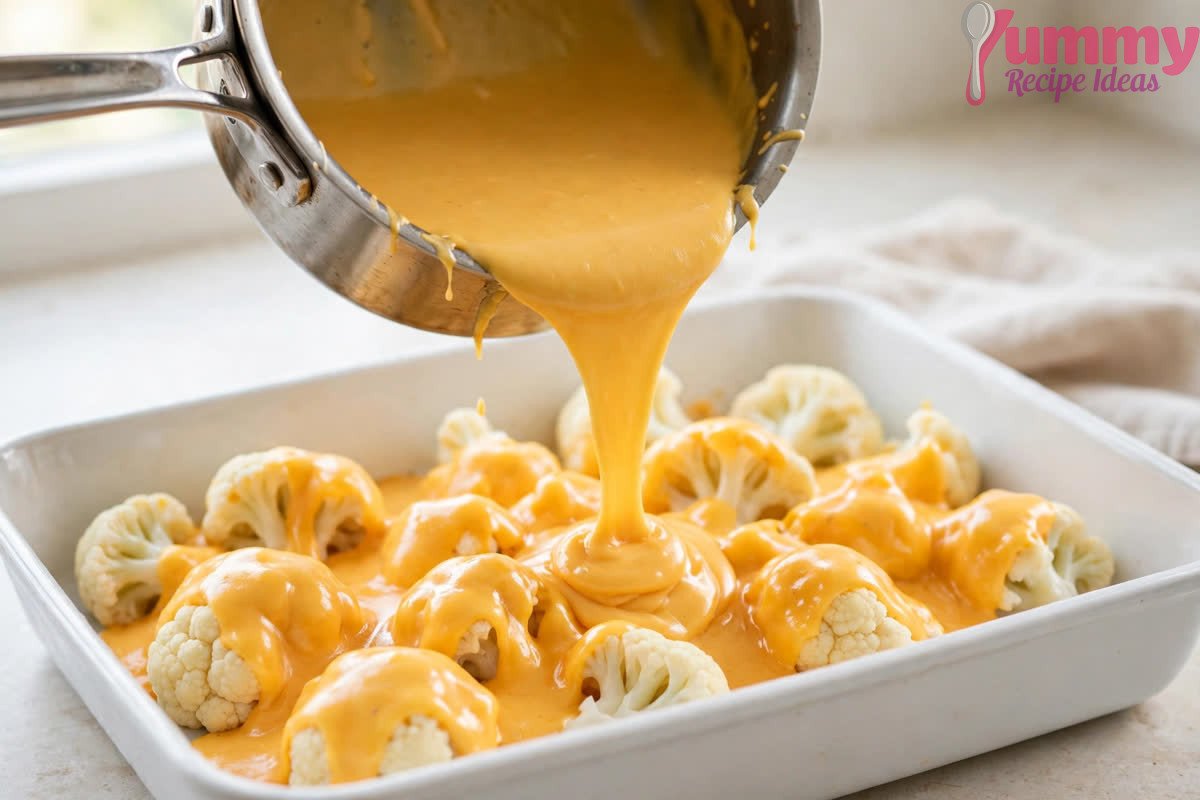
- Assemble and top: Heat the oven to 400°F. Arrange the dry florets in the baking dish, pour over the cheese sauce, and toss gently to coat. Toss the breadcrumbs and thyme with the remaining 1 1/2 cups of cheese and scatter evenly over the top.
- Bake until golden: Bake 15 to 20 minutes, until deeply golden and bubbling at the edges. Rest 5 minutes before serving.
Notes
Ingredients
For the cauliflower:
- 1 large head cauliflower (about 2 lb), cut into bite-size florets
- 1 teaspoon kosher salt, for the blanching water
For the cheese sauce:
- 4 tablespoons (1/2 stick) unsalted butter
- 1/4 cup all-purpose flour
- 1 tablespoon English mustard powder
- 2 1/2 cups whole milk, warmed
- 1 pinch cayenne pepper
- 1 cup (about 3.5 oz) shredded mature Cheddar
- 1 cup (about 3.5 oz) shredded Monterey Jack (US stand-in for Lancashire)
- 1 cup (about 3.5 oz) shredded sharp white Cheddar or Colby (US stand-in for Cheshire)
- Kosher salt and freshly ground black pepper, to taste
For the topping:
- 3/4 cup fresh breadcrumbs
- 1 tablespoon fresh thyme leaves, chopped
Directions
- Blanch the cauliflower: Bring a large pot of generously salted water to a rolling boil. Add the cauliflower florets and blanch for 4 to 5 minutes, until just tender with a distinct bite. While they cook, fill a large bowl with ice water.
- Shock in the ice bath: Drain the florets and plunge them straight into the ice water. Leave for 2 minutes to stop the cooking completely, then drain very well and pat dry with a clean kitchen towel — excess water is the enemy of a silky sauce.
- Make the roux: In a medium saucepan, melt the butter over medium heat. Whisk in the flour and cook, whisking constantly, for 1 to 2 minutes until it smells faintly nutty. Whisk in the mustard powder until evenly combined.
- Build the sauce: Gradually pour in the warm milk, whisking constantly to keep it smooth. Bring to a gentle simmer and cook 4 to 5 minutes, stirring, until the sauce thickly coats the back of a spoon. Season with the cayenne, salt, and plenty of black pepper.
- Melt in half the cheese: Take the pan off the heat. Add half of the combined shredded cheeses (about 1 1/2 cups) and stir until completely melted and glossy. Taste and adjust the seasoning — the sauce should taste boldly cheesy and lightly peppery.
- Assemble and top: Heat the oven to 400°F. Arrange the dry florets in a 9×13-inch ovenproof baking dish, pour over the cheese sauce, and toss gently to coat. In a small bowl, toss the breadcrumbs and thyme with the remaining 1 1/2 cups of cheese, then scatter evenly over the top.
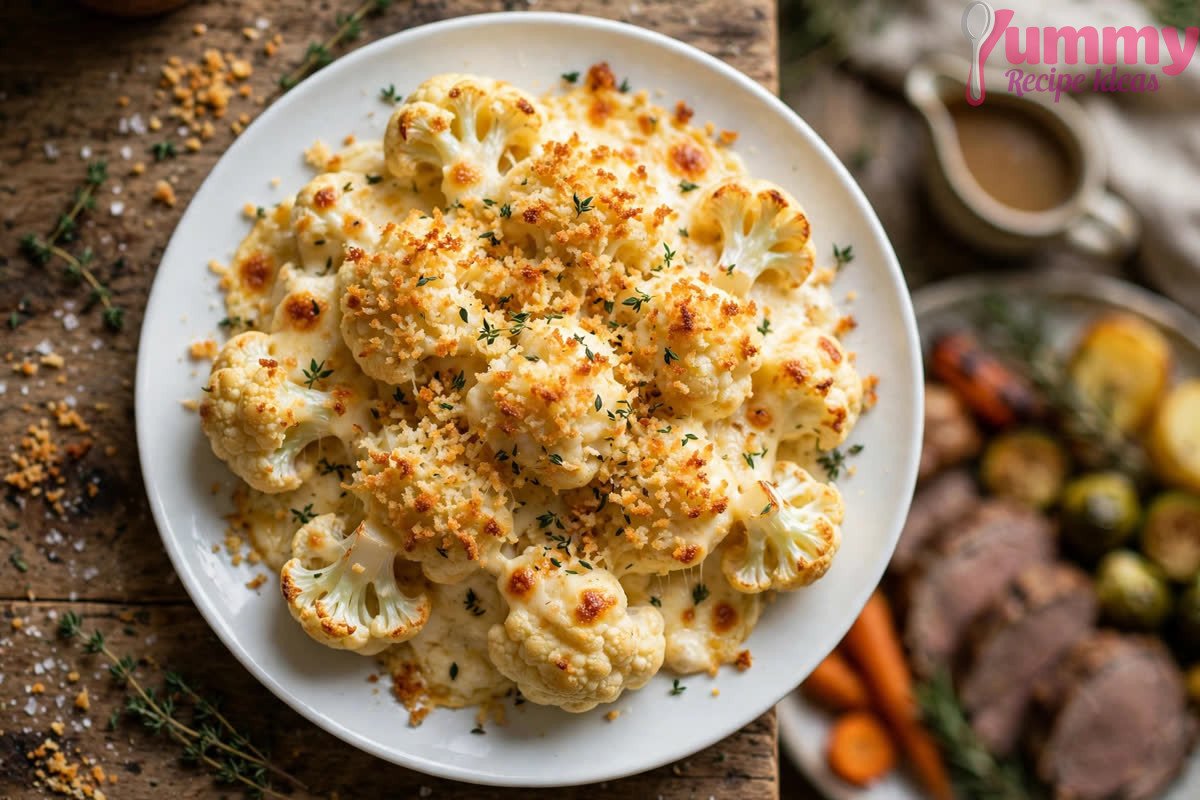
- Bake until golden: Bake 15 to 20 minutes, until the top is deeply golden and the sauce is bubbling at the edges. Rest 5 minutes before serving so the sauce settles.
FAQs
Why does Gordon Ramsay use three cheeses?
Every cheese in Ramsay’s blend has a job, and that is why a single-cheese version never tastes quite as good. Mature Cheddar brings the sharp, savory depth that makes the sauce taste unmistakably cheesy. Lancashire melts into a milky, almost creamy crumble that gives the sauce its body, while Cheshire adds a gentle saltiness that lifts everything without overpowering it. Half of the blend goes into the sauce and the other half is tossed with the breadcrumbs for the topping, so every bite delivers both silk and crunch. In the US, Lancashire and Cheshire are hard to find, but the substitutes are faithful: Monterey Jack mirrors Lancashire’s milky crumble, and sharp white Cheddar or Colby mirrors Cheshire’s mellow saltiness. Use an extra-sharp mature Cheddar aged at least 12 months for the third. One more tip from our test kitchen: grate the cheese yourself. Pre-shredded bags are coated in anti-caking starch that dulls melting and can make the sauce grainy.
Why do you shock the cauliflower in an ice bath?
This is the technique that separates Ramsay’s cauliflower cheese from every soggy version you have had. Cauliflower keeps cooking from its own residual heat long after it leaves the boiling water — a phenomenon chefs call carryover cooking. Without the shock, the florets soften past tender into mush and, worse, release water into the cheese sauce, leaving you with a thin, watery bake. Plunging the blanched florets into ice water halts the cooking instantly, locking in a firm-tender bite and a bright creamy-white color. The florets then hold their shape under 20 minutes of hot oven time instead of dissolving. Two details matter: blanch for only 4 to 5 minutes so the florets still have bite going into the ice, and after shocking, drain them thoroughly and pat them dry. Any water clinging to the florets will thin your sauce, undoing all the good work.
What does the mustard powder actually do — will it taste like mustard?
No, the finished dish will not taste like mustard at all. English mustard powder plays a background role: its gentle heat and sharpness cut through the richness of the butter, milk, and three cheeses, keeping the sauce from tasting heavy or one-note. It also amplifies the perception of cheesiness, the same way a pinch of salt makes chocolate taste more chocolatey. The pinch of cayenne works the same way, adding warmth you feel more than taste. If you only have Dijon mustard, you can use 1 teaspoon as an emergency substitute, but do not add more — Dijon is wetter and sharper than the powder and can throw off the sauce. Whatever you do, do not skip it: in our test bakes, the sauce made without mustard powder tasted noticeably flat and needed extra salt to compensate.
Can I make cauliflower cheese ahead of time? Does it freeze?
Yes to both, which makes this a brilliant holiday side. To make ahead, assemble everything through the topping step, cover the dish tightly, and refrigerate for up to 24 hours. Bake straight from the fridge at 400°F, adding 10 to 15 minutes to the baking time. For the crispiest possible top, keep the breadcrumb-thyme-cheese mixture in a separate bag in the fridge and scatter it over just before baking. It also freezes well for up to 3 months: cool the baked (or unbaked) dish completely, wrap it tightly in a double layer of foil, and freeze. Thaw overnight in the refrigerator, then reheat covered at 350°F for 20 minutes and uncovered for 10 more to re-crisp the top. One honest note: the sauce can look slightly grainy after freezing and thawing. A gentle stir while it reheats brings it back together, and the flavor is unaffected.
What do you serve with cauliflower cheese?
Cauliflower cheese is the classic British roast-dinner side, so think roast chicken, holiday turkey, glazed ham, or a Sunday joint of beef — anything with savory pan juices loves that creamy, cheesy counterpoint. It also rescues simple weeknight food: sausages, pork chops, or even a baked potato become a proper dinner with a scoop of this on the side. If you are building a full roast spread, pair it with our Gordon Ramsay BBQ sauce, which is brilliant brushed over ham or ribs served alongside, and our Gordon Ramsay hollandaise sauce for the full restaurant-style table. And do not overlook leftovers: fold cold cauliflower cheese into mac and cheese, pile it onto baked potatoes, or chop it roughly and stir through a frittata the next morning.
Can I use broccoli instead of cauliflower?
Absolutely — broccoli cheese is a beloved classic in its own right and the method barely changes. Blanch the broccoli florets for 3 minutes instead of 5, since broccoli softens faster, then give them the same ice-bath shock to keep them bright green and firm. The flavor is a touch more assertive than cauliflower and the green-and-gold color contrast under the crispy topping looks stunning on the table. You can also do a half-and-half mix, which is a great way to win over anyone who claims not to like cauliflower. If you are in a broccoli mood beyond this bake, our Gordon Ramsay broccoli salad is another excellent way to use it. Whichever vegetable you choose, keep the mustard-spiked three-cheese sauce exactly as written — it is the heart of the recipe.
About the Yummy Recipe Ideas Kitchen — We test every Gordon Ramsay-inspired recipe in a real home kitchen until it is foolproof, converting everything to US measurements with honest per-serving costs. This cauliflower cheese took four test bakes to nail the sauce-to-crumb ratio and the ice-bath timing.
