
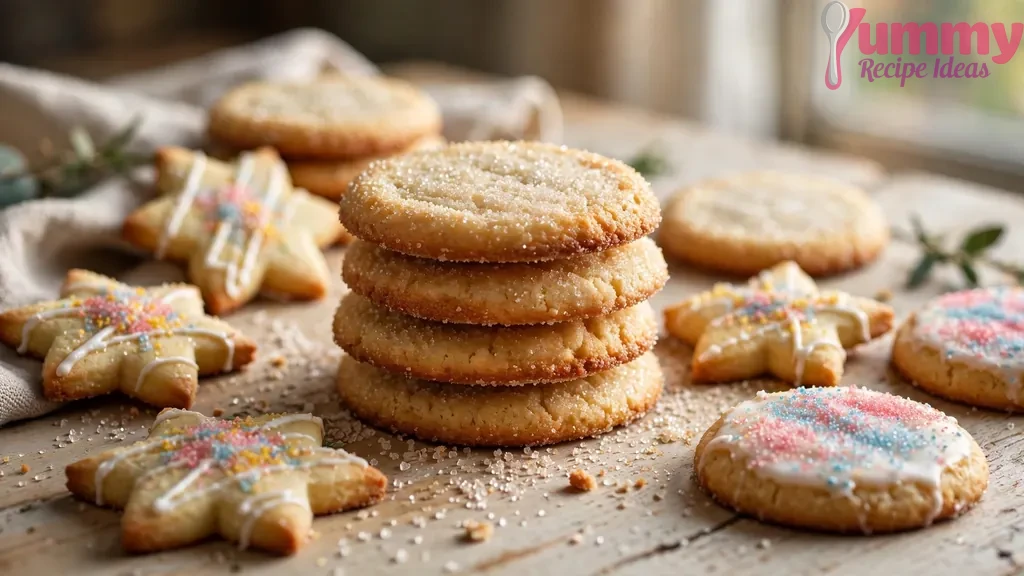
Gordon Ramsay’s sugar cookies are the rare cut-out cookie that actually tastes as good as it looks: crisp, golden edges, soft chewy centers, and a whisper of lemon zest brightening the vanilla. The whole batch takes about 1 hour 45 minutes (most of it hands-off chilling) and costs around 17 cents a cookie — a dozen-and-a-half homemade cookies for less than the price of a bakery box.
The recipe comes from the “Just for Kids” chapter in Ramsay’s Make It Easy, where he designed it for little hands: a forgiving dough that rolls without cracking, holds any cutter shape in the oven, and takes a glaze like a dream. At Christmas he cuts festive shapes, pokes a hole near the top with a skewer, and hangs them on the tree. The standout technique is restraint — he starts the dough with a sturdy metal spoon, switches to his hands only at the very end, and kneads for 1–2 minutes and no more, because overworking the flour is what turns sugar cookies tough instead of tender.
But the twist that makes this version better than every plain vanilla cut-out online is the flavoring. Instead of vanilla alone, we fold in real lemon zest alongside pure vanilla extract — the zest doesn’t make the cookies taste lemony, it makes them taste brighter and more buttery, the same way a squeeze of lemon lifts a rich dish. Add in the second secret — working the dough in cold quarters and pulling the cookies while the centers still look slightly soft — and you get bakery-style cookies with crisp edges and soft, chewy middles every single time.
Cooked this recipe? Send a photo — we’d love to feature your version!

Gordon Ramsay Sugar Cookie Recipe
Ingredients
Equipment
Method
- Cream the butter and sugar. Beat the softened butter and granulated sugar with a stand or hand mixer on medium speed for 2–3 minutes until pale, fluffy, and creamy. Proper creaming whips in air that lifts the cookies, so don’t shortcut it — under-creamed butter makes flat, dense cookies.
- Add the egg, vanilla, and lemon zest. Beat in the egg until fully absorbed, then the vanilla extract and lemon zest. Scrape down the sides of the bowl once so everything is evenly mixed.
- Work in the dry ingredients — gently. Whisk the flour, baking powder, salt, and mixed spice together in a separate bowl. Add it to the butter mixture and mix on low just until a soft dough forms, using a sturdy metal spoon at the start and switching to your hands only to bring it together — then knead for 1–2 minutes and no more, until smooth. Working the flour any longer develops gluten and turns the cookies tough instead of tender.
- Chill the dough. Flatten the dough into a thick disc, wrap it tightly in plastic wrap, and refrigerate for at least 1 hour (or up to 24 hours). Cold dough rolls without sticking and holds razor-sharp edges in the oven instead of spreading into blobs.
- Roll in quarters and cut your shapes. Heat the oven to 350°F and line two baking sheets with parchment paper. Divide the dough into 4 portions, rewrap three, and keep them in the fridge. Roll one portion on a lightly floured surface to 1/4-inch thickness, cut your shapes, and space them 1 inch apart on the sheets. If you want Christmas tree cookies, cut festive shapes and poke a hole near the top of each one with a skewer before baking.
- Bake to pale gold — then let them set. Bake for 10–12 minutes, until the edges are just set and faintly golden while the centers still look slightly soft. Leave the cookies on the hot sheet for 5 minutes — they firm up as they cool, and that carry-over rest is what keeps the centers chewy — then move them to a wire rack to cool completely.
- Glaze and decorate. Whisk the confectioners’ sugar with 2 tablespoons of milk, adding more a teaspoon at a time, until you have a smooth, thin glaze that ribbons off the spoon. Brush or spoon it over the cooled cookies, shower with colored sugar and sprinkles, and leave on the rack until the icing is fully dry, about 1 hour.
Gordon Ramsay Sugar Cookie Recipe
Recipe by Yummy Recipe Ideas · Course: Dessert · Cuisine: British · Yield: 24 cookies · Prep Time: 30 minutes (+ 1 hour chill) · Cook Time: 12 minutes · Total Time: about 1 hour 45 minutes · Calories: 115 kcal per cookie · Difficulty: Easy
Ready in about 1 hour 45 minutes for around 17 cents a cookie: crisp-edged, chewy-centered cut-out sugar cookies with vanilla and a whisper of lemon zest, finished with a thin glaze and colored sugar.
Ingredients
For the cookies:
- 1 cup (2 sticks) unsalted butter, softened to 65–68°F
- 3/4 cup granulated sugar
- 1 large egg, at room temperature
- 2 tsp pure vanilla extract
- 1 tsp finely grated lemon zest (from about 1 lemon)
- 2 3/4 cups all-purpose flour, spooned and leveled
- 1/2 tsp baking powder
- 1/2 tsp fine sea salt
- 1/4 tsp ground mixed spice (or pumpkin pie spice)
For the glaze and decorating:
- 1 1/2 cups confectioners’ sugar, sifted
- 2 to 3 tbsp milk, plus more as needed
- Colored sanding sugar and sprinkles, for decorating
Directions
- Cream the butter and sugar. Beat the softened butter and granulated sugar with a stand or hand mixer on medium speed for 2–3 minutes until pale, fluffy, and creamy. Proper creaming whips in air that lifts the cookies, so don’t shortcut it — under-creamed butter makes flat, dense cookies.
- Add the egg, vanilla, and lemon zest. Beat in the egg until fully absorbed, then the vanilla extract and lemon zest. Scrape down the sides of the bowl once so everything is evenly mixed.
- Work in the dry ingredients — gently. Whisk the flour, baking powder, salt, and mixed spice together in a separate bowl. Add it to the butter mixture and mix on low just until a soft dough forms, using a sturdy metal spoon at the start and switching to your hands only to bring it together — then knead for 1–2 minutes and no more, until smooth. Working the flour any longer develops gluten and turns the cookies tough instead of tender.
- Chill the dough. Flatten the dough into a thick disc, wrap it tightly in plastic wrap, and refrigerate for at least 1 hour (or up to 24 hours). Cold dough rolls without sticking and holds razor-sharp edges in the oven instead of spreading into blobs.
- Roll in quarters and cut your shapes. Heat the oven to 350°F and line two baking sheets with parchment paper. Divide the dough into 4 portions, rewrap three, and keep them in the fridge. Roll one portion on a lightly floured surface to 1/4-inch thickness, cut your shapes, and space them 1 inch apart on the sheets. If you want Christmas tree cookies, cut festive shapes and poke a hole near the top of each one with a skewer before baking.
- Bake to pale gold — then let them set. Bake for 10–12 minutes, until the edges are just set and faintly golden while the centers still look slightly soft. Leave the cookies on the hot sheet for 5 minutes — they firm up as they cool, and that carry-over rest is what keeps the centers chewy — then move them to a wire rack to cool completely.
- Glaze and decorate. Whisk the confectioners’ sugar with 2 tablespoons of milk, adding more a teaspoon at a time, until you have a smooth, thin glaze that ribbons off the spoon. Brush or spoon it over the cooled cookies, shower with colored sugar and sprinkles, and leave on the rack until the icing is fully dry, about 1 hour.

FAQs
Why lemon zest and vanilla instead of just vanilla extract?
Because zest doesn’t make the cookies taste like lemon — it makes them taste more like butter. Lemon zest contains aromatic oils that amplify richness and add a fresh, bright top note, so the cookie reads as more buttery and less flat than a plain vanilla cut-out. It’s the same balancing logic chefs use in savory cooking, where acid tames richness — you’ll find it all over our kitchen, from the bright finish of this Gordon Ramsay Rhubarb Crumble Recipe to the citrus lift in our vinaigrettes. Ramsay’s original uses a pinch of mixed spice for warmth; we keep that warmth but add the zest-and-vanilla pairing, which reads cleaner and less “spiced” — important if these are for kids who wrinkle their noses at anything that tastes like pumpkin pie. The ratio matters: 1 teaspoon of zest per batch is enough to brighten without tipping into lemon-cookie territory. And one practical note — zest the lemon before you juice it, using only the yellow skin, because the white pith underneath is bitter and will ruin the effect.
Why does Ramsay only knead the dough for 1–2 minutes?
Because every second of kneading after the dough comes together is working against you. Flour contains proteins that form gluten when they meet liquid and get agitated — a little gluten gives the dough enough structure to roll and cut cleanly, but a lot of gluten makes the baked cookie tough and bready instead of crisp and tender. Ramsay’s method is engineered to stay on the right side of that line: he starts mixing with a sturdy metal spoon, switches to his hands only to bring the dough together, and stops the moment it’s smooth — about 1–2 minutes of hand work. That’s enough to unify the dough so it doesn’t crumble when you roll it, but not enough to develop the elastic gluten network that causes tough cookies. Skip the short knead and the dough falls apart under the rolling pin; overdo it and you get cookies with the texture of bread crust. If your dough feels sticky, the fix is never more flour or more kneading — it’s the fridge, which firms the butter and makes everything manageable.
Why chill the dough — and why work it in quarters?
Two separate problems, one solution: cold dough. Warm sugar cookie dough is soft butter and warm sugar, which means it sticks to the rolling pin, stretches when you lift the cut shapes, and melts in the oven before the structure sets — so your sharp stars turn into blurry blobs. Chilling firms the butter, which is what holds the shape. The quarter-portion trick is the detail most recipes skip: you divide the dough into four, keep three wrapped in the fridge, and roll only one portion at a time. That way each portion stays cold right up until it hits the baking sheet, instead of warming on the counter while you decorate the first batch. It’s the same respect-for-temperature discipline behind finicky classics like our Gordon Ramsay Hollandaise Sauce Recipe — in both, temperature control is the whole game. If a portion gets soft while you’re working, don’t fight it: wrap it, chill it for 10 minutes, and carry on. Patience here is the difference between bakery-sharp edges and sad puddles.
How do I get crisp edges with soft, chewy centers?
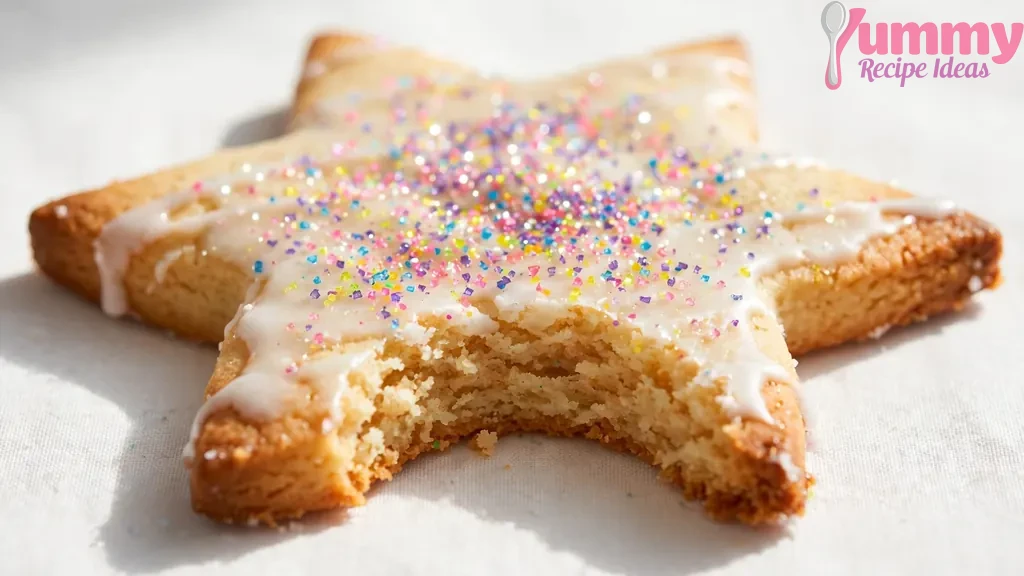
This is entirely about pull timing — and it means trusting your eyes over the clock. The cookies are done when the edges look set and faintly golden but the centers still look slightly soft and underdone. Pull them then, not later. Here’s why: a cookie sheet stays blazing hot after it leaves the oven, and the cookies keep cooking on it for another 5 minutes. That carry-over heat finishes the centers gently while the edges, which browned first, stay crisp. If you wait until the centers look “done” in the oven, they finish overcooked on the sheet and you get dry, crunchy cookies. So set your timer for 10 minutes, check, and look for the visual cue: pale gold rim, soft-looking middle. Leave them on the sheet for exactly 5 minutes to firm up, then move to a wire rack. One more detail that helps: roll to a full 1/4 inch thick. Thinner cookies have no center left to stay soft — they bake through and go crunchy all over. Thickness is your insurance policy for chew.
Can I make these as Christmas tree cookies?
Absolutely — Ramsay designed these for exactly that. Cut the chilled dough with festive cutters (stars, trees, snowflakes), and before baking, poke a hole near the top of each cookie with a skewer or the end of a chopstick — make it a little larger than you think, because the hole shrinks slightly as the cookie bakes. Bake, cool, and decorate with the glaze and colored sugar, then thread thin ribbon through the holes once the icing is completely dry (give it a full hour, or the ribbon will smudge the glaze). Two tips from experience: keep the tree-hung batch slightly thicker (a scant 1/4 inch) so they survive being handled, and use the mixed spice as written — its cinnamon-nutmeg warmth reads unmistakably festive without turning the cookies into gingerbread. Hang them on the tree the day you decorate for the freshest crunch, and honestly? Put a few extras aside, because hung cookies have a mysterious habit of disappearing before Christmas morning.
How long do they keep, and can I freeze the dough?
Baked and undecorated, the cookies keep 5 days in an airtight tin at room temperature — the glaze actually protects them, so decorated cookies hold just as well, as long as the icing is fully dry before you stack them with parchment between the layers. Don’t refrigerate baked cookies; the cold dries them out. For longer storage, freeze them baked (undecorated is best) in a single layer, then bag them for up to 3 months; thaw at room temperature and decorate fresh. The raw dough is even more freezer-friendly: wrap the disc tightly in plastic, then in foil, and freeze for up to 3 months. Thaw overnight in the fridge, then roll, cut, and bake as normal — frozen-then-thawed dough actually cuts beautifully because it’s extra firm. You can also freeze cut, unbaked shapes on a parchment-lined tray, bag them frozen, and bake straight from the freezer, adding 1–2 minutes to the bake time. That’s the real weeknight win: fresh-baked cookies on demand, with the work done weeks ago.
About the Author
Yummy Recipe Ideas is run by a small team of home cooks who spend their days testing, tweaking, and tasting so you don’t have to. Every recipe on this site is cooked and eaten in a real home kitchen before it ever gets published.
About Yummy Recipe Ideas: We test and share easy, flavor-packed recipes inspired by the world’s best chefs — written for real home kitchens with US measurements and honest costs. New recipes every day.
