
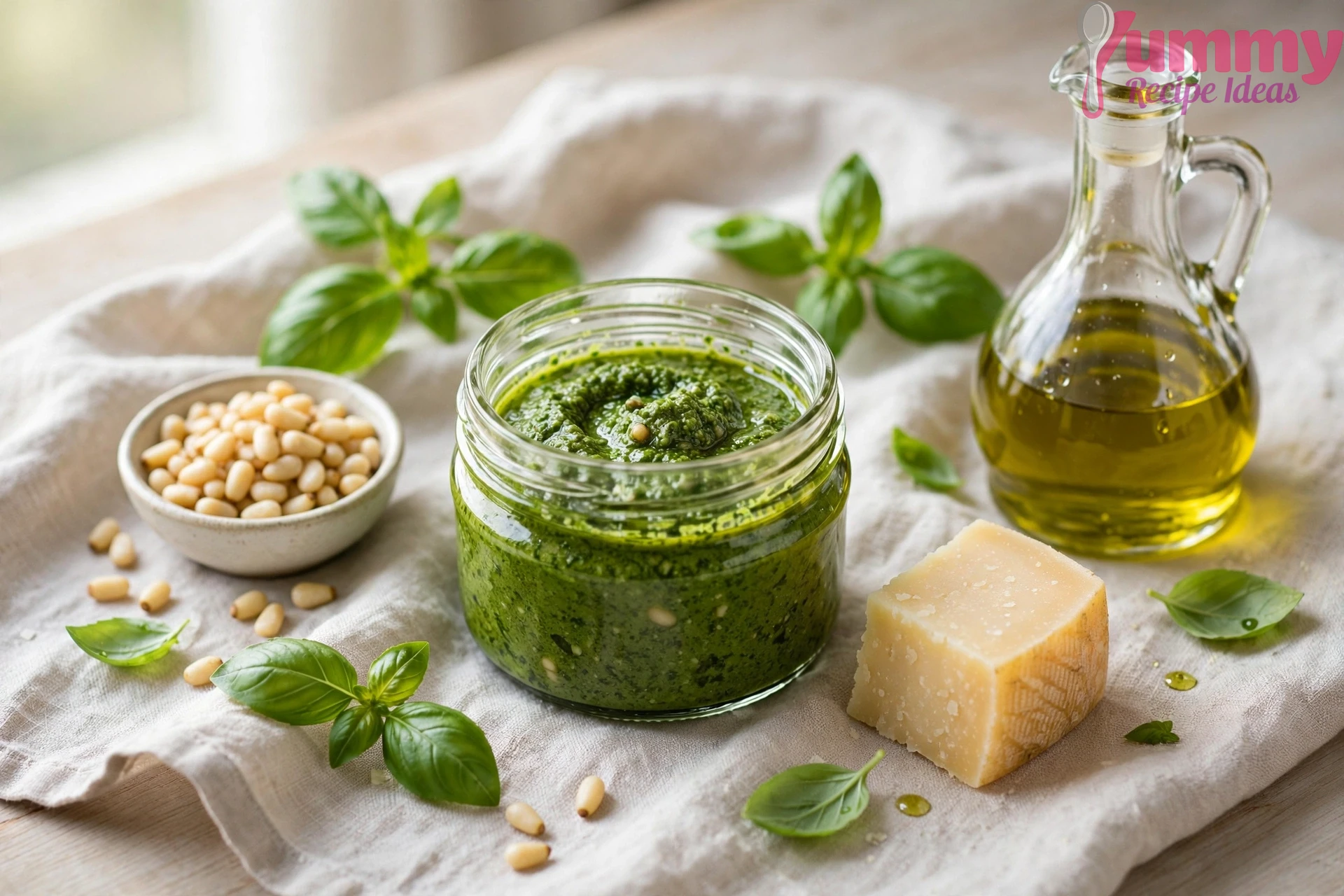
Gordon Ramsay’s basil pesto is bright, loose and unapologetically basil-heavy — five ingredients, zero garlic, 45 seconds in the blender. It makes about 1 1/2 cups for around $2 a serving with roughly 300 calories a serving, and it coats pasta the way restaurant pesto does instead of sitting in clumps.
The recipe comes from his official restaurant website, where he serves it with linguine and shellfish. Across his cookbooks he makes two more versions: a sage and walnut pesto in Ultimate Fit Food and a sundried tomato pesto in Ultimate Home Cooking — and comparing all three shows how deliberately he adjusts the technique to the herb. The detail most people miss is what is not in the jar: there is no garlic in his basil pesto at all, because raw garlic would bulldoze the delicate basil, while his sage version gets a clove because sage is strong enough to take it.
This version goes one better than the typical thick, muddy homemade pesto in three ways. The olive oil ratio is nearly 1:1 with the basil, so the texture is loose and spoonable instead of clumpy. The blender stops at 45 seconds before blade heat can darken the leaves. And the basil gets the bright-green treatment — dried thoroughly, finished with an oil cap in the jar — so it stays electric green for days, not hours. Five ingredients, five minutes, better than anything in a jar.
Cooked this recipe? Send a photo — we’d love to feature your version!
Gordon Ramsay Basil Pesto
Recipe by Yummy Recipe Ideas · Course: Sauce · Cuisine: Italian · Servings: 6 (about 1 1/2 cups) · Prep: 5 min · Cook: 0 min · Total: 5 min · Calories: 300 kcal · Difficulty: Easy
Five-ingredient, no-garlic basil pesto — bright, loose and ready in 45 seconds. Makes about 1 1/2 cups (6 servings) for around $2 a serving.
Ingredients
- 6 cups packed fresh basil leaves (about 6 oz), washed and dried
- 2/3 cup extra-virgin olive oil, plus more for sealing the jar
- 1/4 cup pine nuts (about 1 1/2 oz)
- 3 tbsp freshly grated Parmesan (about 1/2 oz)
- 1 tsp kosher salt, plus more to taste
- 1/2 tsp freshly ground black pepper
Directions
- Prep the basil properly: Wash the basil leaves and dry them thoroughly — in a salad spinner if you have one, then patted with a clean towel. Wet basil is the fastest route to muddy, dark pesto, so do not skip this. Pick through and discard any bruised or blackened leaves, keeping only bright, whole ones.
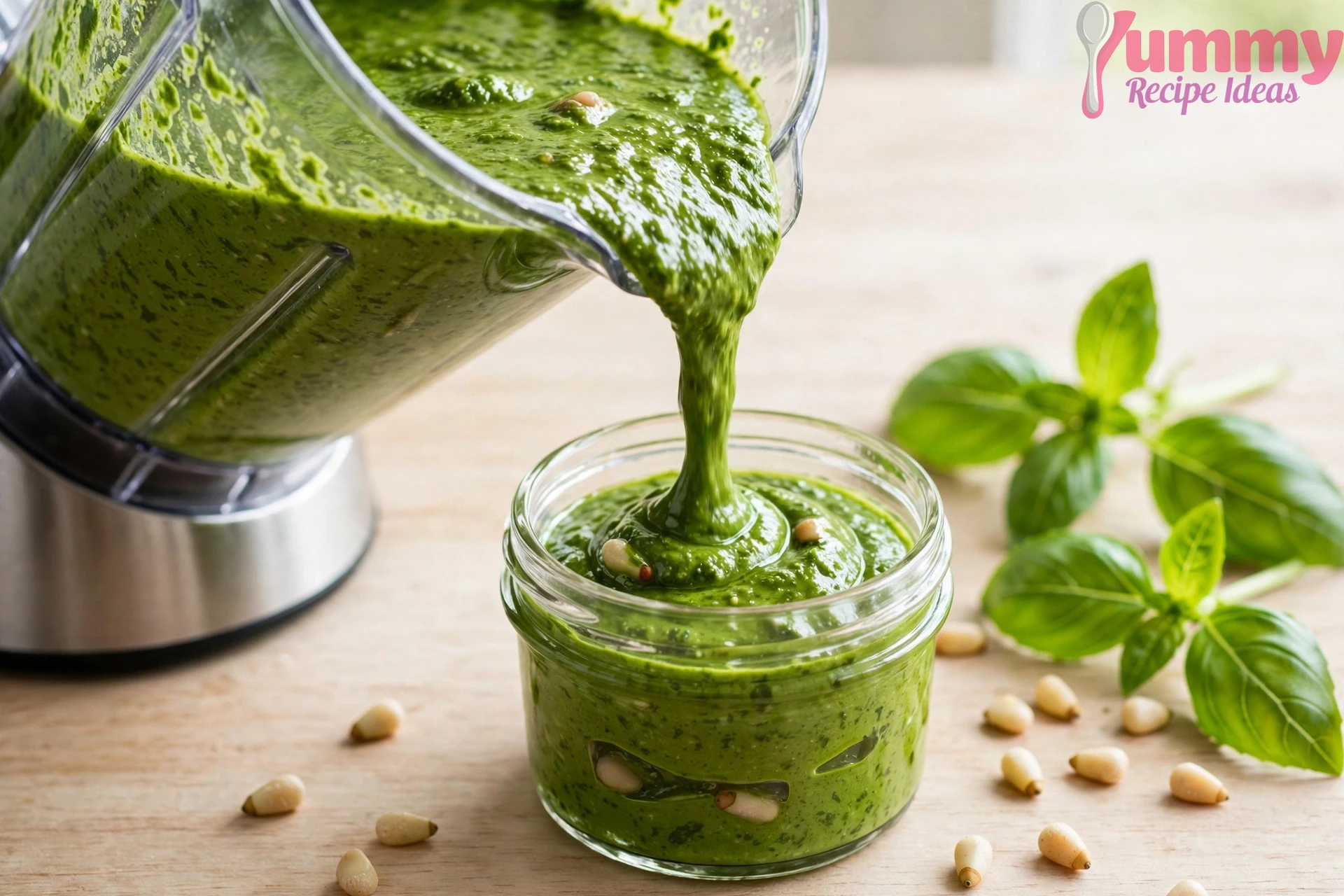
- Blitz for 45 seconds: Put the basil, olive oil, pine nuts, Parmesan, salt and pepper into a blender or food processor. Pulse for 45 seconds until smooth but not completely liquid — you want a loose sauce with some texture left, not a baby-food purée. Stop once halfway to scrape down the sides.
- Check the consistency: The pesto should be loose enough to coat the back of a spoon in a glossy layer. If it is thicker than that, pulse in another splash of olive oil. Never thin it with water — water dulls the flavor instantly.
- Taste, seal and store: Taste and adjust — it may want more salt, pepper or Parmesan. Spoon into a small glass jar, then pour a thin layer of olive oil over the surface to seal out air and stop the basil browning. Seal and refrigerate, or use straight away.
FAQs
Why does Ramsay leave garlic out of his basil pesto?
Because garlic would bulldoze the basil. This is Ramsay’s own logic, and it is smarter than it looks: fresh basil is delicate and floral, and a clove of raw garlic is loud. Put them together and you taste garlic with a vague green background — the basil becomes a supporting actor in its own sauce. He proves the principle is deliberate, not an accident, because his sage and walnut pesto in Ultimate Fit Food does include a clove of garlic. Sage is punchy and earthy enough to stand up to it; basil is not. He matches the aromatics to the herb, not to tradition. If you genuinely miss the bite, the fix is not a whole clove — grate half a small clove on a microplane so it distributes evenly and stays in the background. But try it his way first: the bright, clean basil flavor that comes through with no competition is the whole point of the recipe, and it is what separates this pesto from the sharp, muddy jarred versions.
Why is his olive oil ratio so high?
It is nearly 1:1 by weight — about 2/3 cup of olive oil to 6 cups of basil — and most home recipes use half that much, which is exactly why homemade pesto so often comes out thick and clumpy. The generous oil does three jobs at once: it gives the blender blades something to catch so everything emulsifies into a sauce instead of a paste; it makes the finished pesto loose and spoonable so it coats every strand of pasta instead of sitting in green lumps; and it protects the basil from air, which is the main reason pesto turns brown and bitter. If your pesto still seems thick after the 45-second blitz, thin it with a splash more oil rather than water. And when you toss it through pasta, save a cup of the starchy cooking water first and loosen the pesto with a few spoonfuls of it — the starch helps the oil cling to the noodles like a proper restaurant sauce.
How do you keep homemade pesto bright green?
Browning is oxidation — the basil’s enzymes reacting with air — and every green thing you do fights it. Start before the blender: wash the leaves, then dry them thoroughly, because water trapped on the leaves turns the pesto muddy and dark. For insurance, blanch the basil for 15 seconds in boiling salted water, plunge it into ice water, and squeeze it completely dry — this deactivates the browning enzymes and the pesto stays electric green for days. Use a good extra-virgin olive oil and a small squeeze of lemon juice: acid slows oxidation the way it keeps a sliced apple from browning. Do not over-blend — a full minute of blade friction heats the pesto and darkens it, which is why Ramsay stops at 45 seconds. And always finish with the restaurant trick: pour a thin layer of olive oil over the surface of the jar before sealing. Air cannot reach the pesto, so it cannot brown.
What can I use instead of pine nuts?
Pine nuts are the classic choice but the expensive one — a quarter cup can cost more than the basil itself. Ramsay himself reaches for walnuts in his sage and walnut pesto, and they work beautifully here too: toast them first in a dry skillet for 3 to 4 minutes until fragrant, because raw walnuts have a bitter edge that toasted ones lose. Almonds are the other strong swap — milder and sweeter, closer in flavor to pine nuts, and much cheaper. Cashews make the creamiest pesto of all, almost silky, though slightly less traditional in flavor. On a budget, a 50/50 mix of toasted walnuts and sunflower seeds keeps the cost down without tasting cheap. The one nut to avoid is peanuts, whose flavor is too assertive and un-Italian here. Whatever you use, keep the quantity the same — 1/4 cup — and toast first. The swap changes the character slightly, but the basil-first philosophy stays identical.
What does Ramsay serve pesto with beyond pasta?
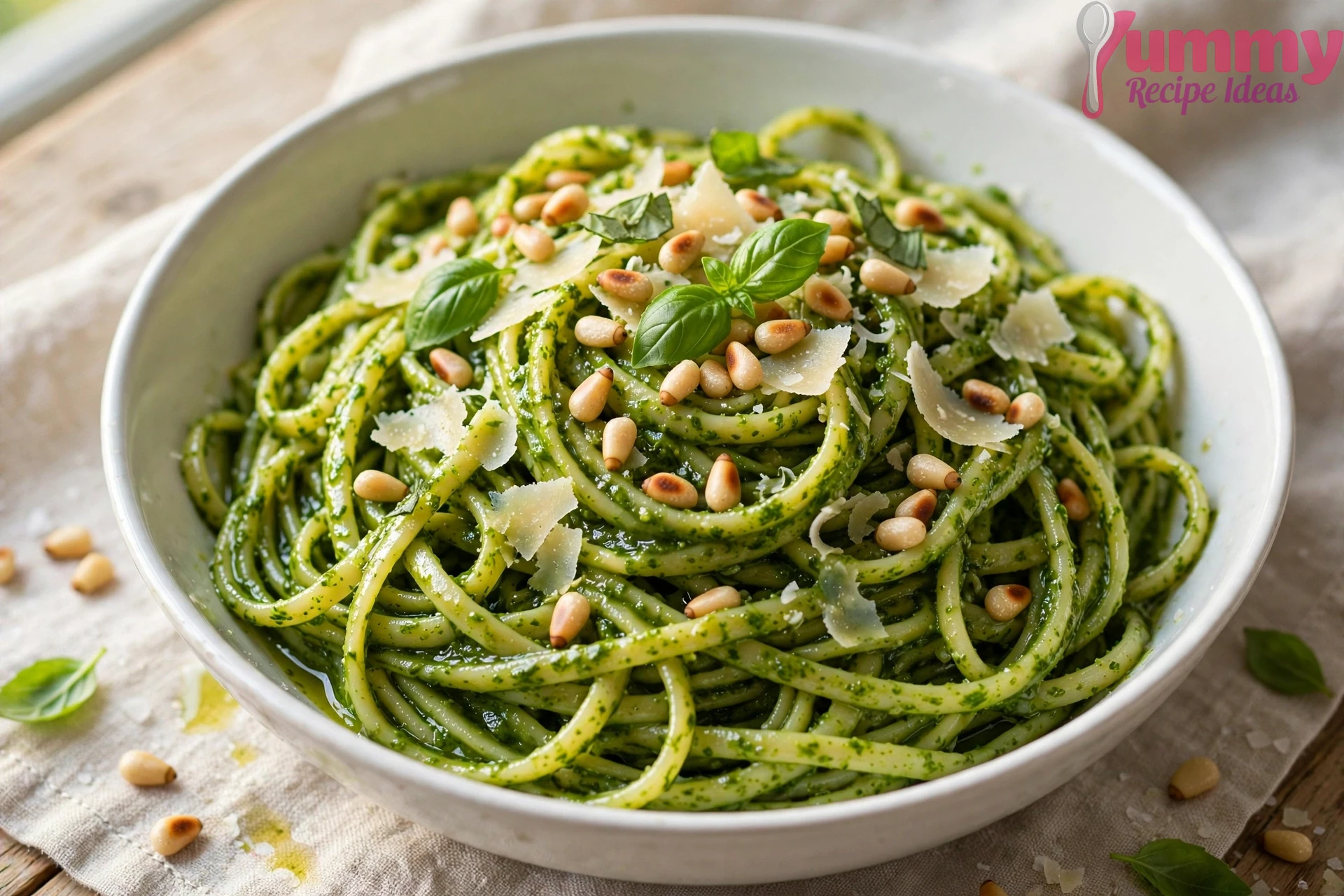
In his restaurants, Ramsay serves this exact basil pesto with linguine and shellfish — toss it through hot pasta with a spoonful of the starchy cooking water and it becomes a glossy sauce that needs nothing else. But it earns its keep far beyond pasta. Spread it on grilled chicken or spoon it over roasted vegetables, where the fresh basil cuts through char and richness. Stir a spoonful into risotto right before serving for a hit of freshness, or whisk it into a vinaigrette for a green dressing that beats anything bottled. Drizzle it over our Gordon Ramsay Caprese Salad in place of the usual balsamic for a basil-forward twist, or spread it thick on toast under a poached egg for a five-minute lunch. It also loves grilled halloumi and a tomato-and-mozzarella flatbread. One rule: never heat pesto hard — add it at the very end, off the heat, or the basil turns dull and bitter. Fresh, cold and proud is how it wants to be treated.
Does pesto freeze well?
It is one of the best sauces to freeze, and the ice cube tray is the whole system. Spoon the finished pesto into trays, freeze until solid, then pop the cubes into a freezer bag with the air pressed out — they keep for up to 6 months with barely any flavor loss. One cube is roughly enough for a single portion of pasta, so you never thaw more than you need. The trick that makes frozen pesto taste fresh is the oil layer: top each cube with a few drops of olive oil before freezing, and stir in the grated Parmesan only after thawing rather than before, because cheese goes grainy in the freezer. Thaw cubes in the fridge overnight or drop them straight into hot pasta — the residual heat melts them into a sauce in seconds. If you want a soup built for the same freezer treatment, our Gordon Ramsay Carrot Soup freezes beautifully for up to 3 months.
About Yummy Recipe Ideas: We test and share easy, flavor-packed recipes inspired by the world’s best chefs — written for real home kitchens with US measurements and honest costs. New recipes every day.
Ingredients
Equipment
Method
- Prep the basil properly: Wash the basil and dry thoroughly — salad spinner, then patted with a clean towel. Wet basil turns pesto muddy and dark. Discard any bruised or blackened leaves.
- Blitz for 45 seconds: Put basil, olive oil, pine nuts, Parmesan, salt and pepper into a blender or food processor. Pulse 45 seconds until smooth but not completely liquid — a loose sauce with some texture. Scrape down the sides once halfway.
- Check the consistency: It should coat the back of a spoon in a glossy layer. If thicker, pulse in another splash of olive oil — never water.
- Taste, seal and store: Adjust salt, pepper or Parmesan. Spoon into a small glass jar and pour a thin layer of olive oil over the surface to seal out air. Seal and refrigerate, or use straight away.
