
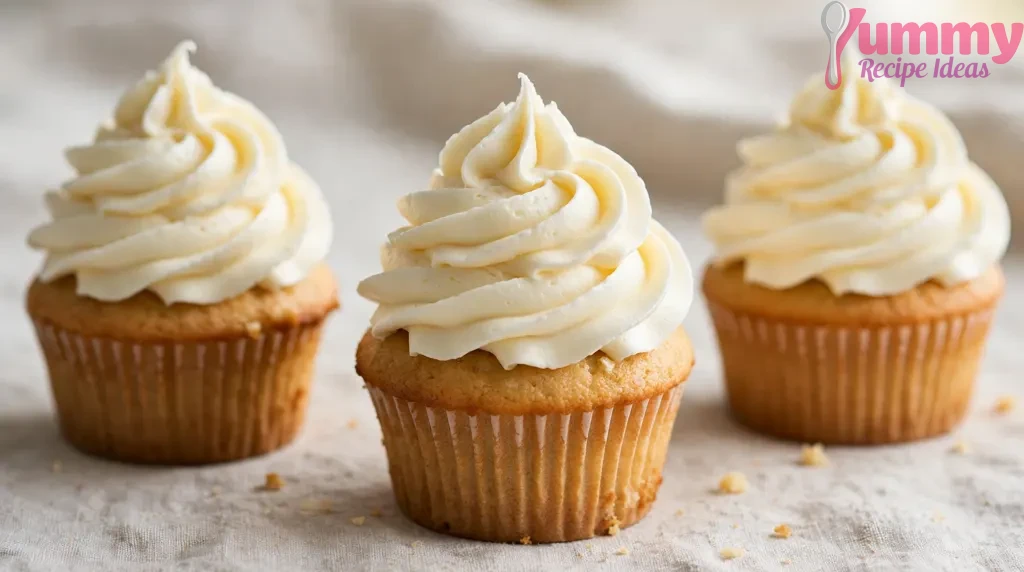
These Gordon Ramsay vanilla cupcakes are soft, fluffy, bakery-style cupcakes built on a properly creamed butter-and-sugar base and crowned with silky vanilla buttercream. They’re ready in 35 minutes, make 12 cupcakes, and cost about 45 cents each — roughly $5.50 for the whole batch. At 340 calories per cupcake, they’re a proper treat worth every bite.
The technique behind them comes straight from Ramsay’s cookery-course teaching: cakes are won or lost in the creaming stage. Butter and sugar get beaten for a full four to five minutes until pale and full of air, and once the flour goes in, the batter is folded gently so none of that air is knocked out. On a US cooking show he once judged a cupcake challenge where the plain vanilla cupcake made with sound technique beat fancier rivals — proof that method matters more than decoration.
What makes this version better than typical vanilla cupcakes is the double hit of real vanilla — pure extract in both the batter and the frosting — plus a carefully balanced egg-to-flour ratio so the crumb is never eggy or dense. A quick tap of the tin settles the batter for level tops, and pulling them at 18 minutes keeps every cupcake moist. Everything is measured in cups and spoons for US kitchens, with no specialty ingredients.
Baked these cupcakes? Send a photo or tell me what you changed — I love seeing your bakes.
Gordon Ramsay Vanilla Cupcakes Recipe
Recipe by Sumit Vishwakarma · Course: Dessert · Cuisine: American · Servings: 12 cupcakes · Prep time: 15 minutes · Cook time: 20 minutes · Total time: 35 minutes · Calories: 340 kcal · Difficulty: Easy
Light, fluffy vanilla cupcakes with silky vanilla buttercream — a from-scratch dozen ready in 35 minutes.
Ingredients
For the cupcakes:
- 1/2 cup (1 stick) unsalted butter, at room temperature
- 3/4 cup granulated sugar
- 2 large eggs, at room temperature
- 2 tsp pure vanilla extract
- 1 1/2 cups all-purpose flour
- 1 1/2 tsp baking powder
- 1/4 tsp fine salt
- 1/2 cup whole milk, at room temperature
For the vanilla buttercream:
- 1/2 cup (1 stick) unsalted butter, softened
- 2 cups powdered sugar, sifted
- 2 tsp pure vanilla extract
- 1–2 tbsp whole milk
- Pinch of fine salt
Directions
- Heat and line: Set the oven to 350°F. Line a 12-cup muffin tin with paper liners so the batter is ready to go the moment it is mixed.
- Cream until pale: Beat the butter on its own for about 30 seconds until smooth, then add the sugar and beat for a full 4–5 minutes until pale, fluffy, and ribbon-like. This aeration is what gives the cupcakes their lift, so do not rush it.
- Add the eggs one by one: Beat in the eggs one at a time, mixing well after each, then beat in the vanilla extract. Both butter and eggs must be at room temperature or the mixture can curdle — if it starts to split, stir in a spoonful of the measured flour to bring it back together.
- Whisk the dry ingredients: In a separate bowl, whisk the flour, baking powder, and salt together so the leavening is evenly distributed.
- Alternate wet and dry: Add the flour mixture in three parts, alternating with the milk in two parts (flour, milk, flour, milk, flour). Mix on low just until each addition disappears — overmixing develops gluten and makes cupcakes tough.
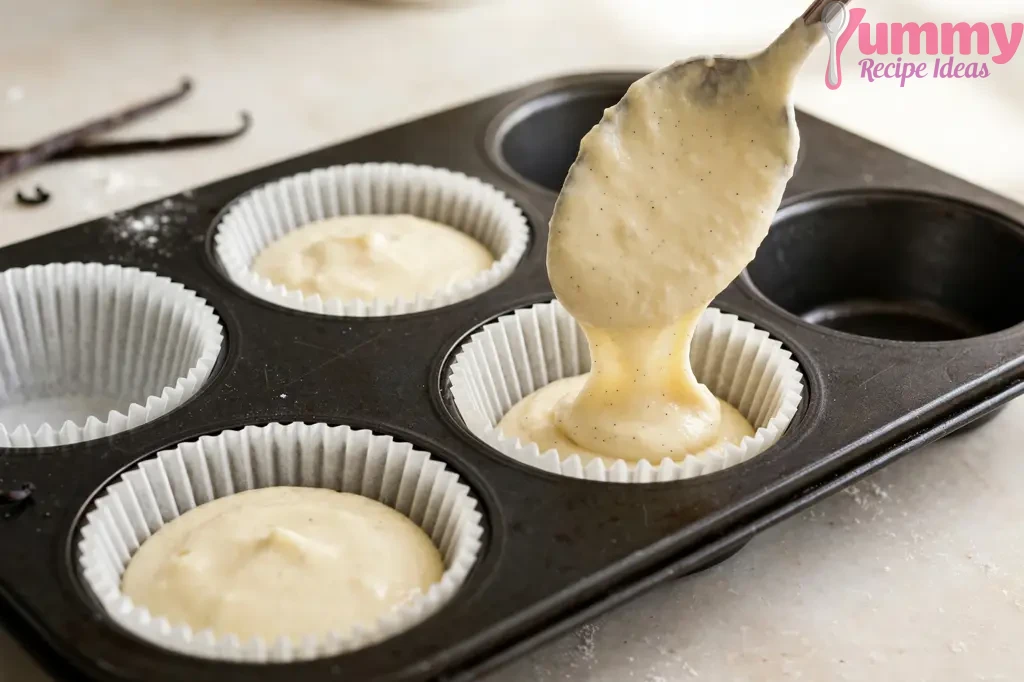
- Fill two-thirds and settle: Divide the batter evenly among the 12 liners, filling each about two-thirds full. Tap the tin firmly on the counter twice to knock out large air pockets so the tops bake level.
- Bake until springy: Bake for 18–20 minutes until golden and the tops spring back when lightly touched; a toothpick should come out with a few moist crumbs. Start checking at 18 minutes — a minute too long is the difference between moist and dry.
- Cool completely: Rest the cupcakes in the tin for 5 minutes, then move them to a wire rack to cool fully before frosting. Warm cupcakes melt buttercream on contact.
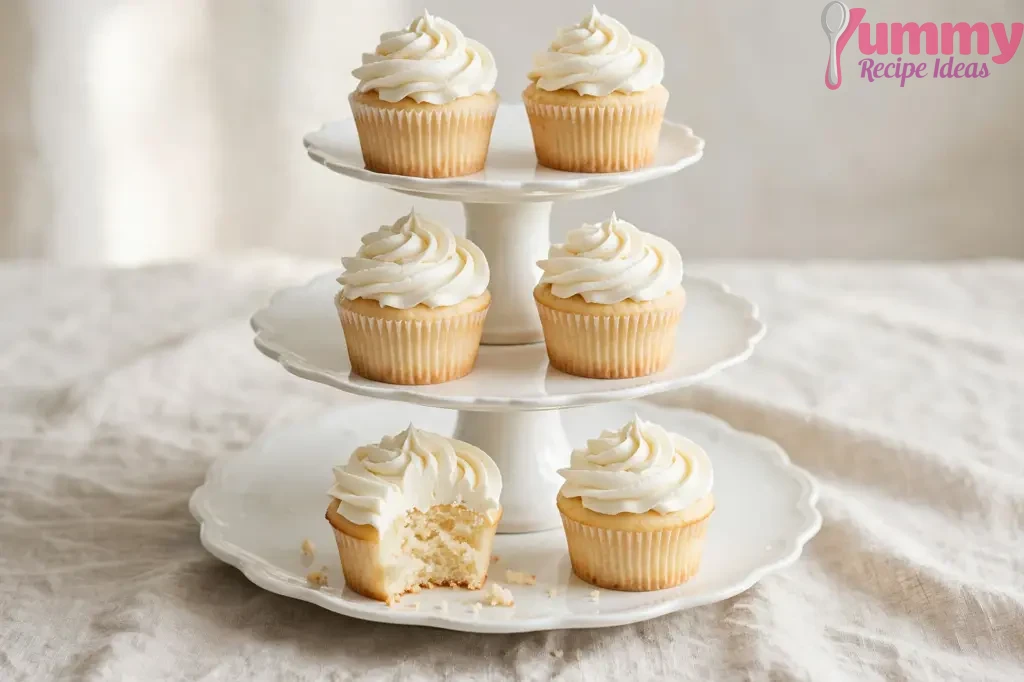
- Whip the buttercream: Beat the softened butter until completely smooth, then add the sifted powdered sugar gradually, beating well between additions. Beat in the vanilla, salt, and just enough milk for a smooth, pipeable swirl. Frost the cooled cupcakes generously.
Gordon Ramsay Vanilla Cupcakes Recipe
Ingredients
Equipment
Method
- Heat and line: Set the oven to 350°F. Line a 12-cup muffin tin with paper liners.
- Cream until pale: Beat the butter on its own for about 30 seconds until smooth, then add the sugar and beat 4–5 minutes until pale, fluffy, and ribbon-like.
- Add the eggs one by one: Beat in the eggs one at a time, mixing well after each, then beat in the vanilla extract. If the mixture starts to split, stir in a spoonful of the measured flour to bring it back together.
- Whisk the dry ingredients: In a separate bowl, whisk the flour, baking powder, and salt together.
- Alternate wet and dry: Add the flour mixture in three parts, alternating with the milk in two parts, mixing on low just until each addition disappears.
- Fill two-thirds and settle: Divide the batter among the 12 liners, filling each about two-thirds full. Tap the tin firmly on the counter twice.
- Bake until springy: Bake 18–20 minutes until golden and the tops spring back when lightly touched; a toothpick should come out with a few moist crumbs.
- Cool completely: Rest in the tin for 5 minutes, then transfer to a wire rack to cool fully.
- Whip the buttercream: Beat the softened butter until smooth, then add the sifted powdered sugar gradually. Beat in the vanilla, salt, and just enough milk for a smooth, pipeable swirl. Frost the cooled cupcakes.
FAQs
Why does everything need to be at room temperature?
Because the whole recipe is built on an emulsion, and cold ingredients break it. Room-temperature butter creams properly with sugar, trapping the tiny air bubbles that lift the cupcakes in the oven; cold butter stays waxy and never aerates, so the crumb comes out dense no matter how long you bake it. Cold eggs are worse — they hit the warm creamed butter and curdle the mixture, undoing the five minutes of beating you just did. Take the butter and eggs out of the fridge at least an hour before you start. Short on time? Cut the butter into small cubes and microwave it in 10-second bursts until just soft (not melted), and rest the eggs in a bowl of warm water for 5 minutes. If the batter does split, stir in a spoonful of your measured flour — the starch bonds the fat and liquid back together. Getting this one detail right is the single biggest upgrade you can make to any butter-based bake, including the Gordon Ramsay chocolate cake, which uses the same creaming foundation.
Why did my cupcakes sink in the middle?
Sinking almost always comes down to three culprits. First, underbaking: if the center is still wet when the cupcakes come out, the structure collapses as it cools — the toothpick should show a few moist crumbs, not wet batter, and the tops should spring back when touched. Second, too much leavening or overmixed batter: extra baking powder gives a fast rise followed by a crash, and overmixing after the flour goes in develops gluten that rises unevenly then falls. Third, opening the oven door early lets a rush of cold air deflate the delicate crumb. To prevent it, measure the baking powder with a proper measuring spoon (don’t eyeball 1 1/2 teaspoons), mix the batter only until the flour disappears, fill liners two-thirds full so there is room to rise, and keep the door shut until at least the 18-minute mark. The same precision pays off in other careful bakes like these Gordon Ramsay sugar cookies, where a minute or a spoonful makes all the difference.
Can I make vanilla cupcakes ahead of time? Do they freeze?
Yes — these are excellent make-ahead cupcakes if you handle the timing right. Unfrosted cupcakes keep at room temperature in an airtight container for up to 2 days; refrigerating them actually dries the crumb out, so keep them on the counter. For longer storage, freeze the unfrosted cupcakes: cool them completely, wrap each one tightly in plastic wrap, and freeze in a zip-top bag for up to 2 months. Thaw at room temperature for about an hour, then frost fresh. The buttercream itself can be made 3 days ahead and kept in an airtight container in the fridge — just re-whip it for a minute before piping so it turns silky again. Avoid freezing frosted cupcakes if you can; the buttercream can weep and lose its swirl as it thaws. If you like planning bakes ahead, the Gordon Ramsay oatmeal cookies are another treat that freezes beautifully and thaws in minutes.
How much does a batch of vanilla cupcakes cost?
About $5.50 for all 12, which works out to roughly 45 cents per cupcake. The butter is the biggest line item — two sticks run around $2 at most US grocery stores — followed by the powdered sugar at about $1. Everything else (flour, granulated sugar, eggs, milk, salt, baking powder) comes from standard pantry staples and adds roughly $2 combined. Pure vanilla extract is the one ingredient people worry about, but 4 teaspoons total across batter and frosting costs well under 50 cents from a standard bottle. Compare that to $3–4 per cupcake at a bakery and the savings are obvious. If you want an even cheaper from-scratch dessert for a crowd, this Gordon Ramsay rhubarb crumble feeds a whole table for a similar total.
How are these different from a boxed vanilla cupcake mix?
Three things: flavor, texture, and control. Box mixes rely on artificial vanilla flavoring, which tastes flat and one-note next to real pure vanilla extract in both the batter and the frosting — that double vanilla hit is the first thing you’ll notice. Texture is the second difference: the creaming method builds a fine, even crumb with real butter flavor, while mixes lean on emulsifiers and oils for a spongy but oddly uniform bite. And control matters more than people think — with a scratch recipe you choose the sweetness level, the salt balance, and exactly how much frosting goes on top. A box mix also can’t teach you the techniques that carry over to every other bake you make. Once you’ve creamed butter and sugar properly for these cupcakes, you’ll use the same skill in the Gordon Ramsay chocolate cake and any butter cake after it. The 35 minutes of hands-on time buys you a noticeably better cupcake and a technique you’ll keep.
About Sumit: Sumit Vishwakarma is the food blogger behind Yummy Recipe Ideas, where he develops from-scratch recipes inspired by world-class chefs, tested for real home kitchens.
